

The quality of a double-sided tape application depends on more than straight alignment along the sheet. If the tape starts too early, ends too late, or leaves an uneven edge, it can affect the appearance and bonding performance of the finished product. For our double-sided tape applicator, precise control of the start and end points helps keep each strip neat and properly positioned for the next stage of packaging or assembly.
Common Start- and End-Point Defects on a Double-Sided Tape Applicator
The start and end of a tape strip are particularly vulnerable to lifting, misalignment and bonding defects because stress often concentrates at these points during opening and handling. On a double-sided tape applicator, accurate positioning and consistent pressure are essential for keeping both ends firmly attached to the substrate. If a sheet enters the pasting section at an uneven speed or angle, the tape may begin off-line, wrinkle or curl near the leading edge. Dust or surface contamination can further reduce adhesion, allowing the tape to lift even when the middle section remains firmly bonded.
At the finishing end, incorrect tape length or stopping position can leave part of a closure uncovered, extend the strip beyond the sheet edge or deposit adhesive on the conveyor. A rough cut, squeezed-out adhesive or insufficient pressure can also create raised edges and cause adjacent sheets to stick together during stacking. These defects may be difficult to detect at normal production speed, especially when sheets pass through the machine continuously. However, their effects often become apparent during carton forming, flap closure, packing or final handling. Checking the tape's starting position, end alignment, cut quality and adhesion on the first few sheets helps operators identify problems early and maintain consistent results throughout the production run.
| Tape application issue | Possible cause | Quality impact | Recommended check |
|---|---|---|---|
| Tape starts off-position | Uneven sheet feeding or incorrect head position | Misaligned tape and an untidy closure | Check sheet alignment and the starting position |
| Tape end lifts or curls | Insufficient pressure or surface contamination | Reduced bonding reliability | Inspect the tape end and substrate surface |
| Tape extends beyond the sheet edge | Incorrect tape length or stopping position | Exposed adhesive and conveyor contamination | Verify the finishing point on test sheets |
| Tape ends unevenly | Incorrect cutting or unstable tape feeding | Poor appearance and inconsistent closure | Check cut quality and tape-feed settings |
| Adjacent sheets stick together | Exposed adhesive or squeezed-out adhesive near the strip end | Difficult sheet separation during stacking and handling | Inspect strip edges before collecting a full batch |
How Our Double-Sided Tape Applicators Maintain Strip-End Quality
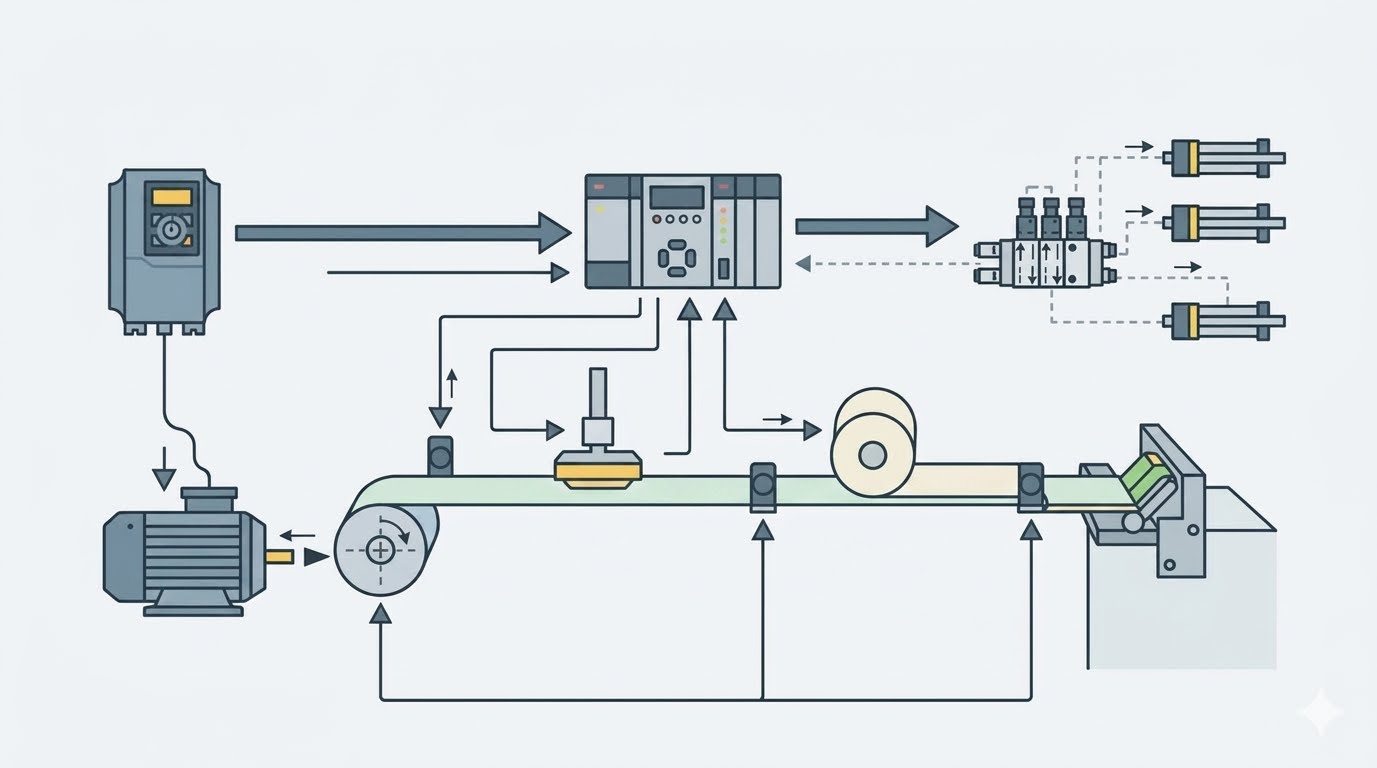
Consistent tape application depends on accurate starting positions, stable movement and clean finishing points. On our automatic multi-head double-sided tape pasting machines, the feeding system, PLC-based process coordination, adjustable adhesive heads and collection section work together to help maintain repeatable application conditions and make defects easier to identify during production.
The feeding section establishes a stable starting reference. A high-friction belt system moves sheets forward smoothly, helping the leading edge reach the pasting position without unnecessary hesitation. Stable sheet movement reduces the risk of crooked starts and uneven tape placement. This is particularly important for envelope bags and document bags, where easy-tear tape sits close to the closing flap and both ends need to remain neatly attached.
PLC control coordinates feeding, tape pasting and collection in one production sequence, helping maintain consistent operating conditions from sheet to sheet. For large batches of bags, card boxes and corrugated cartons, this coordination supports repeatable tape placement and reduces variations that may affect closure quality. Operators should still check the actual start and end positions during setup, especially after changing materials or processing settings.
The multi-head configuration allows several tape strips to be applied in one pass, reducing repeated positioning and handling. When correctly adjusted, the machine helps maintain consistent spacing between strips and their relative positions on the sheet. This is useful for gift boxes and corrugated cartons with multiple tape lines near fold lines or closure panels, where several strip ends can be checked together on each finished sheet.
Changeover features also help operators restore the required positions efficiently. Our machines have a key-operated rotating adhesive head, and a tape change can take approximately 30 seconds under suitable operating conditions. Operators can inspect the first few sheets for tape alignment, flatness and end condition before starting the full batch. On our triangle double-sided tape machine, a handwheel and steel ruler provide a visible reference for left-to-right head adjustment, making repeat jobs easier to set up.
At the exit, a straight-out fish-scale collection belt arranges finished sheets in an overlapping sequence for easier inspection. Operators can spot lifted ends or misplaced tape before defects spread through a larger batch. An optional counting function supports quantity checks for fixed-count orders. Together, these features help maintain consistent strip quality across envelope bags, document bags, card packaging and corrugated cartons, whether production involves frequent format changes or long runs of the same product.
Consistent Tape Ends for Reliable Packaging
Clean strip starts and finishes depend on stable sheet feeding, coordinated operation and timely quality checks. Our automatic multi-head double-sided tape pasting machines combine these features with multi-strip application, quick head adjustment and orderly collection to support consistent tape placement across cardboard, card boxes, corrugated cartons, envelope bags and document bags. Available in different series and working widths, our machines can be configured to suit different product formats and production needs. Share your sheet dimensions, tape specifications and typical batch quantities with our team, and we can recommend a suitable configuration for your application.
 Application Scenarios