3D printing filament is commonly sold on spools, with each spool packed in an individual box for storage, display and transportation. Depending on the packaging design, adhesive tape may be used to secure internal supports, attach inserts or close carton flaps. Consistent tape placement helps these components stay in position and allows boxes to be assembled with greater repeatability.
Tape Application Requirements for Filament Spool Boxes
Filament spool boxes must accommodate a round product while maintaining a practical carton structure. Depending on the spool dimensions and box design, internal supports, dividers or inserts may be used to limit movement during handling and transportation. These components need to fit correctly inside the carton, and any adhesive used to secure them must be applied at the intended positions.
Moisture protection can also be a consideration in 3D printing filament packaging. Some filament materials are sensitive to moisture, so storage conditions and suitable barrier packaging may be important for product protection. However, double-sided tape alone does not make a carton moisture-resistant. The overall result depends on the packaging material, closure design and any additional protective measures used.
Several areas of a box may require tape, including closure flaps, internal supports and carton-bottom structures. The exact layout depends on whether the packaging uses a conventional folding carton, a corrugated box or a more complex insert design. When multiple adhesive strips must be positioned on the same blank, accurate placement becomes an important part of the converting process.
Limitations of Traditional Tape Application
Manual tape application offers flexibility when handling small batches or unusual carton designs. However, operators must repeatedly measure, position and press the tape into place. As product sizes and order specifications change, maintaining the same placement across every blank can become difficult. Manual work also requires repeated handling, which can slow production when several tape strips are needed on each box.
A single-head machine can improve repeatability by applying tape mechanically, but cartons that require adhesive in multiple locations may need to pass through the machine more than once. Each additional pass involves repositioning or feeding the blank again. This creates more handling steps and can introduce alignment differences between tape strips.
Changeovers present another challenge. Filament spool packaging may vary according to spool diameter, filament type, product range and retail presentation requirements. When a new box layout requires different tape positions, the machine must be adjusted accordingly. Frequent changes can take up production time if the equipment is not suited to multiple tape locations and different carton formats.
| Application method | Main production consideration |
|---|---|
| Manual tape application | Flexible for small batches, but placement depends heavily on operator consistency |
| Single-head tape pasting | Mechanized application, but multiple tape positions may require repeated passes |
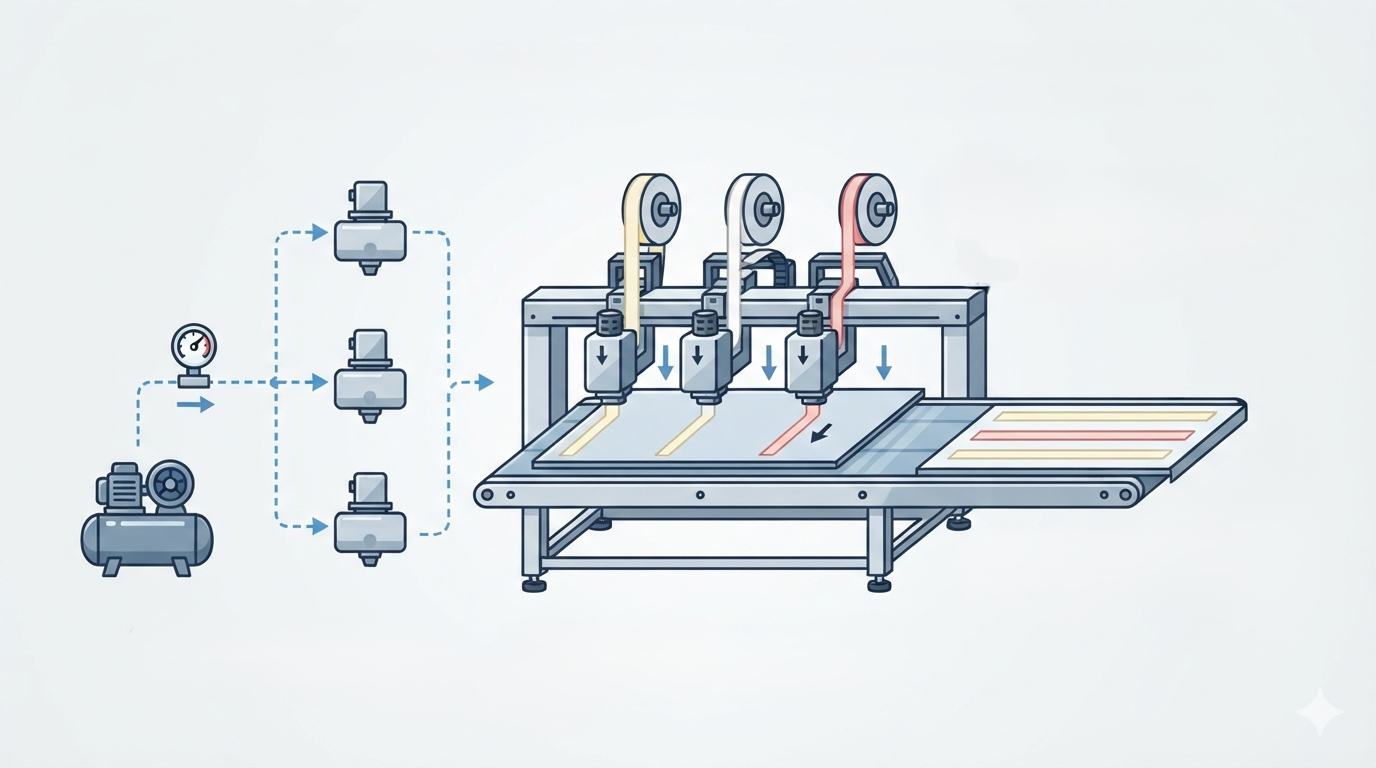
| Multi-head tape pasting | Multiple tape strips can be applied in one pass when the carton layout and machine configuration are compatible |
Changing Requirements in 3D Printing Filament Packaging
The range of 3D printing materials, colors and spool sizes creates different packaging requirements. A packaging supplier may need to produce several box formats for different product lines, with variations in dimensions, internal supports and closure structures. Equipment that can be adjusted for different layouts is therefore useful when managing a changing order mix.
Filament packaging also serves more than one purpose. Boxes may be displayed in retail environments, stored in warehouses or shipped directly to customers. Clean folds, properly positioned tape and secure closures help maintain a consistent finished appearance. For corrugated packaging used in distribution, the carton structure must also suit the product weight and expected handling conditions.
These requirements make repeatable converting processes important. Tape placement needs to follow the carton design rather than simply maximize the number of strips applied. The adhesive type, tape width and position should be selected according to the surfaces being joined and the function of each bonded area.
Advantages of an Automatic Multi-Head Double-Sided Tape Pasting Machine
An automatic multi-head double-sided tape pasting machine can apply several tape strips during one feeding pass, provided that the carton layout is compatible with the machine's head arrangement. For filament spool boxes with multiple bonding points, this reduces the need to feed the same blank through the equipment repeatedly. Fewer handling steps can also make it easier to maintain the relationship between different tape positions.
The multi-head configuration is particularly relevant when tape is required on both carton closure areas and internal components. Rather than treating each strip as a separate operation, the production setup can be arranged around the complete tape layout. This supports a more organized process for packaging blanks that share similar structures, while the head positions can be adjusted when a different box design is introduced.
Material compatibility is another consideration. Depending on the machine configuration, tape pasting equipment can be used with suitable paperboard and corrugated board commonly found in packaging production. Board thickness, surface condition, blank dimensions and feeding characteristics all influence the appropriate setup. These factors should be checked against the actual packaging material rather than assuming that every board grade can be processed in the same way.
Adjustable tape-head positions and suitable tape-width options also help accommodate different box designs. When the position of an adhesive strip changes with a new carton format, the heads can be repositioned to match the required layout within the machine's adjustment range. This is useful for manufacturers producing several filament spool box sizes or handling repeat orders with different tape specifications.
Consistent feeding remains essential. If a blank enters the machine at an incorrect angle or shifts during transport, the tape may not align with the intended bonding area. A suitable setup therefore needs to consider both head adjustment and stable material movement. Correctly matched settings help produce repeatable results and reduce the need for unnecessary repositioning or rework.
Matching Tape Application to Different Filament Spool Box Designs
The appropriate machine configuration depends on the box structure, number of tape strips, board material and expected production volume. Before choosing equipment, manufacturers should identify every tape position on the blank and confirm whether those positions can be handled in one pass. Tape width, minimum and maximum blank dimensions, adjustment range and changeover requirements should also be considered.
Our range of double-sided tape pasting machines includes different configurations for varied production needs. For 3D printing filament packaging, we focus on matching the equipment to the carton layout, required tape positions and material characteristics. A multi-head arrangement can reduce repeated feeding operations when several strips must be applied to the same blank, while adjustable settings help accommodate different box formats.
With the tape layout and machine configuration matched to the packaging design, manufacturers can establish a more consistent process for producing filament spool boxes. This helps keep adhesive application aligned with the carton structure while supporting efficient production across different product sizes and packaging orders.
 Technical Encyclopedia