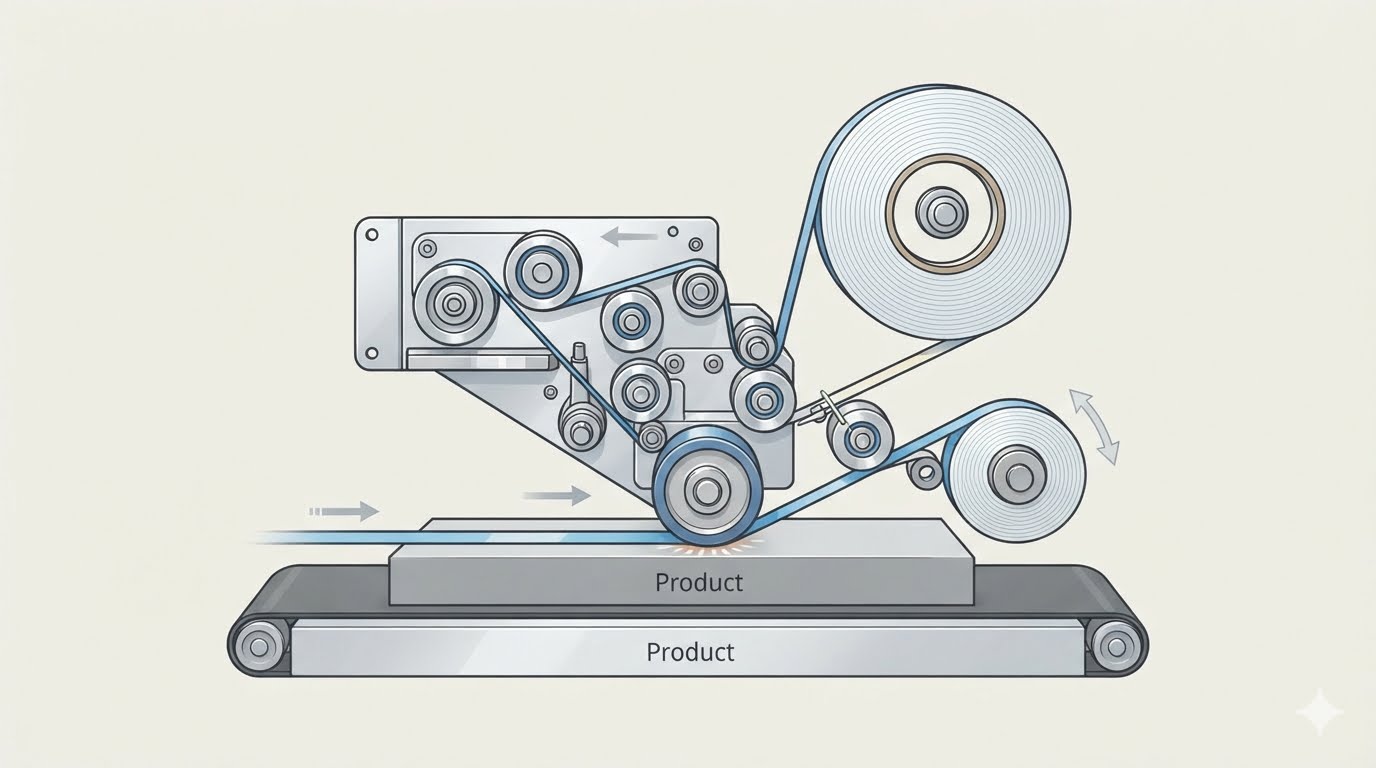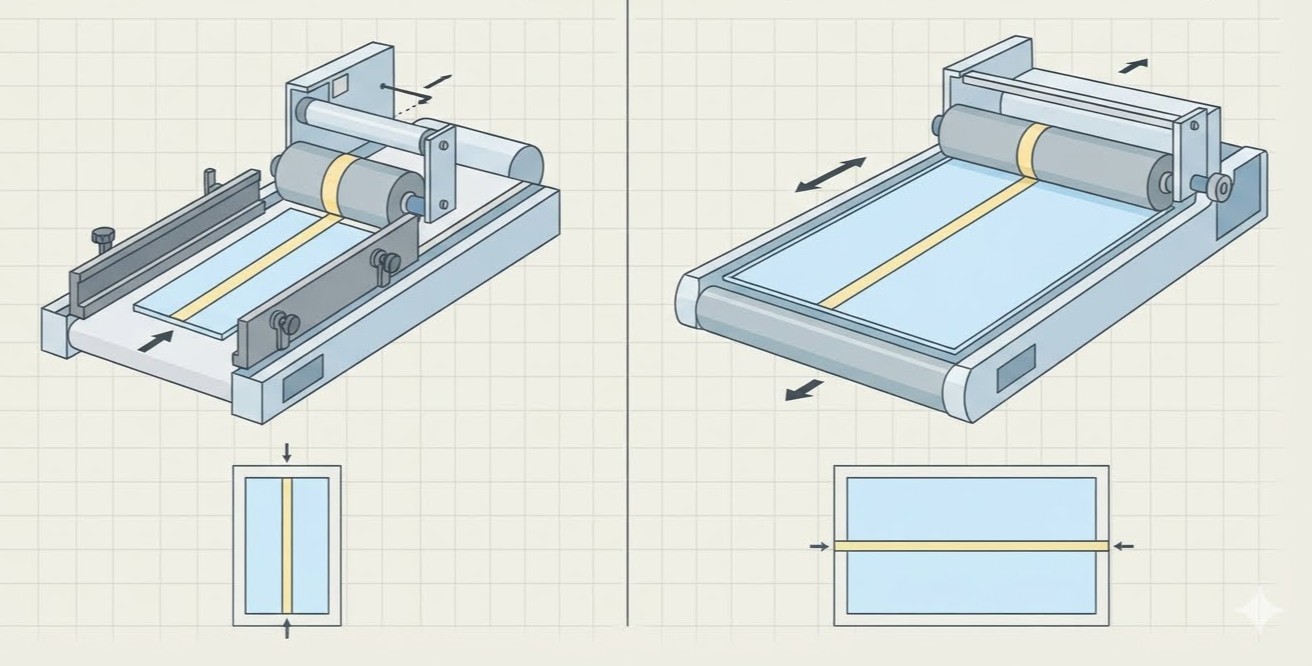


Tape that lands off its mark is often a feeding problem before it is a tape problem. A double-sided tape pasting machine places the tape at a position fixed by the pasting head, so the result depends on where the sheet is when it passes that head. When the sheet is small, the room for error shrinks, and the way the sheet is fed and positioned becomes the main factor in placement accuracy.
Why Small Sheets Leave Less Room for Error
A small sheet has a limited contact area with the feeding belt and very little weight to hold it steady. Even slight variations in friction can turn it away from the intended path, and a sheet that enters the pasting position at a slight angle will receive a tape strip at the same angle. On a large sheet, the same angular error spreads over a wide surface and may stay within tolerance. On a small sheet, the tape sits close to the edge or to a fold line, so a minor shift can place it partly outside the intended area.
Material also plays a part. Thin card, coated paper and sheets carrying dust from cutting or printing each present a different friction condition to the belt. A feeding system tuned for one board may behave differently on another, and the difference is most visible on small formats, where there is less surface to share the load. Spacing between consecutive sheets matters as well. Uneven gaps lead to uneven timing at the pasting head, which shows up as tape strips that start at slightly different distances from the sheet edge.
Where Conventional Feeding Methods Fall Short
Many tape pasting lines still depend on feeding components that lose consistency over time. Belts wear and harden, and the surface that once gripped the sheet reliably begins to slip. On small sheets, this slippage appears first because there is no spare traction. Operators then compensate by adjusting guides and speed during production, which produces results that differ from shift to shift.
Manual preparation adds another source of variation. Stacks that are not squared before loading, sheets that are fanned unevenly, and settings that are changed by feel after every size change all introduce differences that the machine cannot correct later. Pasting head adjustment can be a further obstacle. When the head has no clear reference for repositioning, moving it for a new size takes longer, and the setting is harder to repeat on the next run. The outcome is a process that works for a large run of one size but struggles with the short runs and frequent changeovers common in small-format packaging.
How Feeding and Positioning Work Together
Accurate tape placement is a sequence, and each stage depends on the one before it. The feeding system carries the sheet forward at a steady speed and in a straight line. The sheet reaches the pasting position in a defined orientation and at a regular interval from its neighbors. The pasting head, set to the required lateral position, applies the tape. If the first stage is unstable, no adjustment at the head can fully recover the result.
For this reason, the practical sequence for small sheets starts upstream. First, confirm that the stack is square and the sheets are free of dust. Then check that the belt grips evenly across the sheet width, with a feeding speed suited to the format. Only after that should the pasting head position be set and verified with a few trial sheets. Measure the distance from the tape to the sheet edge on several sheets from the start and end of a short run, since drift between the first and last sheet reveals feeding instability more clearly than a single sample does.
| Factor | Effect on Small Sheets | Adjustment Direction |
|---|---|---|
| Belt grip | Slippage causes skew and uneven spacing | Keep belts clean and check wear |
| Sheet surface | Dust or coating alters friction | Clean the sheet or adapt the feeding setup |
| Head position | Tape sits too close to the edge | Reposition and verify on several sheets |
| Tape or size change | Settings drift between jobs | Recheck placement after every change |
What Our Machines Bring to Small-Sheet Work
Our automatic multi-head double-sided tape pasting machines use a feeding mechanism built around high-friction belts. The design aims to move sheets smoothly and deliver them in an orderly manner, which gives small sheets the grip they need to stay on their intended path. This matters most for card boxes, envelope bags and document bags, where tape strips are placed close to edges or flaps and where the sheets are often light and compact.
Frequent size and tape changes are common in small-format work, so changeover design has a direct effect on how often settings can be verified. The adhesive heads on our machines rotate with a single key, which makes replacing the tape quick and straightforward. On our triangle tape machines, the adhesive head moves left and right with a handwheel against a steel ruler, giving operators a visible reference for repositioning. Fast tape changes and a clear positioning reference both encourage operators to recheck placement after each change, which supports consistent results across short runs.
The output side is equally important. Our machines can be fitted with a straight-out fish-scale collection belt that runs independently and delivers finished sheets in a tidy overlap. Staff can inspect tape placement as the sheets arrive and catch a drift early, before a whole batch is affected. An optional counting function is available for batch tracking. For small sheets, which are easy to scatter or misalign at the exit, orderly collection also protects the quality achieved at the pasting head.
Matching a Machine to Your Small-Format Products
Small-format products have different needs, so the right machine depends on the sheet and the job. Our automatic multi-head series handles long-strip double-sided tape on cardboard, card boxes, corrugated cartons, envelope bags and document bags, and our triangle tape series covers corner and flap applications. Several working widths are available in each series, which allows the machine to be matched to the format range of the products you run.
As a manufacturer, we design our double-sided tape pasting machines around the factors that decide small-sheet results: grip at the feeding belt, quick tape changes, a clear head positioning reference and orderly sheet collection. If your products include small cartons, cards or envelope-style bags, send us your sheet size range, board type and tape specification. Our team will suggest a machine configuration suited to your product, so that steady feeding and precise tape placement become a routine part of your production.
 Application Scenarios