


A corrugated folder gluer machine performs many small actions in a few seconds. A blank is fed, positioned, glued, folded, joined and delivered. Pneumatic parts handle the quick linear movements. Electrical parts sense, decide and drive. The quality of the finished carton depends on how well the machine's components work together.
Where Coordination Breaks Down in Real Production
Timing is one of the main challenges. Every pneumatic action takes time: a signal is sent, a valve opens, and compressed air moves the mechanism. Glue application also involves a delay between the control signal and the moment adhesive reaches the board. When machine speed changes or a board shifts position, the timing must adjust accordingly. Otherwise, glue may land outside the intended area.
Air supply is another important factor. Adhesive delivery often relies on compressed air, so stable pressure is essential for consistent application. The system must maintain suitable pressure to deliver adhesive evenly and move pneumatic cylinders smoothly. Pressure fluctuations can lead to uneven glue lines and inconsistent mechanical movements.
Traditional machine setups can create further difficulties. Pneumatic and electrical components may require separate adjustments, often relying on operators to make corrections during changeovers. Without coordinated control and repeatable settings, the results can vary between operators and production runs.
These issues affect different carton applications in practical ways. Large appliance cartons may be stacked five or more units high, making accurate positioning and firm joints important for stable stacking. Food cartons moving through automated packing lines need consistent dimensions to prevent problems during conveying and palletizing. Printed gift cartons also require careful glue placement, as adhesive applied in the wrong position can leave marks on visible surfaces and affect the finished appearance.
What Each Group of Components Does
The components in a folder gluer serve different purposes, but they need to work together to keep production running smoothly.
Pneumatic components, mainly cylinders and solenoid valves, control movements that need to be quick and consistent. They are commonly used for actions such as pushing, pressing and positioning boards, where a straightforward mechanical movement is required.
Electrical control components manage machine operation and settings. The PLC coordinates the programmed sequence, while the touch screen allows operators to adjust production parameters. Relays and contactors control electrical circuits, and frequency converters regulate motor speed to suit different operating requirements.
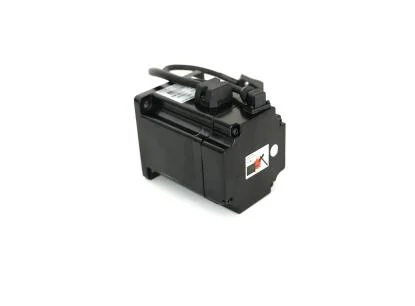
Sensors and drive components help maintain accurate board positioning and movement. Photoelectric sensors detect board presence and position, servo motors control belt movement, and adjusting motors move the guide plates to accommodate different carton sizes.
Each group has a specific role, but reliable production depends on how these components respond to one another. When sensing, movement and control are properly coordinated, the machine can maintain more consistent feeding, folding and gluing throughout a production run.
Why Coordination Matters More Than Any Single Part
At the splicing section, components must work in sequence to join two boards accurately. A sensor detects the board position, the PLC coordinates the next actions, and servo-driven belts guide the boards into place. The pressing mechanism holds them steady during gluing. If any step falls out of sync, the joint may shift or the glue may miss its target.
Reliable components alone cannot guarantee consistent results. Modern folder gluer machines combine PLC control, touch-screen operation and electric adjustment to simplify setup and changeovers between carton sizes. Coordinated controls help operators adjust settings and maintain stable production.
Clean, dry compressed air, regular maintenance, accurate blanks and suitable adhesive also matter. When these factors work together, the machine can maintain accurate splicing and consistent gluing.
How Our Machine Puts These Components to Work
Our corrugated folder gluer machine is built around a PLC and touch-screen control. Output, speed and counting are set in one place. This helps food carton makers whose customers run automated packing lines, because every carton comes off the line in the same form.
The guide plates are driven by electric leading screws with a memory function. A repeat order can be recalled from stored settings. For printed gift cartons that return each holiday season, this keeps the folding result the same from year to year. Operators do not have to rebuild each setting by hand.
At the splice, servo-driven belts and photoelectric guidance work together with the pressing function and the hot and cold double coating. For large appliance cartons, this combination supports accurate alignment and a firm seam. The machine does not choose the board grade, carton style or adhesive. Those remain decisions for the carton maker. Its job is to carry out the chosen design in a repeatable way.
The gluing section applies adhesive with mechanical rollers. It can use hot glue or cold glue, and a spray glue system is available as an option. Stable suction feeding at the entry and regular folding and patting at the exit complete the sequence.
Reliable Production with Our Corrugated Folder Gluer Machine
Reliable production depends on how well pneumatic parts, electrical controls, sensors and servo drives work together. In our fully automatic two-piece corrugated folder gluer machine, these components coordinate feeding, splicing, folding and gluing throughout the production cycle. Recallable settings also make repeat orders easier to manage, reducing the need for repeated manual adjustments when switching between carton sizes.
 Application Scenarios