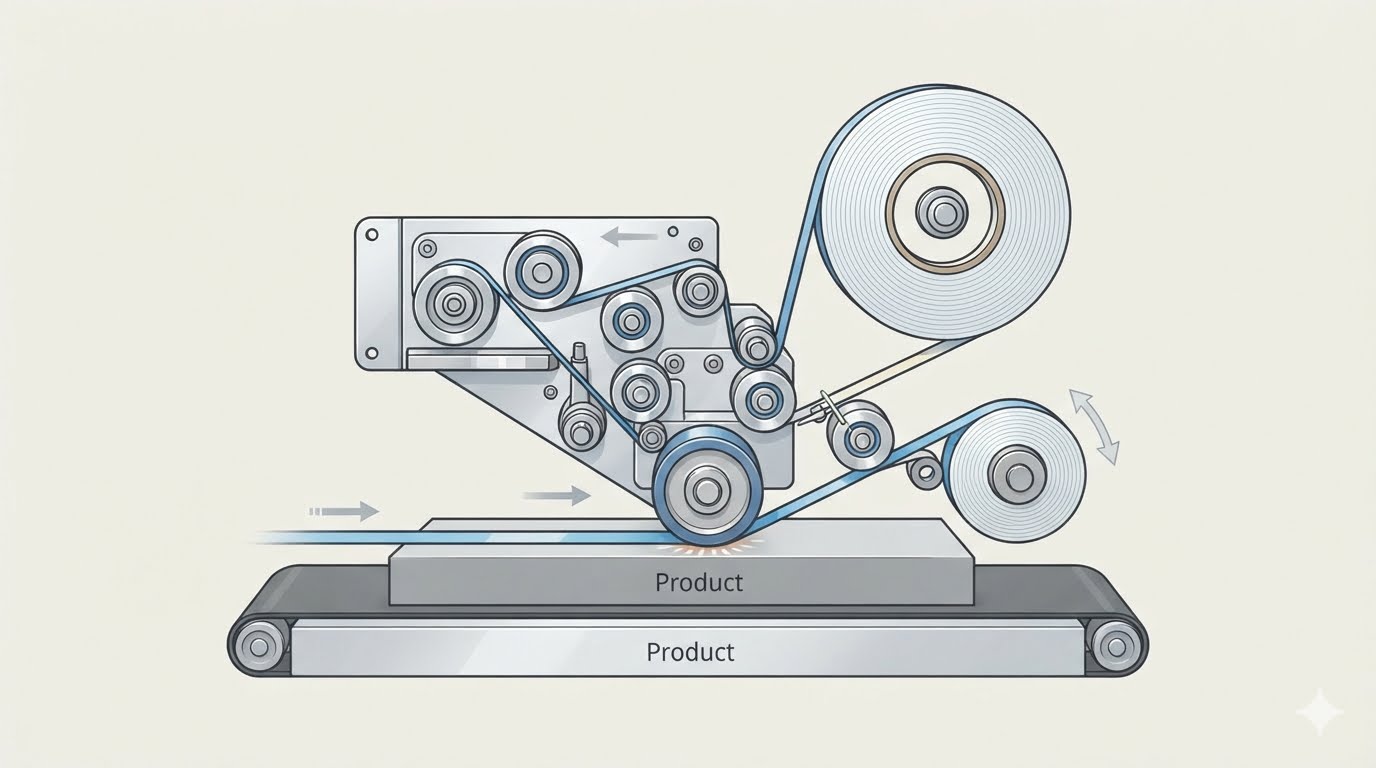


The accuracy of a double-sided tape applicator depends on how well its feeding belts, pasting heads and conveyor sections stay aligned during operation. These components are mounted on the machine frame, which supports their relative positions as sheets pass through the machine. Over time, frame rigidity, mounting stability and wear can all affect how consistently the machine maintains its tape placement settings during production.
Why the Frame Sits Behind Every Placement Result
Tape placement depends on a chain of positions. The sheet is gripped by the feeding belt, carried along the conveyor and passed under the pasting heads, where the tape is laid at a set distance from the edge. If any link in this chain moves, the strip moves with it. The frame is the common reference for all of them, so even small changes in its condition show up at the tape.
Vibration is the most direct influence. A frame that flexes or resonates under load lets sheets shift slightly as they travel, and the effect grows with running speed. Looseness is the slower one. Fasteners that work free, guide surfaces that wear and mounting points that settle all change the relationship between feeding and pasting by small amounts. Each change is too small to notice on a single sheet. Over weeks, they accumulate into tape strips that sit a little further from the edge than the product drawing allows.
Installation conditions play a part as well. A machine standing on an uneven floor carries uneven loads through its frame, and the belts and heads that were aligned at the factory may no longer sit in the same relationship at the customer's site. Weight and rigidity help a machine resist these influences, but they cannot replace careful placement and leveling.
How Long-Term Drift Usually Shows Up
Drift rarely announces itself. It appears first as a slight widening of the spread in tape position, with a few sheets in a batch landing closer to the edge than the rest. Operators compensate by adjusting head position, and the adjustment hides the underlying cause. Weeks later, the same compensation is needed again, and the head setting no longer matches the value recorded for that product.
Wear contributes in the same quiet way. Belts lose grip gradually, and small and light sheets are the first to show it. Dust and adhesive residue build up on rollers and guides, changing friction and alignment. When these effects combine with a frame that has settled or loosened, the machine becomes harder to set and less repeatable, even though nothing has visibly failed. The cost appears as more first-sheet adjustments, more rework and a growing gap between recorded settings and real behavior.
Design Features for Stable Long-Term Operation
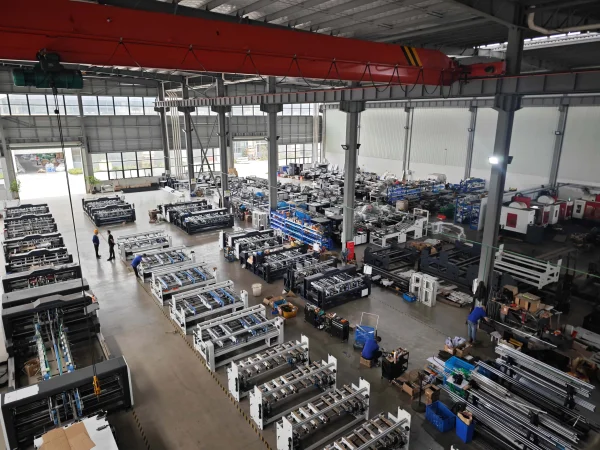
Our automatic multi-head double-sided tape pasting machines are designed for continuous production, with the frame supporting the feeding, pasting and conveying sections as they work together. Frame rigidity and secure component mounting help maintain the alignment of these sections during operation. For plants processing large batches of envelope bags and document bags, this structural stability provides a consistent foundation for tape application throughout a production run.
The feeding system plays an equally important role. High-friction belts move sheets forward and help maintain a consistent feeding path beneath the pasting heads. When applying long strips along the edges of card boxes, gift boxes and corrugated cartons, stable sheet travel helps keep the tape aligned with the intended position. The multi-head configuration also allows several strips to be applied in one pass, reducing repeated handling and re-feeding. Because all heads work from the same sheet feed, their relative positions can be maintained through a common setup.
Control and adjustment features support repeatable production across different orders. PLC control coordinates feeding, tape application and collection, keeping these operations synchronized during a run. The adhesive head rotates at the press of a key, and tape changes take about 30 seconds, helping reduce changeover time. On our triangle tape machine, operators can also adjust the adhesive head horizontally using a handwheel and steel ruler. This visible reference makes it easier to set and reproduce tape positions when switching between product formats.
Collection and inspection provide another opportunity to identify placement deviations. The straight-out fish-scale collection belt arranges finished sheets in an overlapping sequence, allowing operators to check tape position as sheets leave the machine. An optional counting function helps verify quantities for orders with fixed batch counts. Together, these features support quality checks for long tape strips on card boxes and cartons, as well as easy-tear tape on envelope bags and document bags.
Long-term performance depends on more than the machine frame alone. Stable feeding, secure component mounting, repeatable head adjustment and regular inspection all contribute to consistent operation. By combining these elements in one production system, our machines help reduce unnecessary handling, simplify changeovers and make tape placement easier to maintain across repeated production runs.
Built for Consistent Production Over Time
Long-term machine performance depends on sound construction, accessible maintenance points and adjustments that can be repeated accurately. Feeding belts should be easy to inspect and replace, while position settings should have clear references for product changeovers. The relationship between feeding, pasting and collection sections also matters, as each contributes to the machine’s overall operating consistency.
Our automatic multi-head double-sided tape pasting machines combine high-friction belt feeding, PLC-coordinated operation, convenient tape changes and orderly sheet collection to support a consistent production process. Available in different series and working widths, they handle applications ranging from card boxes and corrugated cartons to envelope bags and document bags. By matching the machine configuration to your sheet dimensions, tape layout and production volume, we can help you choose a setup suited to your day-to-day manufacturing requirements.
 Application Scenarios