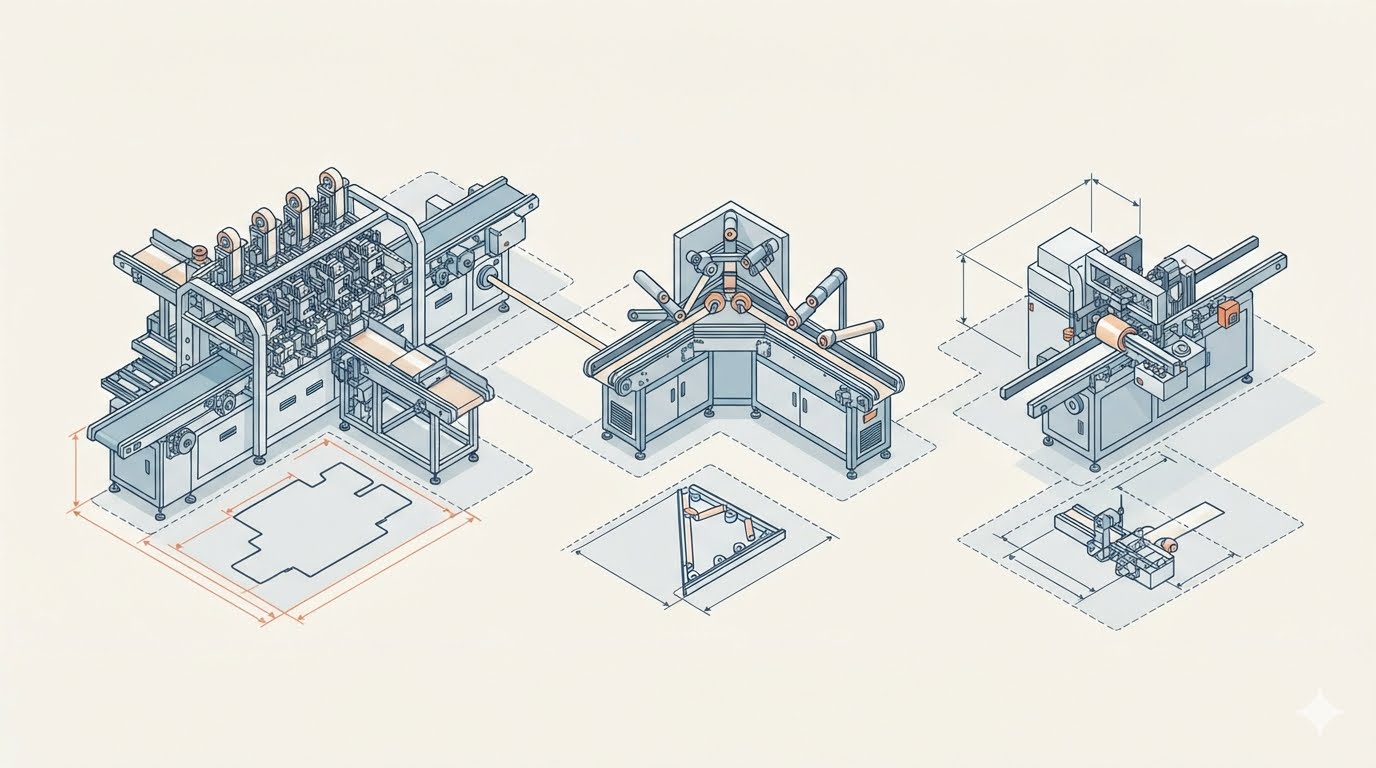


USB drives and charging cables are often displayed on printed packaging cards that carry product information, branding and barcodes. The card may also hold a small tray or secure the product directly to its surface. Since these packages are commonly hung on retail pegs or arranged on display racks, the product needs to remain firmly in place during handling and display. A double-sided tape applicator helps prepare these cards by applying adhesive tape in consistent positions, making product attachment easier and more repeatable during packaging.
What Packaging Cards Ask of Tape Placement
A packaging card has little spare area. The printed artwork takes most of the surface, and the bonding zone must fit between the logo, the text, and the window or tray opening. Tape that lands a few millimetres off its mark can run into a printed area or fall short of the part it should hold.
Position also affects how the product looks on the shelf. A USB drive that sits slightly crooked on one card and straight on the next makes a display row look uneven. Cables show the same problem more clearly, because a coiled cable follows the line of the tape beneath it. Consistent tape placement is therefore both a mechanical matter and a visual one.
Product variety adds pressure. Digital accessories change quickly, and a single brand may run cards for several storage sizes, connector types, and cable lengths. Each version can have its own card size and bonding layout. Order quantities often differ from one release to the next, so the taping step has to handle changes without a long reset.
Hand Taping, Glue Dots, and Full Automation: Three Compromises
Hand taping is the most common starting point. An operator peels tape from a roll, trims it, and presses it onto the card. Small cards are awkward to hold, and the tape drifts out of line as fatigue builds. Output depends on the individual, and it is hard to hold the same pace across a full shift.
Glue dots and liquid adhesive avoid the roll of tape but bring other concerns. Adhesive can spread past the intended area and soil the printed face. It may also reach the product casing or the cable jacket during mounting. Liquid systems often need a short setting period, which delays the packing steps that follow.
Fully automatic taping lines solve many of these points, but they are built for long, stable runs. When a plant switches between many card formats in moderate quantities, repeated changeovers can reduce the benefit.
| Method | Tape Position | Card Surface | Format Changes |
|---|---|---|---|
| Hand taping | Varies by operator | Clean if handled with care | Quick, but slow per piece |
| Glue dots or liquid adhesive | Moderate | Risk of spread and marks | Needs setting time |
| Manual-feed tape applicator | Repeatable | Clean, no wet adhesive | Adjusted by hand |
Feeding Cards by Hand, Letting the Machine Place the Tape
A manual double-sided tape applicator splits the work between the operator and the machine. The operator loads each card onto the feed table. The machine carries it forward, lays the tape at the set position, and releases it for the next stage. Tape length, line, and spacing are set once and then repeat from card to card.
This division suits accessory packaging well. The operator still sees every card, so a misprint or a damaged blank can be removed before it receives tape. The machine takes over the part that is hardest to do by hand, which is placing a straight strip at the same point each time.
At the mounting station, the next step is quick. The operator removes the release liner and presses the product, tray, or insert onto the exposed adhesive. No glue needs applying and no drying time is needed. Because the adhesive is carried on a tape of fixed width, it stays inside its own strip, which keeps the card face and the product surface free of marks.
Matching Machine Capabilities to Accessory Packaging Work
Each capability of our manual double-sided tape applicator has a counterpart in digital accessory packaging.
Placement accuracy is about ±1 mm. On a small card where the bonding area is limited, this keeps the tape inside the space the layout designer allowed. It also keeps the product in the same position across a batch, which supports a tidy display on the shelf.
The machine handles card and sheet sizes from roughly 100 × 140 mm up to about 700 × 600 mm. Compact cards for a single USB drive and larger sheets for multi-cable sets can run on the same equipment. A minimum distance of about 10 mm between two tape ends on one piece also allows short strips in tight layouts, such as a card holding a drive and a cable side by side.
Speed can be adjusted from about 10 to 90 m/min. A slower setting is useful when a new card design is being checked or when thicker board needs careful guiding. A faster setting suits repeat orders once the layout has been confirmed. Accessory brands frequently launch updated versions, so the same machine can serve both early sample runs and later volume production.
Manual loading also helps with frequent changes. When a new card format arrives, the operator adjusts the tape position and continues with the next batch. There is no need for a lengthy reconfiguration of a larger line. The machine stands on a footprint of around 2000 × 1500 × 1600 mm and runs on a 220 V supply, which fits a standard packaging workshop.
A Manual Tape Pasting Machine for USB Drive and Cable Packaging
A manual tape pasting machine offers a practical solution for applying double-sided tape to USB drive and cable packaging cards, especially for production runs involving different card sizes and product designs. With manual feeding, operators can position each card, monitor material alignment and switch between formats without the complexity of a fully automated line. The machine applies tape at consistent positions, reducing repetitive hand application and helping keep printed cards clean and ready for product assembly.
Our manual double-sided tape pasting machine is designed for packaging operations that need reliable tape placement, straightforward operation and flexibility across different orders. It can also be used for other flat packaging materials that require accurately positioned adhesive strips. Share your card dimensions, board material and tape layout with our team, and we can help confirm whether the machine suits your application and production needs.
 Technical Encyclopedia