


Optimizing a manufacturing facility requires careful consideration of production capacity, equipment layout, and available workspace. In packaging, printing, and electronics assembly industries, adhesive tape processing machine dimensions directly influence production flow, installation planning, and overall operational efficiency. Different machine configurations are designed for specific processing requirements, with variations in working width, structural design, and automation level affecting the required floor space and factory arrangement.
The Operational Impact of Equipment Footprints in Tape Processing
Industrial workshops frequently encounter spatial bottlenecks when introducing new processing lines. Conventional tape application machinery often relies on bulky component designs with complex, unoptimized mechanical linkages. These oversized sub-assemblies expand the overall machine width and height, occupying excessive floor space and compressing vital operator clearance zones.
From a technical perspective, poorly integrated mechanical designs increase the risk of physical interference and structural vibration during continuous operations. When a machine operates at high speeds, excessive bulk in moving parts can lead to mechanical deflection. This deflection directly impairs accuracy, manifesting as tape misalignment, edge curling, or uneven pressure application. Furthermore, rigid, non-modular frames prevent manufacturers from scaling their operations.
Engineering Space Efficiency Through Compact Component Design
Modern engineering addresses these footprint challenges by focusing on high-integration, modular components. Developing compact tape application heads and integrated gluing assemblies allows manufacturers to shrink the overall physical machine chassis without sacrificing operational rigidity.
Streamlining the structural configuration of core components directly optimizes mechanical transmission paths. Shorter drive lengths minimize cumulative tolerance build-up and reduce structural vibrations during high-speed production cycles. Consequently, position deviation during double-sided tape lamination and release paper application is consistently maintained within strict engineering limits, usually between plus or minus zero point two millimeters to zero point five millimeters. Refining internal components empowers factory planners to deploy multi-head synchronized operations within a highly controlled frame. Facilities can maximize throughput per square meter, eliminating the need to expand physical building structures to accommodate high-volume production lines.
Technical Specifications and Dimensional Analysis of Our Double-Sided Tape Machines
| Equipment Designation | Standard Dimensions (L × W × H mm) | Layout Applications and Spatial Planning |
|---|---|---|
| Automatic Multi-Head Double-Sided Tape Machine | 4500 × 1400 × 1400 4500 × 1800 × 1400 4500 × 2450 × 1200 4500 × 2750 × 1400 | Designed for continuous production environments, with multiple width options available to match different working areas, material sizes, and factory layouts. |
| Triangle Double-Sided Tape Machine | 4750 × 1700 × 1500 2200 × 900 × 1600 | Features a compact configuration suitable for triangular tape processing and production areas where space utilization is an important consideration. |
| Automatic Glue Scraping and Release Paper Pasting Machine | 5000 × 1340 × 1650 | Integrates glue scraping and release paper application processes in one system, requiring sufficient installation space for stable material feeding and operation. |
| Manual Double-Sided Tape Machine | 2000 × 1500 × 1600 | Compact structure designed for flexible small-batch processing and easy integration into various workshop environments. |
Floor Layout Integration and Longitudinal Optimization
Machine dimensions play an important role in factory layout planning, especially when different adhesive tape processing machines are installed within the same production area. The automatic multi-head double-sided tape machine series is available in multiple width configurations, ranging from approximately 1400 mm to 2750 mm, while maintaining a similar overall length of around 4500 mm. This dimensional flexibility allows manufacturers to select a suitable machine size according to production requirements, material specifications, and available installation space.
For adhesive processing applications that integrate glue scraping and release paper application, the automatic glue scraping and release paper pasting machine features an overall length of approximately 5000 mm with a compact width of 1340 mm. The extended machine structure provides sufficient space for different processing sections, including adhesive application, material positioning, and release paper attachment. Its relatively narrow footprint helps optimize workshop arrangement while maintaining convenient operation and maintenance access.
Mechanical Stability and Frame Construction Principles
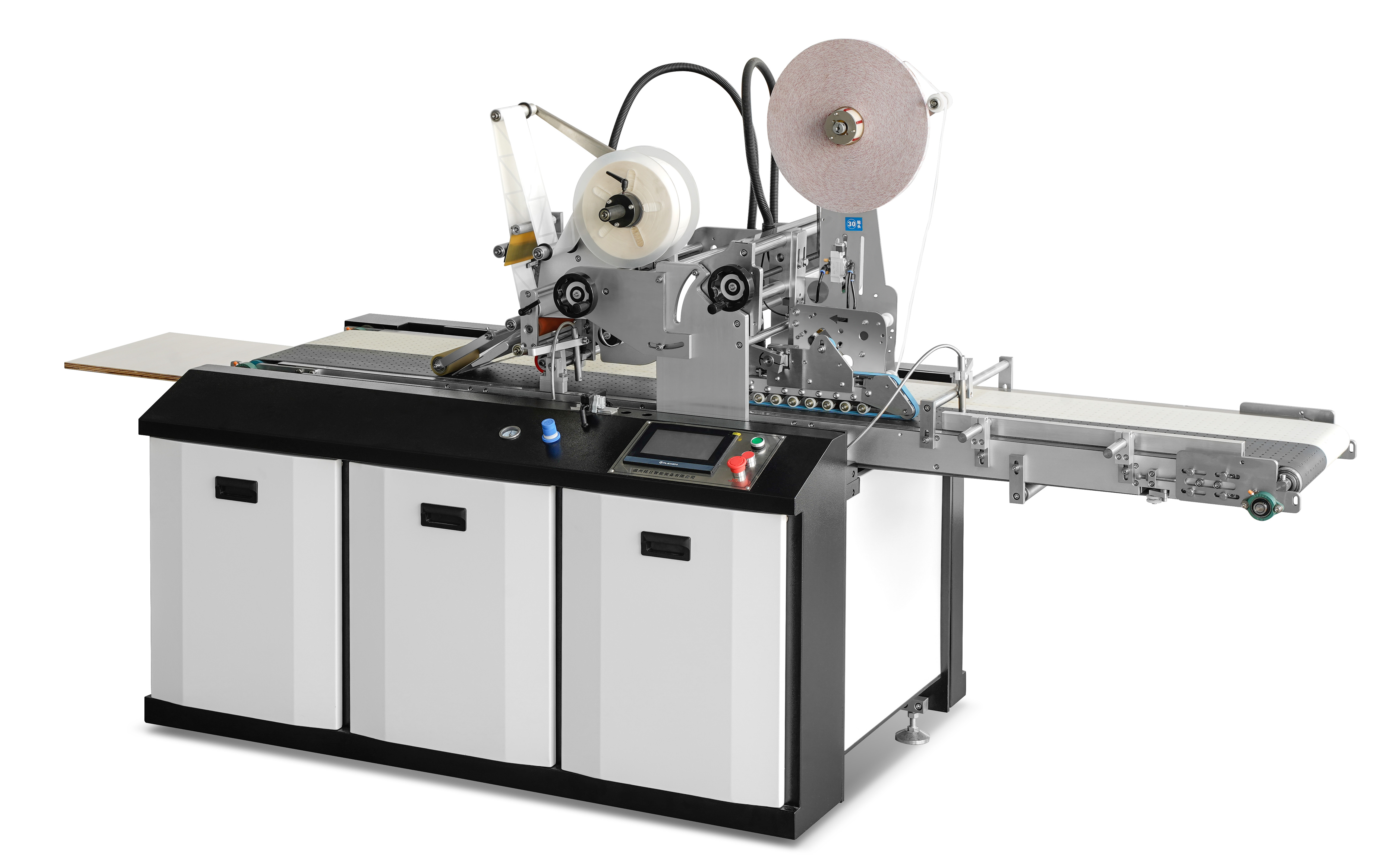
Preserving structural accuracy across machinery lengths of four to five meters requires specific structural engineering principles. Compact external dimensions must never compromise the weight distribution and structural rigidity of the equipment base. High-performance tape processing machinery solves this by using heavy-duty, one-piece welded steel frames that establish a low center of gravity.
A rigid structural foundation effectively dampens the low-frequency vibrations generated by rapid material acceleration, heavy unwinding rolls, and pneumatic tape cutting strokes. By controlling these structural oscillations, the machine ensures uniform pressure across the tape width, preventing localized delamination and preserving consistent edge tracking over extended production shifts. A robust frame also prevents long-term structural twisting, keeping the winding shafts perfectly aligned and preventing uneven material web tracking as the equipment ages.
Customization Parameters and Variable Production Needs
Standard machine dimensions provide a reference for factory planning, but different production environments may require adjustments based on available installation space, material specifications, and processing requirements. Factors such as workshop layout, production line arrangement, and operator access areas should be considered when selecting the appropriate adhesive tape processing machine configuration. We can provide different machine width options, working configurations, and auxiliary equipment arrangements to match specific production needs.
Optimized Equipment Dimensions for Efficient Production Planning
Selecting the right adhesive tape processing machine dimensions is an important factor in achieving efficient factory layouts, stable production processes, and convenient equipment operation. Beyond the basic machine footprint, factors such as working clearance, material feeding space, maintenance accessibility, and future production expansion should also be considered during equipment planning.
Our adhesive tape processing machines are designed with practical industrial requirements in mind, offering different configurations to match various production environments. The product range includes automatic multi-head double-sided tape machines, triangle double-sided tape machines, automatic glue scraping and release paper pasting machines, and manual double-sided tape machines, each developed with optimized structures for different application needs.
With flexible dimensional options, reliable mechanical designs, and carefully planned component layouts, our machines can be integrated into different factory spaces while maintaining efficient operation and easy maintenance. We provide professional equipment recommendations based on production requirements, helping customers select suitable machine configurations and build more efficient adhesive tape processing solutions.
'/%3e%3cpath%20id='Rectangle%20455'%20d='M0%2011.1428H5.57143L22.2857%2052H0V11.1428Z'%20fill='%23CE221D'/%3e%3c/g%3e%3cdefs%3e%3clinearGradient%20id='paint0_linear_888_3811'%20x1='0'%20y1='26'%20x2='401.607'%20y2='26'%20gradientUnits='userSpaceOnUse'%3e%3cstop%20stop-color='%23153B8A'/%3e%3cstop%20offset='1'%20stop-color='%23153B8A'%20stop-opacity='0'/%3e%3c/linearGradient%3e%3c/defs%3e%3c/svg%3e) Products
Products
'/%3e%3cpath%20id='Rectangle%20455'%20d='M0%2012H6L24%2056H0V12Z'%20fill='%23CE221D'/%3e%3c/g%3e%3cdefs%3e%3clinearGradient%20id='paint0_linear_769_2773'%20x1='0'%20y1='28'%20x2='432.5'%20y2='28'%20gradientUnits='userSpaceOnUse'%3e%3cstop%20stop-color='%23153B8A'/%3e%3cstop%20offset='1'%20stop-color='%23153B8A'%20stop-opacity='0'/%3e%3c/linearGradient%3e%3c/defs%3e%3c/svg%3e)


