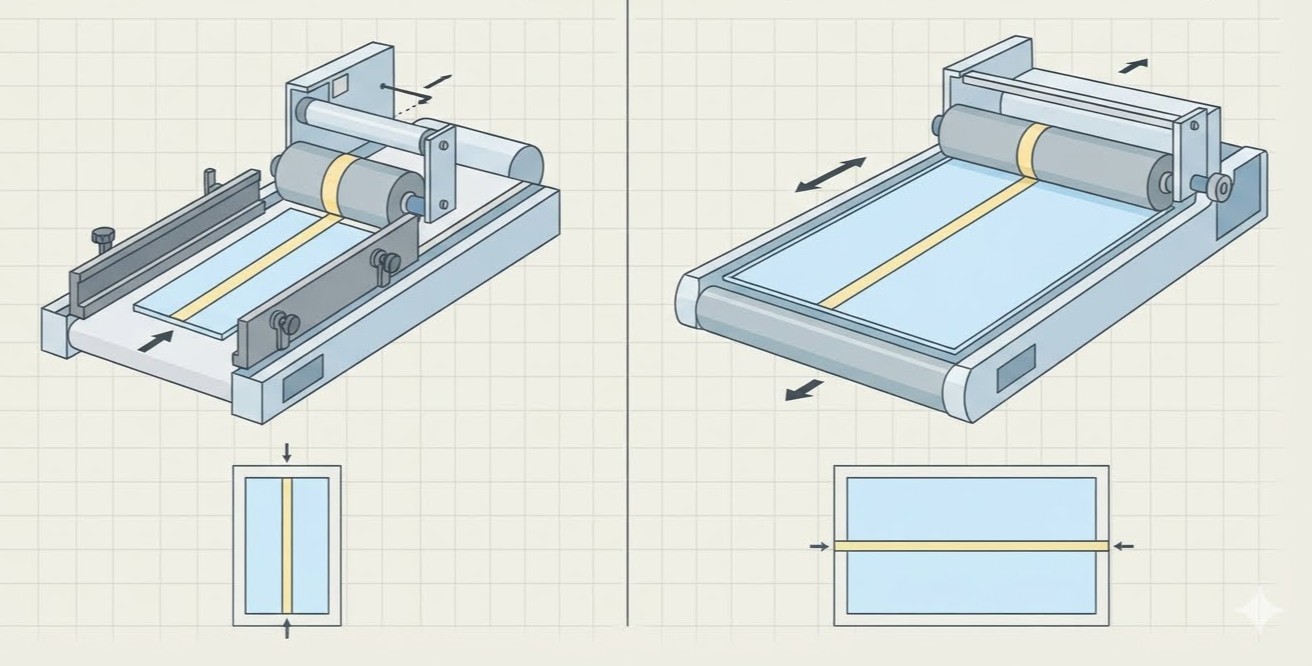


Paper and board are taking over closure jobs that plastic once handled, and packaging regulation is one of the forces behind the move. The EU’s PPWR, which has applied since 12 August 2026, is the most visible example. For the converting plant, the practical effect appears at the pasting station, where the tape that replaces a plastic fastener must be placed accurately and applied efficiently.
What Plastic Reduction Changes in Closure Design
PPWR is often summarized as a plastic ban, but the regulation is broader and more measured than that. It combines packaging minimization, recyclability criteria, recycled-content requirements for plastic packaging, labeling and producer responsibility, with certain requirements phased in over several years. Companies are therefore reviewing their whole packaging portfolio, not only their plastic components, and many are asking whether a plastic closure, bag or wrapper can be replaced by a structure made of paper or board.
Double-sided tape closures are one of the common answers. Envelope-style bags, document bags, card boxes and cartons can be closed with a long strip of tape or an easy-tear strip, with no plastic zipper, film sleeve or separate fastener. The tape itself remains a choice for the packaging owner, and its recycling behavior should be assessed with the tape supplier and the applicable rules. What the move to paper changes for the converting plant is the work at the pasting station, since the sheets are different and so are the demands placed on tape position.
Why Paper Closures Ask More of the Pasting Station
Paper and board replace thin, flexible plastic with materials that are thicker, stiffer and less uniform. Corrugated board has flutes that can be crushed, coated stock changes the friction at the feeding belt, and heavier card resists the small corrections that a light film accepts. A machine tuned for one material can behave differently on the next, so feeding stability matters more when the range of stocks grows.
Position requirements also tighten. A paper closure often depends on a single tape strip to do the work that a plastic fastener did, so the strip must sit exactly where the design places it. On an envelope or document bag, an easy-tear strip close to the edge leaves little margin, and a strip that lands slightly off position can leave the flap unevenly closed or hard to open. On a carton, tape near a fold line must avoid the crease. These are placement problems before they are adhesive problems.
Order patterns shift as well. When brands redesign packaging, they often introduce several new formats at once, with different sizes, closure positions and tape widths. The result is more product variants and shorter runs, which puts changeover time at the center of the production plan. Quantity control becomes more important too, since small orders leave little room for shortfalls or surplus.

How Our Machines Answer the Shift to Paper
Our automatic multi-head double-sided tape pasting machines are designed for the materials and products that paper-based sealing involves. Our technical data covers rigid cardboard, card stock and E, B and C flute corrugated board, and our applications range from card boxes and cartons to envelope bags and document bags. The machine handles this variety through a few design choices that work together.
The first is the feeding system. A high-friction belt carries sheets forward smoothly and delivers them in an orderly way, which gives thicker stocks the grip they need and keeps sheets aligned as they reach the pasting heads. Under PLC control, feeding, tape pasting and collection run as one coordinated sequence, so the rhythm set at the start of a job holds across the run. For envelope and document bags with easy-tear tape, this steady delivery is what allows the strip to land consistently close to the edge.
The second is changeover. The adhesive head rotates at the press of a key, and a tape change takes about 30 seconds. For plants moving several products from plastic to paper at once, that speed makes short runs of many formats practical, since the time between jobs stays small. On our triangle tape machine, the adhesive head can also be shifted left and right with a handwheel against a steel ruler, which gives operators a visible reference when a new closure design places the tape somewhere different.
The third is the exit. A straight-out fish-scale collection belt delivers finished sheets in a tidy overlapping sequence, so tape position can be checked as sheets arrive and a drift can be corrected before the run is far advanced. An optional counting function supports batch quantity checks for orders that must match a fixed count. In a period when new paper structures are still being validated by customers, early visibility of placement and a reliable batch count reduce the risk of rework on first orders.
Paper Closures Need a Pasting Station That Keeps Up
The move from plastic to paper-based closures comes down to three practical demands at the pasting station. Thicker, stiffer stocks need steady feeding, a single tape strip needs to land in the same position job after job, and shorter runs of more formats need quick, repeatable changeovers. A machine that meets all three lets a plant adopt new paper structures without slowing its schedule.
Our automatic multi-head double-sided tape pasting machines are built around exactly these demands. A high-friction belt feeding system delivers cardboard, card stock and corrugated board smoothly, PLC control keeps feeding, tape pasting and collection in step, and the one-key rotating adhesive head brings a tape change down to about 30 seconds. At the exit, the fish-scale collection belt, with an optional count, returns finished sheets in a tidy order for inspection and packing. Together, these features suit the products our customers make, from cartons and card boxes to envelope bags and document bags.
As a manufacturer, we offer several series and working widths so the machine can be matched to your products. If your packaging is moving from plastic closures to paper, send us your sheet sizes, board type, tape specification and expected order pattern, and our team will suggest a configuration that fits.
 Application Scenarios