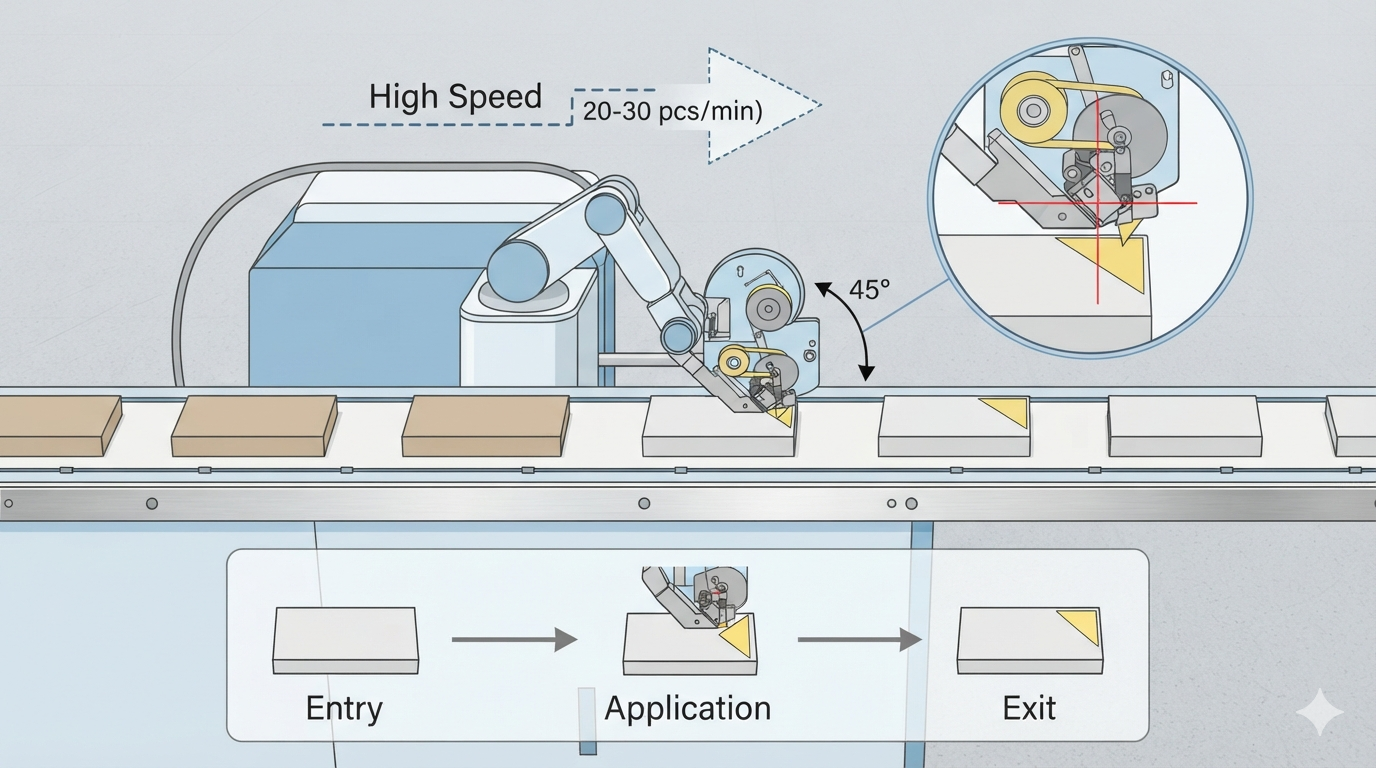


Calligraphy gift sets often combine brushes, ink sticks, inkstones and paper in one presentation box. These items vary in size, shape and weight, so the inner tray, paper liner and card supports must be positioned to fit the contents. Double-sided tape can secure these components before the box is assembled, making accurate placement important for both insert stability and the finished presentation.
Tape Application Requirements for Calligraphy Gift Boxes
Unlike standard shipping cartons that often use continuous adhesive strips along flaps or seams, calligraphy gift boxes may require small, localized bonding points. Tape can be used to secure an inner liner, hold a card divider in place or attach a support to the box structure. The exact positions depend on the insert design and the components being held.
Placement errors can affect the fit and appearance of the finished box. If an insert shifts during assembly, compartments may no longer align with the intended positions of the brushes or other accessories. Tape that extends beyond the designated bonding area may also be visible when the box is opened. Accurate application helps keep components aligned during assembly, although the final result also depends on the insert dimensions, board quality and adhesive compatibility.
Different contents create different retention requirements. A heavier inkstone may need a more substantial support than a lightweight brush, while paper accessories require a clean compartment that prevents unwanted movement. Tape placement and bonding area should therefore be determined by the box design rather than using the same arrangement for every gift set.
Limitations of Manual and Conventional Tape Application
Manual tape application can suit prototypes, custom boxes and small production runs. However, operators must place each piece individually, which makes output dependent on handling consistency. When many blanks require several small tape pieces, the repeated positioning process can increase labor time and produce variation across a batch.
Conventional tape machines designed for continuous strips address a different production need. They are useful for applying tape along longer bonding areas, but they may not be the most suitable choice when a box requires small pieces at specific points. Using continuous tape for localized bonds can consume more material than necessary and may leave adhesive outside the intended area.
Changeovers also affect productivity. Calligraphy gift boxes may differ in insert shape, compartment layout and tape position across product collections. When the layout changes, the tape application setup must be adjusted accordingly. Equipment that allows straightforward head positioning and tape replacement can help reduce preparation time between orders.
| Production factor | Manual application | Continuous-strip tape machine | Triangle double-sided tape machine |
|---|---|---|---|
| Small, localized bonding points | Flexible but labor-intensive | Better suited to continuous strips | Suitable for triangular tape pieces at designated points |
| Placement consistency | Depends on operator technique | Repeatable along configured paths | Repeatable when positioning and feeding are correctly set |
| Layout changes | Requires repeated manual repositioning | Depends on machine adjustment range | Head position can be adjusted for compatible layouts |
| Typical application | Samples and small batches | Long bonding areas and seams | Inserts, liners and components requiring localized bonds |
Packaging Expectations for Stationery and Cultural Gift Products
For calligraphy and stationery gift sets, the packaging protects the contents and contributes to the product's presentation. An aligned insert, clean interior and securely fitted components help create a consistent appearance across a product range. These details are particularly relevant when boxes are sold as gifts or customized for different collections.
Packaging suppliers may also handle several box designs in the same production schedule. Each design can require different tape positions or component layouts, making repeatable application important. A process based on defined machine settings can reduce dependence on manual placement, provided that the blank is fed consistently and the settings match the actual box design.
For short runs and customized orders, changeover efficiency matters alongside placement accuracy. Tape replacement and position adjustment should be considered when evaluating equipment, especially if the production schedule includes frequent changes in box size or insert configuration.
How a Triangle Double-Sided Tape Machine Supports Gift Box Production
A triangle double-sided tape machine is designed to apply triangular pieces of double-sided tape at designated positions on flat board or compatible packaging components. This application method suits box designs that require localized bonding rather than a continuous strip. Depending on the machine configuration, tape can be applied before the blanks are folded and assembled, allowing inserts and other components to be secured during subsequent production steps.
Position adjustment is important when working with different gift box layouts. The machine's tape head can be moved laterally using a steel ruler as a positioning reference, allowing the operator to align the application point with the required bonding location. The adjustment range and achievable placement accuracy depend on the specific machine configuration and production setup, so they should be checked against the dimensions of the actual box blank.
Tape replacement is another practical consideration. The adhesive head can be rotated to provide easier access during reloading, helping simplify the changeover process. For converters handling multiple gift box designs, convenient access to the tape head can reduce preparation effort when changing tape rolls or preparing the machine for another order.
The machine can also accommodate different component shapes within its supported application range, including small pieces and longer, narrow components where compatible. Before production, the required tape shape, dimensions, bonding surface and application positions should be checked to confirm that the machine suits the intended packaging design. Correct tape placement supports the assembly process, but it does not replace the need to select an adhesive compatible with the board and liner materials.
Where a gift box design requires both localized tape pieces and long continuous strips, different tape application methods may be needed. A triangle double-sided tape machine can handle the localized bonding points, while a multi-head tape pasting machine may be more appropriate for layouts that require several continuous strips. The choice depends on the tape geometry and the structure of the box, rather than on the product category alone.
Matching Tape Application Equipment to Gift Box Designs
The suitable machine depends on the number and location of bonding points, the required tape shape, the dimensions of the blanks and the frequency of layout changes. We manufacture double-sided tape pasting machines in different configurations, including triangle, multi-head, semi-automatic and manual models. Each configuration serves different tape application needs. For calligraphy supply gift boxes, a triangle double-sided tape machine is worth considering when the design relies on small, localized triangular tape pieces to secure liners, inserts or internal supports.
A high-quality triangle double-sided tape machine helps gift box manufacturers achieve more consistent tape placement, streamline changeovers and maintain a clean finish across different calligraphy gift set designs. We offer a range of double-sided tape pasting machines to suit different box structures and production requirements, helping manufacturers find a practical solution for reliable, efficient gift box packaging.
 Technical Encyclopedia