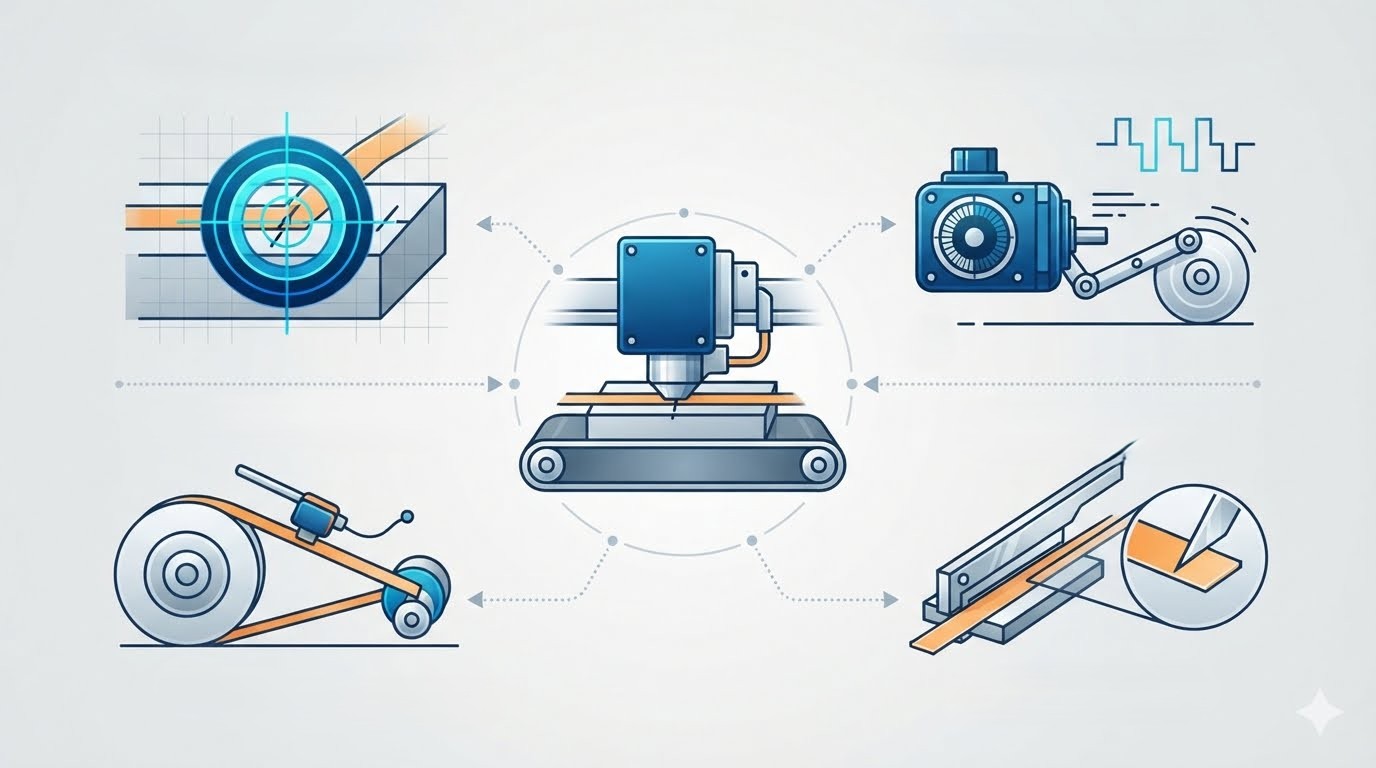


A single-head tape applicator places one strip of double-sided tape per pass. A multi-head machine carries several pasting heads and can place tape at more than one position during a single pass of the sheet. The difference looks simple, yet it reaches into position control, handling, scheduling and floor space. For products that need more than one strip, it often decides how smoothly an order moves through the plant.
What Single-Head Pasting Asks of the Operator
Many packaged products carry more than one tape strip. A carton may need a strip for the closing flap and another along a bonding edge. A gift box may need two or three strips at different positions. With a single-head applicator, each position requires its own pass. Operators load the stack, set the head for the first position, run the batch, then reset the head and run the same sheets again for the next strip.
Each pass brings its own handling. Sheets are picked up, stacked, carried and fed again, and every feeding cycle introduces a small variation in how the sheet enters the pasting position. The strips are therefore referenced to different feeding events, so the distance between them is only as consistent as the repeated alignment allows. On products where strips sit close to edges or folds, small differences accumulate and show up when the carton is formed.
The schedule feels the effect too. Intermediate stacks occupy floor space, and a batch cannot move on until every pass is complete. For short runs of many formats, the added steps lengthen the path from cut sheet to finished component, and the extra handling consumes labor that could go elsewhere in the plant.
How Multiple Heads Change the Process
A multi-head machine moves several of these steps into one. The sheet is fed once, receives its tape strips in the same pass and leaves the machine ready for the next stage. Three consequences follow from that design.
Handling drops, since the sheet is loaded and collected once instead of once per strip. Position consistency improves in principle, because all strips on a sheet are referenced to the same feeding event, and the spacing between them depends on the machine's head settings and not on repeated alignment. The flow also becomes more continuous, as feeding, pasting and collection form one sequence that is easier to plan and to staff.
Single-head machines keep a place in production. For products with one strip, small batches and a simple order book, a single head can do the job with less setup and a smaller footprint. The case for multiple heads grows with the number of strips per sheet, the size of the batches and the tolerance of the forming stage to variation in strip spacing.
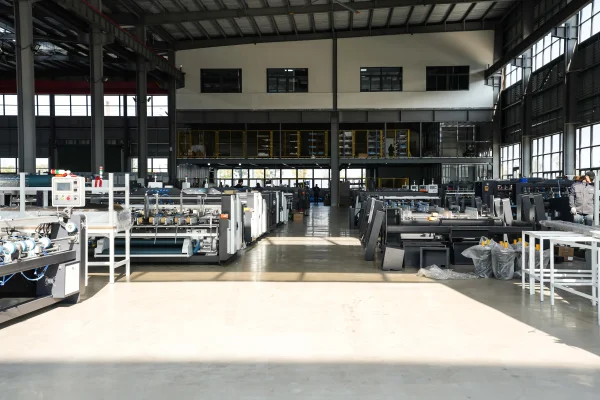
What Our Multi-Head Machines Add in Daily Production
Our automatic multi-head double-sided tape pasting machines are built for products that carry more than one tape position, and each feature serves a situation that plants with such products recognize.
Card boxes, gift boxes and cartons often combine several long strips on one blank. Pasting those strips in one pass removes the repeated loading, stacking and re-feeding that a single-head workflow would require. A high-friction belt feeding system supports this by carrying sheets forward smoothly and delivering them in an orderly way, so the sheet reaches the pasting heads in a stable condition and all strips share the same starting reference.
Envelope bags and document bags are usually produced in larger batches, with easy-tear tape close to the closing flap. Here the machine's rhythm matters. PLC control coordinates feeding, tape pasting and collection as a single sequence, so the pace set at the start of a run holds across the batch. Operators watch one connected process instead of passing stacks between separate stations, which keeps labor focused on supervision and not on shuttling sheets.
Plants with many formats care most about resetting. The adhesive head on our machines rotates at the press of a key, and a tape change takes about 30 seconds. On our triangle tape machine, the adhesive head can also be moved left and right with a handwheel against a steel ruler, giving operators a visible reference when a new product calls for a different tape position. With a single-head workflow, each additional position multiplies the number of resets. With our multi-head design, the resets sit inside one setup routine, and the time between orders stays short.
The exit completes the picture. A straight-out fish-scale collection belt carries finished sheets away in a neat overlapping sequence, so tape placement across all strips can be checked as the sheets arrive. An optional counting function supports batch quantity checks for orders with fixed counts. Because the sheet has already received every strip, one inspection point covers the whole product, whereas a single-head workflow needs checks after each pass.
Taken together, these features reduce the number of times a sheet is touched, keep the strips on a sheet tied to one feeding reference and shorten the distance between a cut blank and a finished component. They suit the products our customers make, from card boxes and cartons to envelope bags and document bags, and they give production planners a process with fewer steps to coordinate.
Why Our Multi-Head Machines Fit Multi-Strip Production
Putting several tape positions into one pass changes the whole rhythm of a job: fewer handling steps, strips tied to a single feeding reference, and a shorter path from cut blank to finished component. Our automatic multi-head double-sided tape pasting machines are built to deliver exactly that. A high-friction belt system feeds sheets smoothly, PLC control keeps feeding, pasting and collection in step, the one-key rotating adhesive head brings a tape change down to about 30 seconds, and the fish-scale collection belt, with an optional count, returns finished sheets in a tidy order for inspection and packing. Available in several series and working widths, the machines cover cardboard, card boxes, corrugated cartons, envelope bags and document bags, so the configuration can be matched to your product and not the other way around.
As a manufacturer, we put these details into every machine so that a multi-strip order runs as one steady, dependable process. If your products carry more than one tape strip, send us your drawings, sheet sizes, tape specifications and typical batch quantities, and our team will suggest a configuration that fits.
 Application Scenarios