


A double-sided tape applicator machine relies on a coordinated sequence of feeding, positioning, tape application and sheet collection. The feeding belts move sheets into position, pneumatic mechanisms carry out specific actions, and the control system coordinates the timing of each stage. If these actions fall out of sequence, sheets may reach the pasting heads at the wrong moment, affecting tape placement and disrupting production flow. Proper timing coordination helps the machine maintain stable operation across successive sheets.
How Timing Affects Tape Placement in Production
Accurate tape placement depends on the sheet reaching the pasting position at the intended moment. If feeding and tape application fall out of sync, the strip may start too close to or too far from the leading edge, creating inconsistent positions across a batch. These variations can be difficult to correct by adjusting the pasting head alone, especially when the head is already positioned correctly.
The challenge increases when a double-sided tape applicator machine combines motor-driven feeding belts with pneumatic mechanisms. The belts respond to motor speed, while pneumatic actions depend on air pressure, valve response and the condition of the air lines. If these factors change, the timing between sheet feeding and tape application can shift. Speed adjustments can expose the problem further, as the feeding system and pneumatic actions may not respond at the same rate. Operators may notice strips starting at different positions, end points shifting across a batch, or inconsistent results after changes in operating conditions. On multi-head machines, timing differences can also affect the spacing and alignment of multiple strips on the same sheet. Coordinated control, stable air pressure and appropriate speed settings help maintain consistent timing throughout production.
Habits That Keep the Sequence in Step
Several routines protect timing in daily use. The air supply should be stable, filtered and dry, with its pressure matching the requirement stated in the machine's technical data, and a workshop that shares one supply among several machines should confirm that the total demand is covered. Air lines, fittings and filters deserve regular inspection for leaks and moisture, and condensate should be drained at intervals. After any change of product, tape or running speed, the first sheets should be examined for strip start and end positions against the drawing, and a note of the settings that worked makes later setups faster. None of these steps is demanding, but together they keep the machine's behavior close to what the program expects.
How Our Machines Keep Every Part in Step
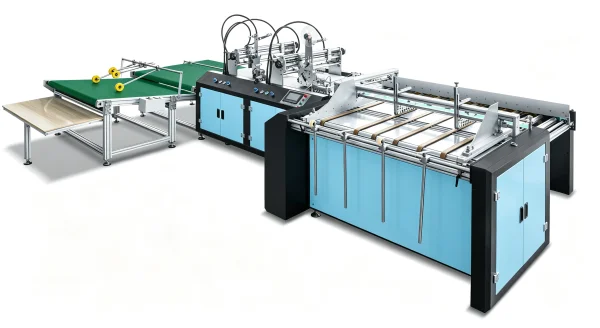
Our automatic multi-head double-sided tape pasting machines use PLC control to coordinate key stages of production. Each model's technical specifications also state its compressed air requirements, allowing the workshop to check the air supply before installation. By coordinating the programmed operating sequence, the control system helps feeding, tape application and collection work together rather than as disconnected operations.
The PLC manages the sequence of machine actions, helping maintain a consistent operating rhythm throughout a production run. For large batches of envelope bags and document bags, stable feeding and coordinated tape application help keep easy-tear tape near the closing flap in the intended position. Consistent results still depend on correct machine settings, material conditions and regular quality checks.
A touchscreen interface gives operators access to job parameters in one place, simplifying adjustments when production switches between product formats. Rather than adjusting settings across multiple separate controls, operators can update the relevant values through the interface. Before starting a new run, they should still confirm the settings against the product drawing and check any required mechanical adjustments.
Stored product settings make repeat orders easier to prepare. Our machines can save parameters for different products and recall them when the same order returns. Instead of rebuilding the setup from memory, operators can load the saved values, inspect the first sheets and make any necessary corrections before continuing production. This provides a repeatable starting point for recurring carton, gift box, envelope bag and document bag orders, while reducing reliance on individual experience alone.
The feeding section provides the stable sheet movement needed for coordinated tape application. High-friction feeding belts help carry sheets forward smoothly and reduce unwanted movement as they approach the pasting heads. Once the heads have been positioned according to the product drawing, multiple strips can be applied in a single pass. This reduces repeated handling, while consistent feeding and correct head adjustment help maintain the intended strip positions and spacing on cardboard, card stock and corrugated board.
Mechanical adjustments and collection features support the same workflow. The adhesive head can be rotated at the press of a key, and the tape-change operation takes approximately 30 seconds under the specified procedure. On our triangle tape machine, operators can also move the adhesive head laterally with a handwheel, using a steel ruler as a visible reference when restoring a recorded position. At the discharge end, a straight-out fish-scale collection belt arranges finished sheets in an overlapping sequence for easier collection and inspection. An optional counting function helps verify batch quantities for orders with fixed counts.
These features support production ranging from card boxes and corrugated cartons requiring multiple tape strips to envelope bags and document bags using easy-tear tape. For plants handling both short runs and large repeat orders, coordinated control, accessible settings and practical mechanical adjustments help simplify changeovers and maintain a more consistent production process.
Checking the Workshop Before the Machine Arrives
Before installation, check the compressed air supply against the machine's technical specifications, including pressure stability when other equipment is running. Confirm that suitable air filtration and drainage arrangements are also in place. Preparing these conditions in advance helps the machine operate as intended and reduces the risk of production interruptions caused by an unstable air supply.
Our double-sided tape applicator machines combine PLC control, touchscreen settings, stored product parameters and multi-head tape application to support different production requirements. Whether you process cardboard, card boxes, corrugated cartons, envelope bags or document bags, machine configuration should match your sheet dimensions, tape specifications, production volume and workshop conditions.
 Application Scenarios