

Once tape-pasted sheets leave the machine, they still need to be checked, counted and prepared for packing. A well-organized collection stage makes these tasks easier, especially when production involves frequent job changes or fixed quantities per batch. On a double-sided tape pasting machine, the way finished sheets are collected can help operators check tape placement, keep track of output and prepare each batch for the next step.
Why Quantity Control Matters at the Exit of the Machine
Packaging orders are specified by quantity. A run of envelope bags, card boxes or corrugated cartons is expected to arrive at the customer in the amount agreed, and a gap between the planned count and the packed count leads to extra work in either direction. A shortfall means a supplementary run and a second changeover. An overage means material, tape and machine time spent on sheets that nobody ordered. Both outcomes are small on a single job, but they accumulate across a production schedule with many short runs.
The exit of the machine is the most natural place to control this. Sheets are finished, they are in sequence, and they have not yet been mixed with output from other jobs. Once a batch is stacked, boxed and moved away, recovering an accurate count becomes more difficult and often means opening packs that were already closed. Quantity control works best when it happens at the moment the sheets leave the machine, not afterwards.
The exit is also where tape placement can be checked cheaply. A sheet that arrives with its tape strip slightly off position is easy to spot when sheets are visible one after another. The same sheet is hard to find later in the middle of a pallet. Counting and inspection are therefore two sides of one task, and a collection system that supports both saves time on each.
Where Conventional Collection and Counting Fall Short
Many tape pasting lines still collect sheets in a loose stack at the machine exit. Sheets drop on top of each other with little order, edges are hidden, and the operator has to square the pile before doing anything else with it. Counting then becomes a manual task performed on a stack that was never arranged for it. Staff count by hand, often in groups, and recount when the result looks doubtful. Small, thin or lightweight sheets make the task slower still, since they slip, stick together and are easy to miscount.
Manual counting also depends on the person doing it. Attention drifts during repetitive work, and a count that is accurate at the start of a shift may be less reliable at the end. The result is a quantity that is usually close to the target but seldom verified with confidence. Because the count happens after collection, any mistake is discovered late, at packing, when correcting it interrupts the next job.
A loose stack also hides the tape strip. Inspecting placement requires lifting sheets one by one, so most operators check only a few samples. A drift in tape position that begins mid-run can pass through unnoticed until a larger share of the batch is affected. A process that makes counting slow also makes checking slow, and both tend to be reduced to the minimum under production pressure.
How Orderly Collection and Counting Work Together
A sound collection method begins with arrangement. When sheets leave the machine in an overlapping, regular sequence, the edges and tape strips stay visible, and the stack is easy to take away without disturbing its order. This shingled arrangement, often called fish-scale collection, lets an operator see the flow of output at a glance and estimate quantity by eye before any formal count is made.
Counting adds a second layer. A counting function gives a reference number for the batch, so the person at the exit of the machine can compare the output against the planned quantity without handling every sheet. The count does not remove the need for sampling, but it replaces the slowest part of verification and leaves the operator free to focus on the sheets themselves. The two measures reinforce each other: orderly collection makes the count easier to trust, and the count makes the orderly stack easier to manage.
The collection method changes how both checks are carried out at the exit. With a loose stack, the operator must square the pile before counting by hand, and tape placement can only be checked by lifting sheets one at a time, which in practice means sampling a few. With orderly overlapping collection, the same two tasks become easier. Quantity can be estimated by eye and counted by hand more quickly, and the tape strips stay visible as each sheet arrives, so a shift in placement is noticed earlier. Adding an optional counting function gives the batch a reference count on top of this, which reduces the time spent counting and leaves more attention for inspecting the sheets themselves.

What Our Machines Offer at the Collection Stage
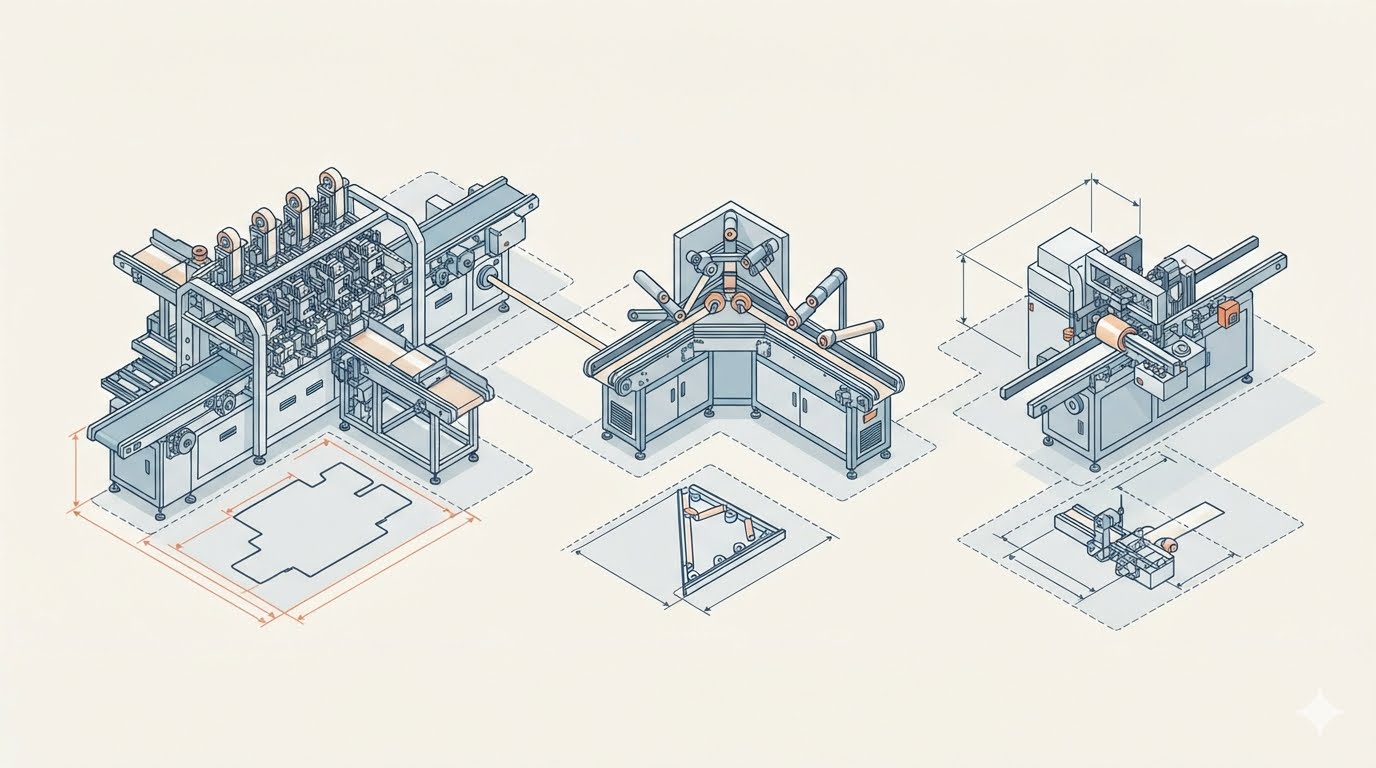
Our automatic multi-head double-sided tape pasting machines can be equipped with a straight-out fish-scale collection belt. This belt runs independently of the feeding section and carries finished sheets away in a neat, overlapping sequence, so that workers can collect them without sorting a disordered pile. Because the sheets travel in a straight line from the pasting section to the exit, the layout is simple and the output area stays easy to reach.
A counting function is available as an option on this collection section, for customers who need batch quantity checks as part of their routine. Not every job calls for it, which is why it is offered as an option and not as a standard feature. Orders with fixed quantities and frequent changes of batch benefit most, since counting at the exit removes a manual step from each changeover. Jobs with long runs of a single item may rely on orderly collection and periodic checks alone.
The machine as a whole is controlled by a PLC, which coordinates the feeding, pasting and collection sections so that they run together as one process. This coordination is what allows a sheet to move from the feeding belt to the pasting heads and out to the collection belt without interruption. In practice, a well-matched collection section helps the whole line keep its pace, since a bottleneck at the exit slows everything behind it.
These capabilities fit the products our customers make. Envelope bags and document bags are often produced in large, similar batches where quantity checks are frequent. Card boxes and corrugated cartons come in many sizes and tape positions, with batch sizes that change from order to order. In both cases, a collection stage that keeps sheets visible and countable gives the operator a clearer picture of the job as it runs.
Matching Collection Options to Your Production Routine
Choosing collection options begins with the order pattern. Long runs of one item, short runs of many items, strict quantity requirements and loose tolerances each point toward a different balance of orderly collection, counting and manual checks. The size of the sheet matters as well, since small and lightweight sheets benefit most from an arrangement that keeps them from scattering at the exit.
As a manufacturer, we build each double-sided tape pasting machine so that the stages work as a connected sequence, from feeding and tape placement to collection and optional counting, under PLC control. Our range covers several series and working widths for cardboard, card boxes, corrugated cartons, envelope bags and document bags. If you are planning a new line or reviewing the way your current output is collected and counted, send us your sheet sizes, tape specifications and typical batch quantities, and our team will suggest a machine configuration that suits your orders.
 Application Scenarios