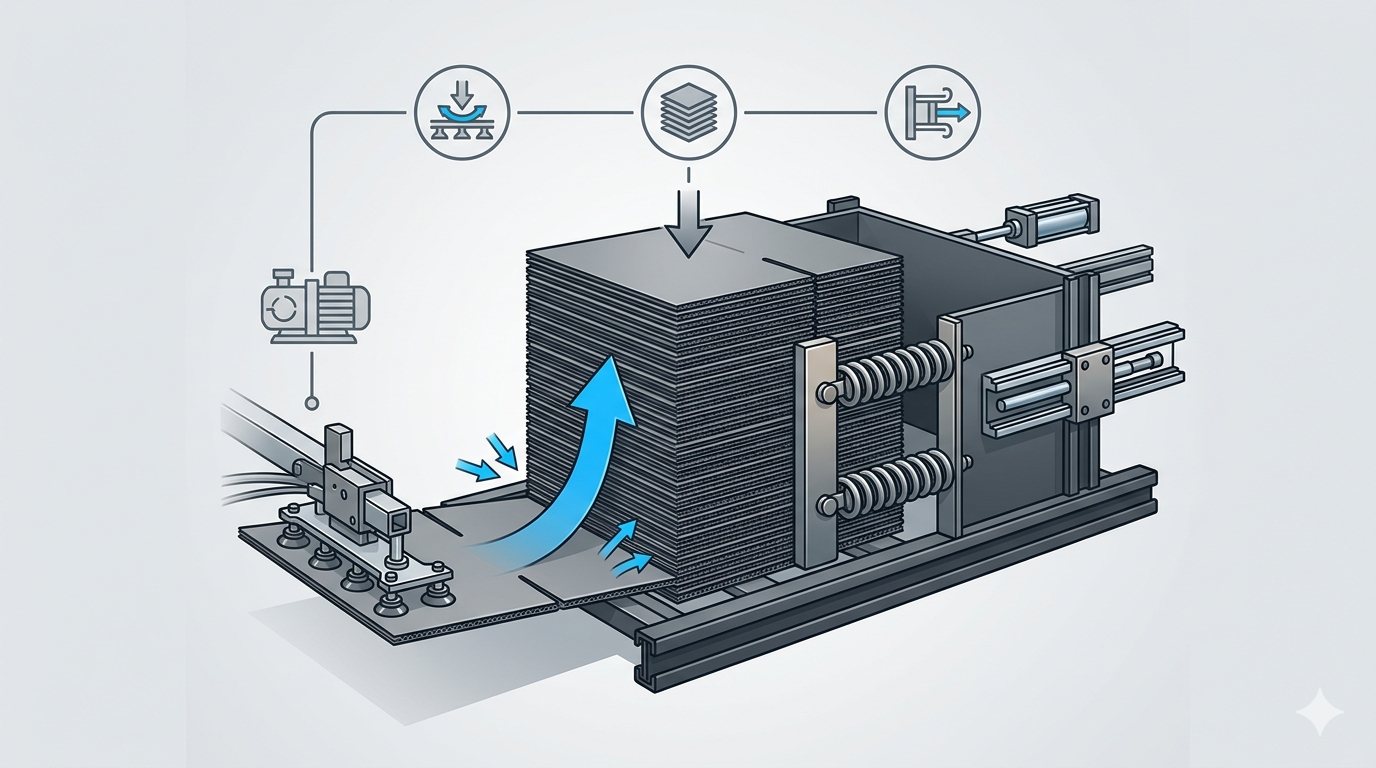


A flat corrugated board blank already contains the basic structure of a carton, but it still needs to be folded and bonded before it can hold products. Crease lines define where the panels bend, glue flaps determine how the edges join, and adhesive placement affects the quality of the finished joint. These elements must work together to produce a carton with the intended shape and dimensions.
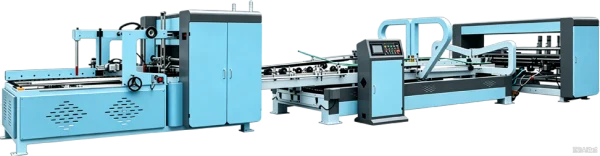
A single-piece folder gluer machine coordinates feeding, gluing, folding, calibration and bonding to turn prepared blanks into finished cartons. As a manufacturer of corrugated box folder gluer machines, we focus on how these operations interact and how the machine's configuration matches different carton designs and production requirements.
What a Flat Blank Must Achieve Before It Becomes a Carton
A carton blank consists of panels, crease lines and joining flaps. Creases guide the folding movement, while the glue flap overlaps the corresponding panel to form the carton joint. If the crease pattern or flap position is inaccurate, the finished carton may be skewed or have an uneven joint.
The quality of the creases also affects folding behavior. A crease that is poorly formed may allow a panel to bend away from its intended position or damage the board surface. The folder gluer follows the prepared crease pattern, so accurate upstream printing, slotting and creasing remain important.
Adhesive placement is equally significant. Glue must reach the intended joining area to create sufficient contact between the flap and the adjacent panel. Too little adhesive may result in an incomplete bond, while excessive adhesive can squeeze out during compression and leave marks on the carton or machine components.
Folding and bonding must therefore work together. The panels need to align correctly before the adhesive-coated surfaces are pressed together. If a blank enters at an angle or folds incorrectly, the joint may bond without producing a square carton. Consistent forming depends on blank quality, feeding accuracy, adhesive application and alignment.
The Forming Logic Inside a Single-Piece Folder Gluer Machine
A single-piece folder gluer machine turns a prepared blank into a folded and bonded carton through coordinated mechanical operations. An automatic belt suction feeding system separates blanks and feeds them individually into the machine. Stable feeding helps maintain the starting position for subsequent operations, although results also depend on board condition, blank dimensions and machine settings.
The machine applies adhesive to the designated glue flap before guiding the blank through the folding section. Belts and guides direct the panels along their crease lines, bringing the glue flap into contact with the corresponding panel. The crease pattern determines where the carton folds, while the flap design determines where the joint must form.
Automatic calibration helps correct the relative positions of folded sections before bonding is completed. This supports more consistent carton geometry across a production batch. However, calibration cannot fully compensate for poorly cut blanks, damaged creases or an unsuitable carton design.
The folded surfaces then pass through a bonding and compression section. Pressure brings the adhesive-coated areas into contact so the joint can develop sufficient strength for subsequent handling. Proper bonding still depends on adhesive properties, application amount, board surface and suitable operating settings.
At the output end, finished cartons are counted and stacked for the next process. The main forming principle remains the same: the blank's existing structure guides the folding movement, and the machine coordinates the operations needed to create the joint.
Why Forming Accuracy Matters Across Different Cartons
E-commerce and express packaging often involves large batches of similar carton styles. Consistent glue flap placement and carton alignment help finished boxes move through automatic sealing, bundling and packing equipment with fewer interruptions caused by irregular shapes. Uniform forming also makes it easier to check product quality throughout a production run.
Food, beverage and household product cartons may need to withstand stacking, storage and transportation. A properly formed glue joint helps maintain carton integrity during handling, while clean adhesive application supports a neat appearance. Overall strength also depends on board grade, flute construction, carton dimensions, moisture conditions and stacking requirements.
Appliance, electronics and industrial packaging can involve a wider range of carton sizes, board grades and structural designs. Larger blanks and heavier boards may behave differently during feeding and folding, making the machine's working range and adjustment capabilities important selection criteria.
Although the basic forming logic remains similar, each application has different requirements. Carton manufacturers should check blank dimensions, crease layouts, glue flap positions and board characteristics against the machine's specifications. A suitable configuration may accommodate multiple carton types, provided their sizes and structures fall within the equipment's working limits.
How Our Machine Applies This Logic to Real Production
Our corrugated box folder gluer machine integrates feeding, gluing, folding, calibration and bonding into a coordinated forming process. Each stage has a specific role in positioning the blank, joining the panels and preparing the finished carton for handling.
For high-volume shipping cartons, automatic feeding and coordinated folding help maintain a regular production flow. Consistent calibration supports carton alignment, while automatic counting and stacking organize finished output. The actual production result depends on carton specifications, blank quality, operating settings and the capacity of downstream equipment.
For food, beverage and household product packaging, adhesive placement and joint alignment are important considerations. Our machine applies adhesive to the designated joining area and brings the folded surfaces together for bonding. Correct setup is necessary because adhesive type, board surface and application amount influence the finished joint.
For appliance, electronics and industrial cartons, the available working range is a key factor. We assess the required board dimensions and carton structure against the machine's specifications to help customers determine which products suit a particular configuration. Processing different carton sizes on one line may simplify production planning, but compatibility must be checked for each intended application.
As the manufacturer, we focus on practical carton-forming requirements when designing and configuring our equipment. Feeding, adhesive application, folding and bonding must work together to suit the customer's carton designs and production conditions.
Matching Forming Requirements to the Right Configuration
A finished carton's shape and joint quality depend on the relationship between its crease pattern, glue flap, adhesive line and folded panels. A single-piece folder gluer machine coordinates these elements, but consistent results also require accurate blank preparation, suitable adhesive and correct machine settings.
We manufacture corrugated box folder gluer machines for carton producers handling different box styles and production volumes. Our team can review your carton dimensions, board specifications, glue flap design and output targets to identify a suitable machine configuration. By matching the equipment to your actual forming requirements, we aim to provide practical production equipment backed by ongoing after-sales support.
 Application Scenarios