


Frequent material replenishment disrupts production flow and increases operator workload during large-volume box converting. While a higher feeder pile extends continuous running time, a massive paperboard stack also creates severe mechanical challenges—namely, immense pressure on the bottom sheets and tougher separation requirements. Our corrugated folder gluers solve this by balancing pile capacity with optimized pressure control systems, ensuring smooth, uninterrupted feeding without sacrificing sheet handling accuracy.
Why Maximum Feeder Pile Height Matters in Corrugated Box Production
The feeder section is the starting point of the entire folder gluing process. Before corrugated blanks enter the folding and gluing units, they must be separated, aligned, and transported at a consistent speed. Any instability during feeding can influence downstream operations, including folding accuracy, glue application position, and final carton appearance.
In traditional folder gluer equipment, limited feeder pile capacity may require operators to stop the machine frequently for manual loading. These interruptions reduce effective production time and make it more difficult to maintain a continuous workflow, especially for high-volume packaging applications.
A larger feeder pile height allows more corrugated sheets to be prepared at one time. This reduces the frequency of loading operations and supports longer production cycles. For packaging factories producing shipping cartons, e-commerce packaging, and industrial boxes, improving feeder capacity can contribute to better production planning and more efficient labor allocation.
However, a higher stack also means that the bottom sheets must support greater vertical pressure. Without proper mechanical design, excessive pressure may affect sheet separation and transportation stability. Therefore, the feeder pile height of a corrugated folder gluer machine must be developed together with the feeding mechanism, support structure, and control system.
Mechanical Challenges of Increasing Feeder Pile Height
Increasing the maximum feeder pile height requires careful consideration of several mechanical factors. The purpose is not only to hold more corrugated sheets but also to maintain reliable feeding performance throughout continuous operation.
One major challenge is managing the weight of the paperboard stack. Corrugated boards vary significantly in thickness and weight depending on flute structure, paper grade, and application requirements. Heavy-duty double-wall boards create greater loading pressure compared with lightweight single-wall materials. The feeder system must provide stable support while preventing excessive compression on the stacked sheets.
A heavy-duty feeder hopper structure helps maintain overall rigidity under continuous loading conditions. Reinforced frames, stable support components, and optimized mechanical layouts reduce deformation risks during operation. This allows the feeder platform to maintain accurate positioning even when processing heavier corrugated materials.
Another important challenge is sheet separation. As pile height increases, the pressure between individual sheets becomes higher, which can make separation more difficult. Advanced feeder systems often use vacuum-assisted separation technology to improve sheet pickup performance. Adjustable suction control allows the machine to adapt to different board conditions and reduce issues such as double feeding or inconsistent sheet transfer.
Paperboard alignment is also essential. Before entering the folding section, each blank needs to maintain a stable position to ensure accurate folding and gluing. Pneumatic side guides, adjustable backstops, and precision positioning components help keep sheets aligned during feeding, supporting consistent carton quality during long production runs.
Advanced Feeder Design for Stable High-Capacity Feeding
A modern corrugated folder gluer machine requires a feeder system that combines capacity with precision. Increasing the pile height without improving other components may create additional operational problems. Therefore, advanced equipment focuses on integrated mechanical design.
The feeder hopper is designed with sufficient structural strength to support higher material loads while maintaining smooth movement. A stable lifting and supporting mechanism helps control the position of the paperboard stack during operation, allowing the feeding unit to work consistently from the beginning of production until the final sheets are processed.
Pressure control is another key element in high-capacity feeding systems. Different corrugated boards require different handling conditions. Lightweight boards may require gentle control to avoid surface damage, while heavier boards need stronger support and feeding force. Adjustable pressure systems allow operators to optimize the feeder according to material characteristics.
The feeding belt system also has a direct influence on sheet transportation performance. Traditional low-friction conveying methods may experience reduced grip when handling heavier stacks or higher production speeds. A high-friction rubber feeding belt provides improved contact with the corrugated surface, helping maintain stable movement and reducing the possibility of sheet slipping.
For packaging manufacturers processing different carton designs and board types, this flexibility is valuable. A well-designed feeder system allows the corrugated folder gluer machine to handle a wider range of production requirements, from standard shipping boxes to heavier industrial packaging.
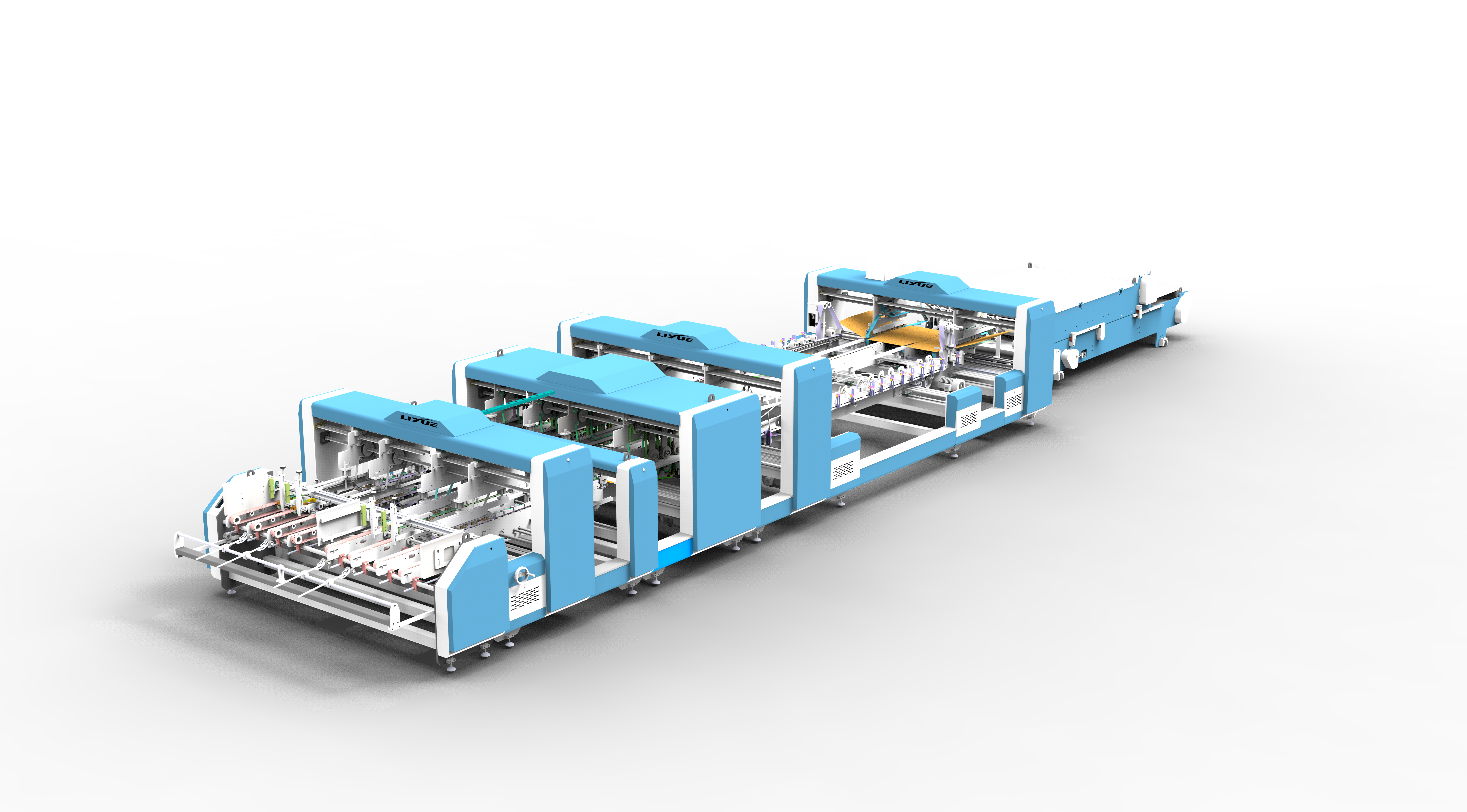
How Our Corrugated Folder Gluer Machine Improves Feeding Efficiency
Our corrugated folder gluer machine is engineered with a focus on stable material handling, reliable feeding performance, and efficient production operation. The feeder system combines a robust mechanical structure with precision components to support continuous processing of corrugated blanks.
The optimized feeder design helps reduce unnecessary interruptions caused by frequent paperboard loading. By allowing a larger stack of blanks to be prepared before operation, the machine supports longer production cycles and helps operators maintain a smoother workflow.
The feeding system is also developed for compatibility with different corrugated materials. Whether processing lightweight corrugated sheets or heavier packaging boards, the combination of adjustable feeding pressure, stable alignment components, and high-grip conveyor technology helps maintain consistent sheet movement.
In addition, the mechanical design considers long-term operation requirements. Durable components, precise adjustment systems, and reliable structural support contribute to stable machine performance over extended production periods. For packaging manufacturers, this means improved production consistency and easier daily operation management.
The Relationship Between Feeder Capacity and Overall Production Performance
When selecting a corrugated folder gluer machine, manufacturers should consider not only production speed and folding capability but also the performance of the feeder system. Maximum feeder pile height reflects the machine’s ability to handle continuous production, maintain stable sheet feeding, and reduce unnecessary interruptions.
Our corrugated folder gluer machine is designed with a reliable feeder structure, precise sheet separation, and stable paperboard handling performance to meet the demands of modern corrugated box production. By optimizing feeder capacity and mechanical design, the machine helps manufacturers improve workflow efficiency while maintaining consistent folding and gluing quality.
'/%3e%3cpath%20id='Rectangle%20455'%20d='M0%2011.1428H5.57143L22.2857%2052H0V11.1428Z'%20fill='%23CE221D'/%3e%3c/g%3e%3cdefs%3e%3clinearGradient%20id='paint0_linear_888_3811'%20x1='0'%20y1='26'%20x2='401.607'%20y2='26'%20gradientUnits='userSpaceOnUse'%3e%3cstop%20stop-color='%23153B8A'/%3e%3cstop%20offset='1'%20stop-color='%23153B8A'%20stop-opacity='0'/%3e%3c/linearGradient%3e%3c/defs%3e%3c/svg%3e) Products
Products
'/%3e%3cpath%20id='Rectangle%20455'%20d='M0%2012H6L24%2056H0V12Z'%20fill='%23CE221D'/%3e%3c/g%3e%3cdefs%3e%3clinearGradient%20id='paint0_linear_769_2773'%20x1='0'%20y1='28'%20x2='432.5'%20y2='28'%20gradientUnits='userSpaceOnUse'%3e%3cstop%20stop-color='%23153B8A'/%3e%3cstop%20offset='1'%20stop-color='%23153B8A'%20stop-opacity='0'/%3e%3c/linearGradient%3e%3c/defs%3e%3c/svg%3e)


