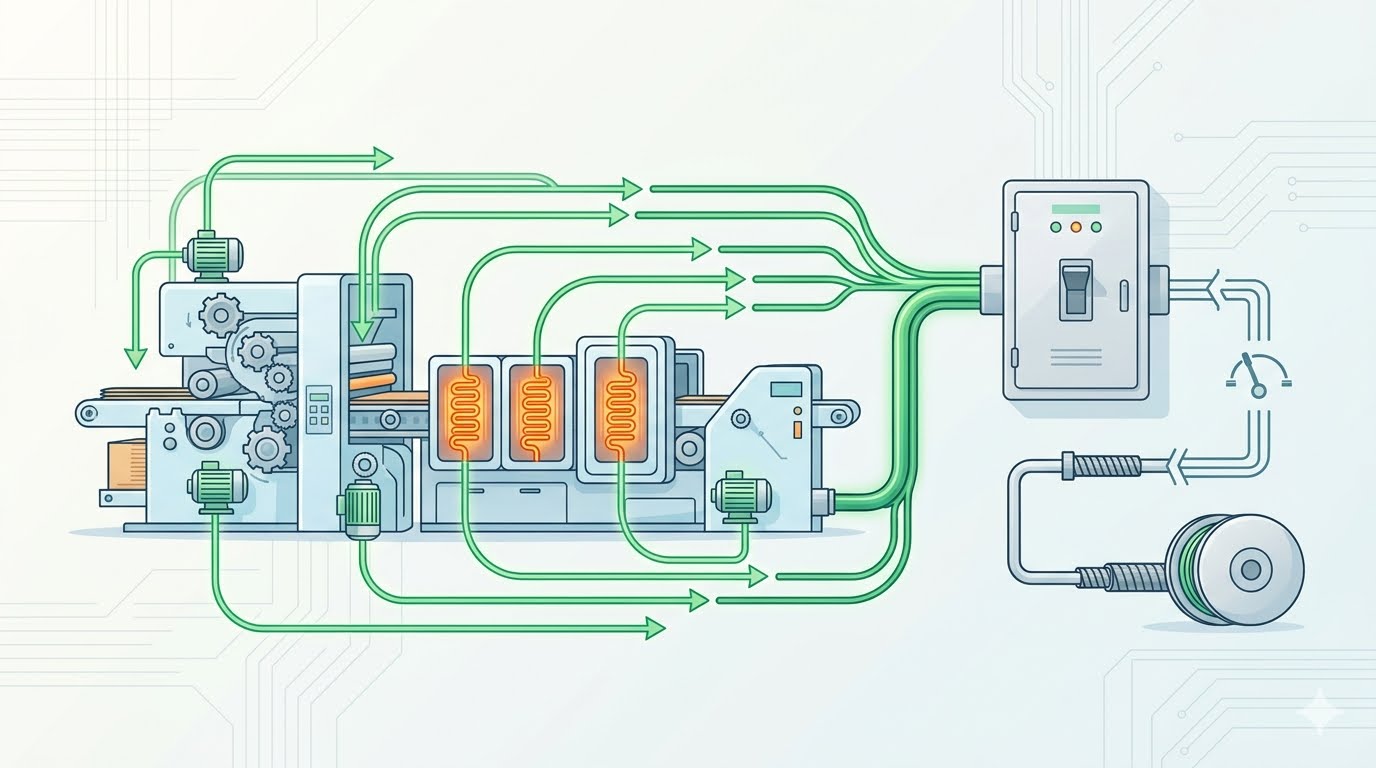


Carton order lead time depends on more than the time needed to form a box. Board preparation, printing, die-cutting, gluing, bundling and dispatch must all fit within the production schedule. A delay at any stage can affect the delivery date, especially when several orders share the same equipment and labor resources.
The gluing stage is particularly important because it connects carton forming with finished-box handling and packing. An uneven production pace, frequent adjustments or defective glue joints can slow the work that follows. A corrugated box folder gluer machine helps manage this stage through automatic feeding, gluing, folding and calibration. Its effect on delivery lead times depends on the carton specifications, production volume and how well the equipment fits the rest of the line.
Where Carton Production Loses Time
Manual gluing and semi-automatic production often require operators to feed blanks, control folding and handle finished cartons between operations. Production speed can vary with staffing, operator experience and changes between carton specifications. When output becomes difficult to predict, production planners may need more time between scheduled jobs to accommodate possible delays.
Defective cartons create another source of lost time. Uneven glue application, misaligned folds or weak joints may require inspection, correction or replacement. These problems consume additional board, adhesive and labor while reducing the time available for the next order. Their impact becomes more noticeable when a large batch must be checked before packing can continue.
Changeovers and material handling also affect the schedule. Switching between carton sizes may require machine adjustments, while manual counting and stacking can interrupt the flow of finished boxes. If the gluing section produces cartons faster than the packing area can accept them, finished products may accumulate between processes. If it runs too slowly, downstream equipment and workers may have to wait.
These delays have different causes, but they share one characteristic: they reduce the time available for completing the scheduled order. Improving the consistency of carton forming and the flow of finished products can help a plant manage its production time more effectively.
Why the Gluing Stage Matters to Delivery Schedules
Gluing and folding take place near the end of carton forming, before finished boxes move to bundling, packing or dispatch preparation. The output of this stage therefore affects how much work downstream teams can complete during each shift.
When cartons arrive at a consistent pace, operators can organize bundling and packing around a more predictable flow. Irregular output makes staffing and equipment scheduling harder because one process may be waiting while another is handling a backlog. This imbalance can extend the time required to complete an order, even when the individual operations are capable of running efficiently.
Finished-carton quality also influences the schedule. Boxes with consistent folds and properly bonded joints are easier to stack and handle. Cartons requiring additional inspection or correction can interrupt packing and delay the release of a batch.
A higher machine speed alone does not guarantee a shorter order lead time. The effective output must match the carton design, board properties, adhesive requirements and capacity of the surrounding equipment. Production planners should evaluate the gluing machine against actual product specifications and the entire production route, rather than relying only on its rated speed.
How Our Corrugated Box Folder Gluer Machine Supports Production Flow
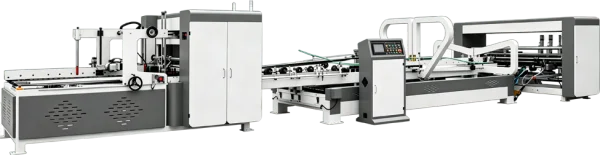
Our corrugated box folder gluer machine integrates several carton-forming operations into a continuous process. An automatic belt suction feeding system separates and feeds carton blanks individually. The machine then carries out gluing, folding, calibration and bonding, reducing the need for manual handling between these operations.
At the discharge end, finished cartons are counted and stacked. Depending on the selected configuration, a box-flipping function and suitable packing arrangements can support the transfer of finished stacks to the next stage. These functions help reduce separate handling tasks and make the movement of cartons through the production area easier to organize.
For e-commerce and express packaging, where plants often process large batches of similar carton styles, continuous feeding and automatic counting can simplify production planning. Once a batch is complete, counted stacks can move to bundling without requiring operators to tally every box manually. The actual time saved depends on batch size, carton dimensions and the handling arrangements used at the plant.
Food, beverage and household product packaging may involve concentrated demand during promotional periods and seasonal peaks. During these periods, production capacity must be allocated carefully across multiple orders. Consistent folding, calibration and bonding help reduce avoidable corrections, while automatic feeding supports a more organized production rhythm. Plants must still account for material availability, changeovers and any additional quality checks required for their products.
Appliance, electronics and industrial packaging can involve different carton dimensions, board grades and batch quantities. A machine configured for the required range of carton sizes can allow more products to be processed on the same production line, provided each specification falls within its working limits. This flexibility may reduce the need to transfer suitable orders to outside suppliers, where production queues and delivery arrangements are beyond the plant's direct control.
Machine Reliability and Maintenance in Lead Time Planning
Production schedules also depend on whether equipment can operate reliably throughout a planned run. An unexpected stoppage can delay the current batch and affect the orders scheduled to follow. When dispatch deadlines are close, even a short interruption may leave insufficient time to recover the lost production hours.
Routine inspection and maintenance help plants identify wear, feeding problems and other operating issues before they cause longer interruptions. Cleaning accessible areas, checking feeding components and monitoring the condition of gluing and folding mechanisms should follow the machine manufacturer's instructions. Planned maintenance can then be coordinated with changeovers or quieter production periods where practical.
The manufacturer's support is another consideration when evaluating equipment. Clear operating guidance, maintenance instructions and access to technical assistance help production teams respond to problems more efficiently. As the equipment manufacturer, we support customers with operation and maintenance questions throughout the machine's service life.
These measures cannot eliminate every production interruption, but they give plant managers a more practical basis for planning machine availability and managing delivery commitments.
Choosing a Folder Gluer That Fits Your Order Schedule
A shorter carton order lead time depends on the performance of the whole production process. A corrugated box folder gluer machine can contribute by integrating feeding, gluing, folding, calibration and counting, reducing selected manual tasks and helping finished cartons move more consistently toward packing. The final result still depends on upstream material preparation, order complexity, staffing, maintenance and dispatch capacity.
We manufacture corrugated box folder gluer machines for carton plants producing shipping boxes and industrial packaging in different specifications. When assessing a machine for your production line, our team can review carton dimensions, board types, joint requirements, batch sizes and expected output to identify a suitable configuration. Matching the equipment to your actual orders helps establish realistic production targets and build a more manageable delivery schedule.
 Application Scenarios