

Motor oil, automotive fluids and tire accessories are commonly packed in corrugated cartons for storage and transport to workshops and retailers. Packaging manufacturers may need to produce several carton types within the same week, with each order bringing different dimensions, weights and production requirements. Despite these differences, every carton must remain secure through warehousing, palletizing and delivery. Our two-piece folding and gluing machine helps manufacturers handle larger carton formats while maintaining consistent folding and bonding quality across different production runs.
Two Very Different Loads in One Production Schedule
Lubricant cartons must support the weight of filled bottles while remaining stable during storage, stacking and transportation. Their strength depends on the corrugated board, carton dimensions and the quality of the glued joints. If a carton deforms, opens at the seam or allows too much movement inside, the packaged products become more vulnerable to damage during handling and delivery. Consistent folding and bonding help maintain carton integrity throughout distribution.
Tire accessory cartons have different requirements. They often come in a wider range of sizes and configurations, depending on the parts being packed and the quantities ordered. Carton manufacturers may need to switch between heavy-duty lubricant packaging and smaller accessory cartons within the same production schedule. The challenge is to accommodate these differences while maintaining reliable carton forming, strong glued joints and consistent output across changing orders.
Challenges of Traditional Equipment in Mixed Carton Production
Traditional folding and gluing equipment often requires manual adjustments when carton sizes change. Frequent changeovers take time and can lead to inconsistent glue application and carton dimensions. For heavy lubricant cartons, weak glued joints can reduce the box's ability to withstand stacking loads.
Large cartons also require accurate board alignment. Even small offsets can affect carton squareness, glue placement and stacking stability. These challenges make it harder for carton manufacturers to maintain consistent quality when producing lubricant and tire accessory cartons in the same production schedule.
A Two-Piece Folding and Gluing Machine in Automotive Aftermarket Carton Production
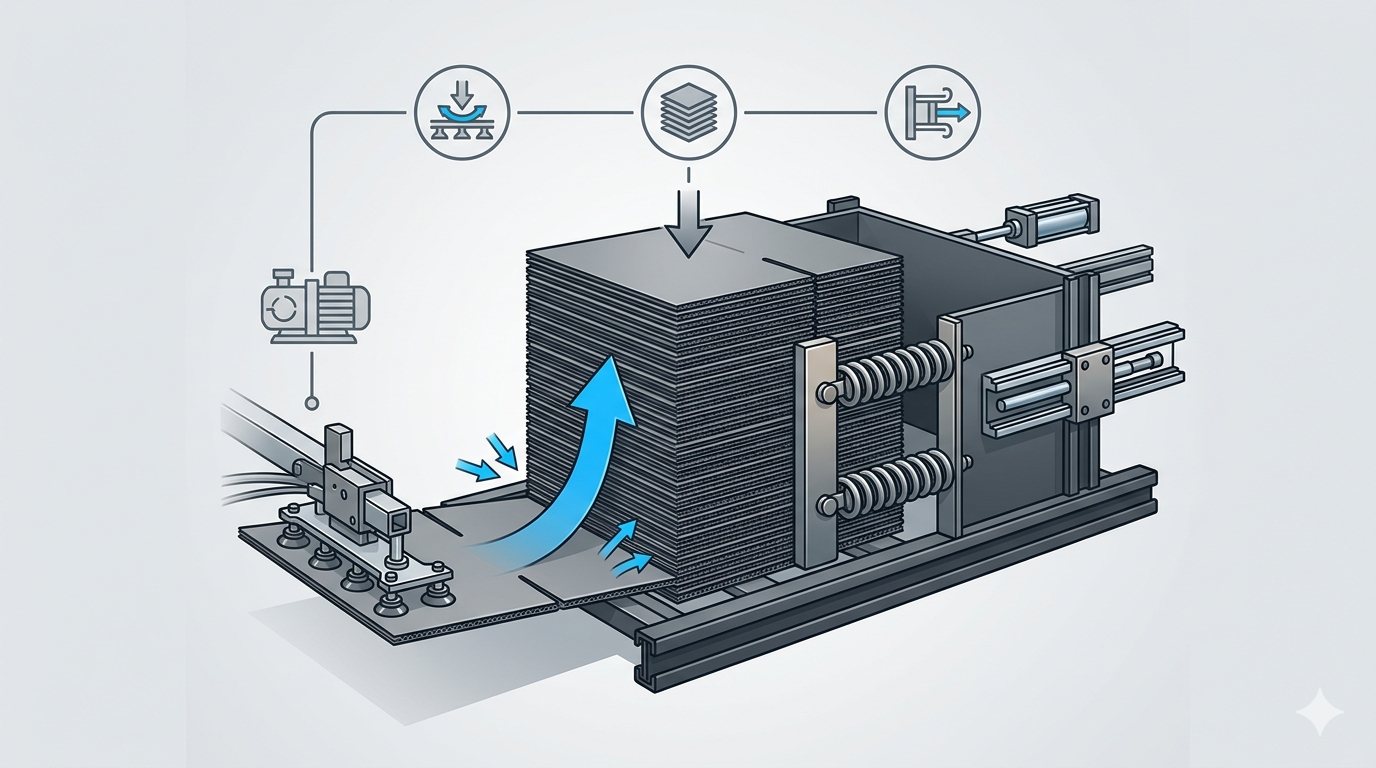
A fully automatic two-piece folding and gluing machine takes blanks through feeding, gluing, folding, splicing, patting and conveying in a single continuous sequence. Where a carton is too large to be formed from one sheet, two boards are brought together and glued in the same pass, and the finished case comes off the line ready to stack. Multi-bottle lubricant cases and the larger shipping cartons used for grouped tire accessories fit naturally into this process, and the carton maker avoids the repeated hand finishing that would otherwise be needed.
The machine does not decide the carton style, the board grade or the adhesive, which remain with the carton maker and the customer. Its contribution is control over how a chosen design is folded and bonded. In this sector, that means the same machine can run a heavy lubricant case in the morning and a differently sized accessory carton in the afternoon, and each should come off the line in the condition its design intended. How easily the machine moves between those two jobs is the practical test of its value to a carton plant serving automotive customers.
Changeover, Splicing and Gluing Features in Our Machine
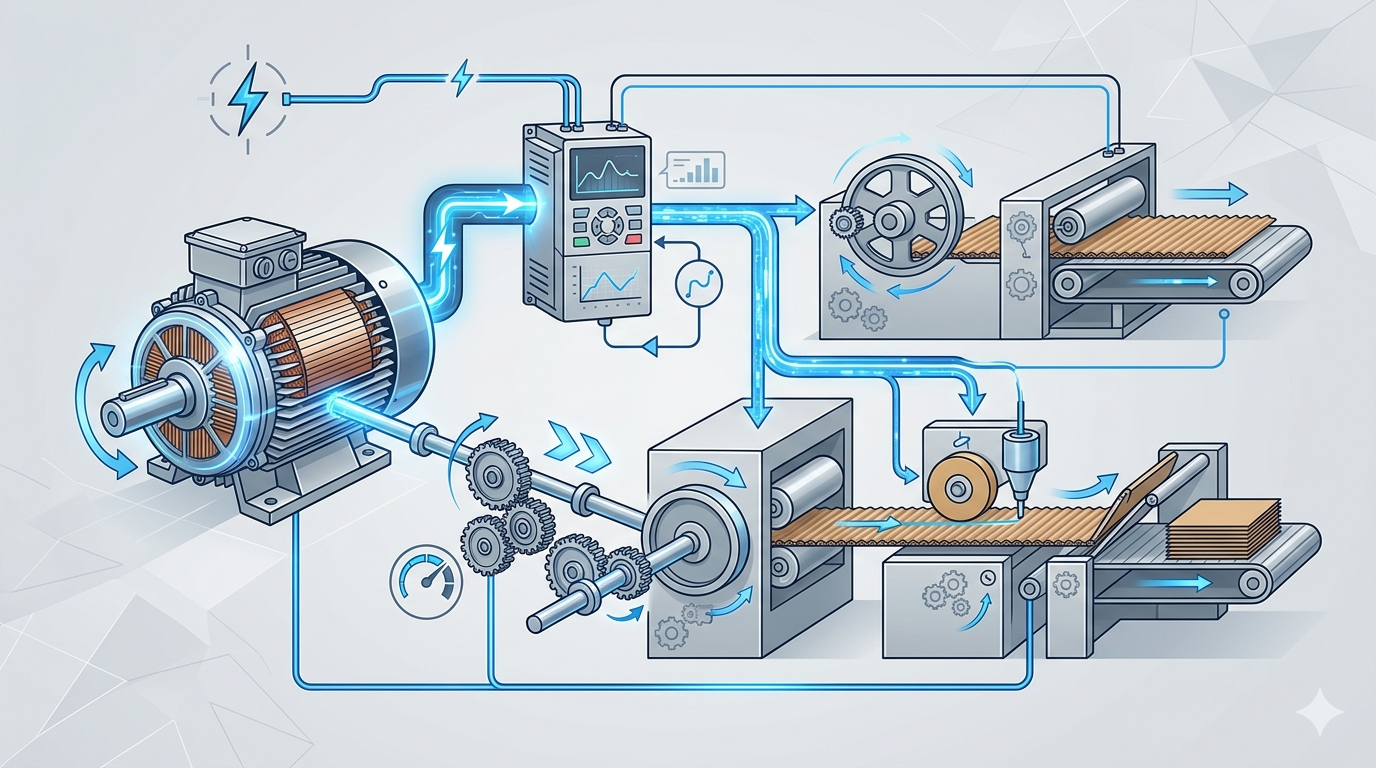
Changeover is where mixed production is won or lost, and our machine addresses it through the splicing guides. The guide plates are driven by electric leading screws with a memory function, so a repeat order can be recalled from stored settings instead of being set again by hand. Product lines in this sector come back regularly, since the same lubricant sizes and accessory cartons are reordered through the year, and stored settings shorten the preparation for each return. They also make the setup repeatable, which supports the consistency that a carton plant needs from run to run.
The splicing section also provides the structure for heavier cases. Two servo-driven belt conveyors carry the boards to the joint, and photoelectric guidance supports accurate alignment as they meet, so the glue line sits where the design places it. Hot and cold double coating at the splice, together with steel-ball board pressing, reinforces the zone that carries the greatest load in a filled lubricant case.
The gluing section applies adhesive by mechanical rollers and can run hot glue or cold glue, with a spray glue system available as an option. The carton maker selects the adhesive and method according to the board and the conditions the carton will face, and the section's task is to deliver the chosen glue as a steady line, whether the order is a small accessory carton or a large multi-bottle case. Stable suction feeding at the entry, followed by regular folding and neat patting, keeps each carton in the same condition as it moves through the line.
| Carton Type | Main Demand | Machine Section | Contribution |
|---|---|---|---|
| Multi-bottle lubricant cases | Strong joint under stacking and drop stress | Splicing section | Hot and cold double coating with steel-ball board pressing |
| Multi-bottle lubricant cases | Squarely formed box for pallet stacking | Splicing section | Servo-driven belts with photoelectric guidance |
| Tire accessory cartons in varied formats | Fast return to a known setup | Guide plate adjustment | Electric leading screws with memory function |
| Both carton types | Steady glue line from run to run | Gluing section | Mechanical roller gluing with hot or cold glue, spray system optional |
One Line for Many Carton Sizes
A supplier to the automotive aftermarket rarely makes one carton. The product mix changes with the season, the customer list and the bottle sizes in fashion, and the production line has to follow. We designed our two-piece folding and gluing machine with that reality in mind, concentrating on recallable settings, accurate alignment at the splice and steady glue application. We build the machine ourselves, and we continue to adjust it in response to the way carton makers use it across heavy and mixed work. For converters whose customers sell oil, fluids and tire accessories, the aim is a single line that handles the whole range of cartons their orders require.
 Technical Encyclopedia