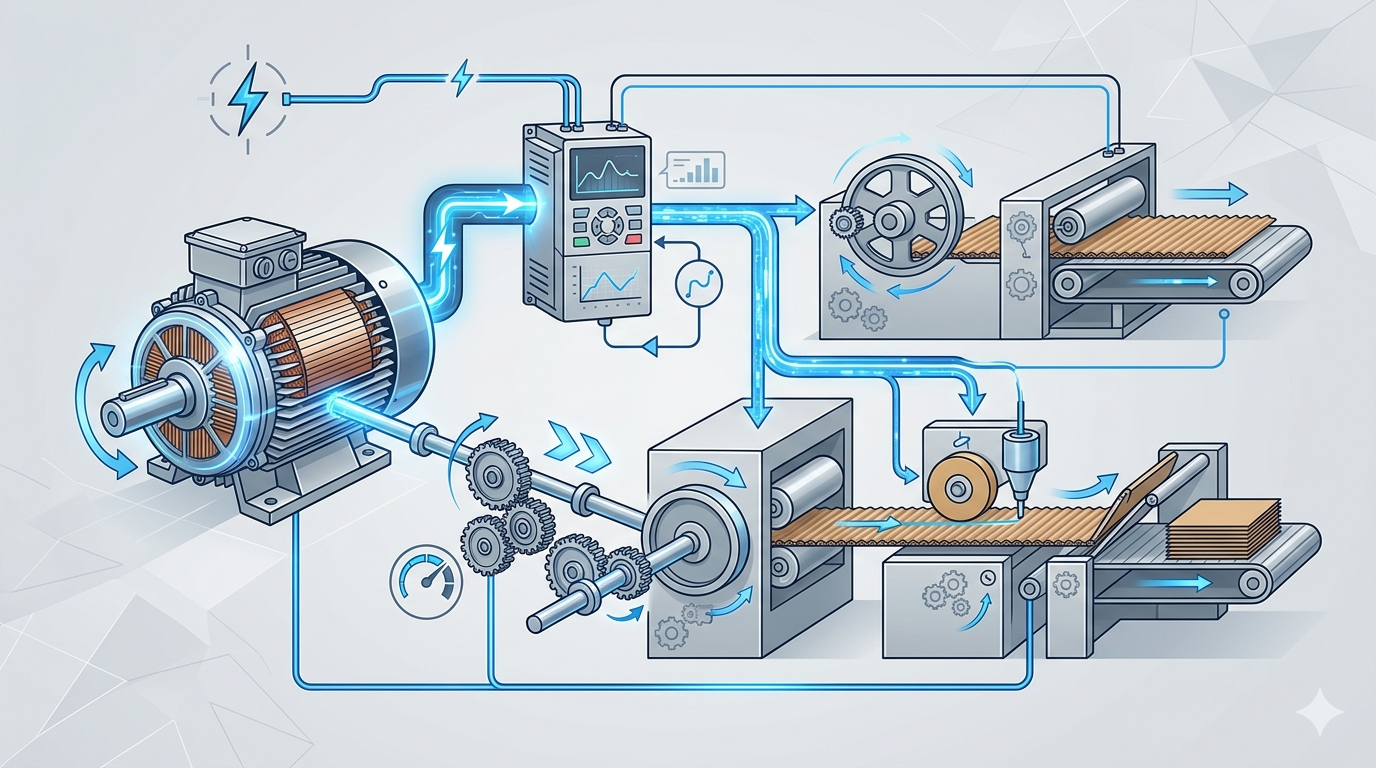
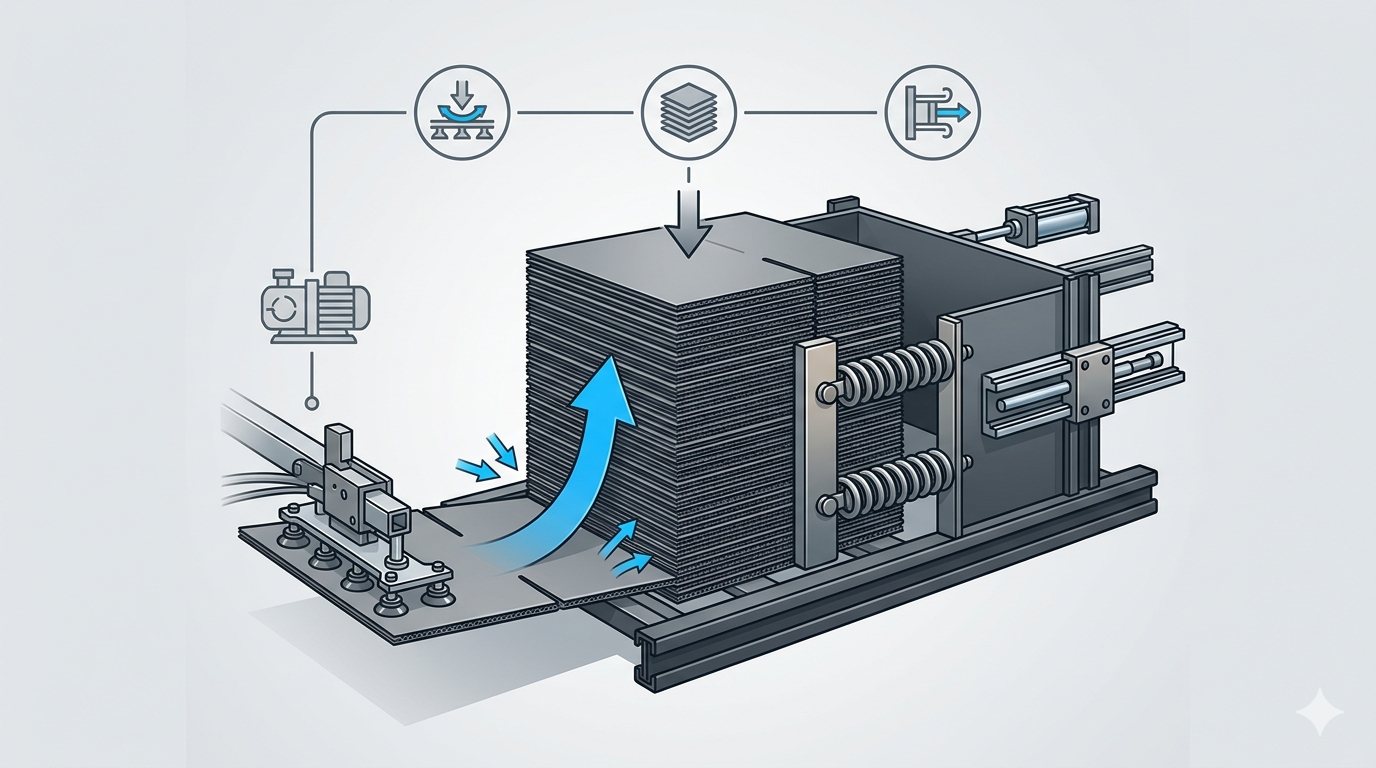
Home appliance transport packaging has three jobs: to support stacking, to suit the handling process, and to protect vulnerable surfaces and corners. Air conditioners and fans test all three, because they are bulky, relatively heavy and shipped in large volumes. Much of the work of meeting those demands is done before the product reaches the carton, at the point where flat corrugated blanks are folded and glued into boxes. A corrugated box folder gluer machine carries out that step, and the accuracy it achieves shows up later in how cartons stack, ship and arrive.
Stacking, Weight and Handling: The Load Behind an Appliance Carton
Warehouse space and freight cost both reward tall stacks, and appliance cartons are designed with that in mind. A carton for a major appliance must be strong enough for vertical stacking, often five or more units high, so that floor space in warehouses and vehicles is used efficiently. The weight inside adds to the demand. Components of air conditioning systems illustrate the point, since a compressor, for example, takes up little space yet weighs a good deal, and ordinary corrugated board does not support it without considerable reinforcement. Fans and other air-handling equipment present a related profile. A packaging study for axial flow fans notes that such items are bulky and heavy, with complex logistics requirements, including compliance with top-load requirements for international truck and container shipping.
Stacking strength depends on how load travels through the carton. When a stack leans, that path is disturbed. Packaging literature describes off-stacking, where forces no longer pass vertically through the corner posts, as a cause of crimped carton corners at best and of a collapsing stack at worst. A carton that leaves the folder gluer slightly twisted or out of square starts every stack with a small lean, and that lean grows with height and with the time the stack stands in storage. Squareness is therefore a structural property of the finished carton, not just a matter of appearance.
Where Traditional Folding and Gluing Falls Short
Manual and basic semi-automatic methods struggle most on large formats. A long carton blank is harder to feed straight, harder to fold evenly and harder to keep aligned through the gluing and pressing stages. Small errors compound over the length of the panel, producing boxes that are slightly skewed or whose glued joint is offset from its intended position. Joint strength is uneven as well, because the glue line depends on operator setup and roller condition. An appliance carton also holds a heavy, expensive product, so a joint that opens in a warehouse or on a truck has a cost far beyond the box itself.
The pattern of orders adds pressure. Appliance makers place high-volume orders, but each product family comes in several sizes, and carton suppliers must switch between them regularly. Equipment that takes long to readjust cuts into output, while equipment that is adjusted by feel gives different results from one setup to the next. The weaknesses that matter most here are the same three that recur across carton production: alignment of large panels, consistency of the glue line, and the time needed to change over.
Large-Format Folder Gluers in Appliance and Fan Carton Production
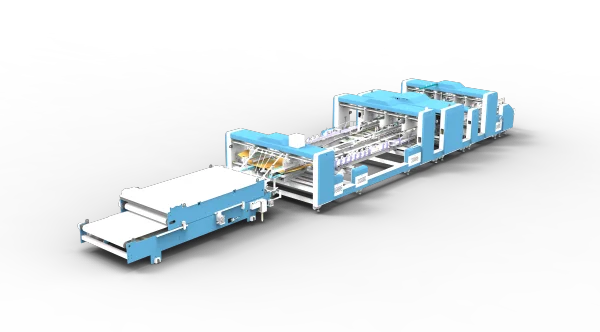
A fully automatic two-piece corrugated box folder gluer machine moves blanks through feeding, gluing, folding, splicing, patting and conveying in sequence. Its particular strength for appliance packaging is the two-piece construction. Where a carton is too large to be formed from a single sheet, two boards are joined at a splice and glued in one pass, and the finished box leaves the line ready for stacking and strapping. Carton makers can therefore supply large outer cartons for air conditioner outdoor units, floor-standing fans and similar products without relying on repeated hand finishing.
The fit with the application is straightforward. Outer cartons for air conditioners and large fans are tall or long, and their joints carry load during stacking. Appliance contracts run in volume, so repeatability from the first carton to the last matters more than any single impressive result. Internal reinforcements such as corner posts and edge protectors are produced by other processes, and the folder gluer's role is to deliver an outer carton that is accurately formed so those components can do their work.
Splicing, Gluing and Conveying in Our Machine
The splicing section is the most relevant part of our machine for large cartons. Two servo-driven belt conveyors move the boards toward the splice, and photoelectric guidance assists in aligning them as they meet. The guide plates are adjusted by electric leading screws with a memory function, which lets a repeat appliance order be recalled instead of being set again by hand. Hot and cold double coating at the splice, together with steel-ball board pressing, supports the bond in the area where the structural load concentrates.
Gluing is handled by mechanical rollers that can run hot or cold glue, with a spray glue system available as an option. Choice of adhesive and board grade remains with the carton maker, and the roller section's task is to apply the selected glue evenly so the joint is consistent from one carton to the next. The conveying section keeps large cartons moving steadily out of the line and offers manual or automatic follow-up, with optional cylinder pressure regulation, while the sections upstream present the blanks cleanly through stable suction feeding and regular folding. Because large panels magnify small deviations, this chain of controlled steps matters more on appliance cartons than on small ones.
Consistent Cartons, Run After Run
An appliance carton is large, and any error in its construction is large as well. Our corrugated box folder gluer machine is designed around the points where those errors begin: feeding, alignment at the splice, glue application and the transfer of finished cartons. Controls are organised through a touch-screen interface and PLC, and the stored settings help carton makers return to a known setup when a product family comes around again. We continue to refine the machine around what appliance carton suppliers ask of a production line, which is steady output and cartons that stack true. Converters who supply air conditioner and fan manufacturers are welcome to discuss their carton formats with us.
 Technical Encyclopedia