

A carton plant that serves several customers rarely runs a single box size for long. One order calls for a long, narrow carton, the next for a compact cube, and a third for a mid-sized box in a heavier board. A corrugated box folder gluer machine sits at the point where these differences have to be absorbed, since every carton passes through it before shipping. How well it copes with changing dimensions decides how many customers a plant can serve profitably on one line.
When Every Customer Orders a Different Box
Multi-customer production scatters specifications. Each customer brings its own length, width and height, and a plant may switch between several sizes within a single week. Every switch takes machine time, so a schedule with frequent changes loses productive hours even when the machine itself runs well.
Batch quantities add a second layer. Large orders keep a line busy for days, while small ones may need only a few hours and are sometimes pushed to the end of the queue or sent to an outside supplier. Neither outcome is satisfying for the customer who placed the order. Board grade and joint requirements also differ from one buyer to the next, because thickness, flute type and glue flap width are chosen to suit the contents. A machine with a narrow working range limits which of these orders a plant can accept at all.
What Size Flexibility Requires From a Folder Gluer
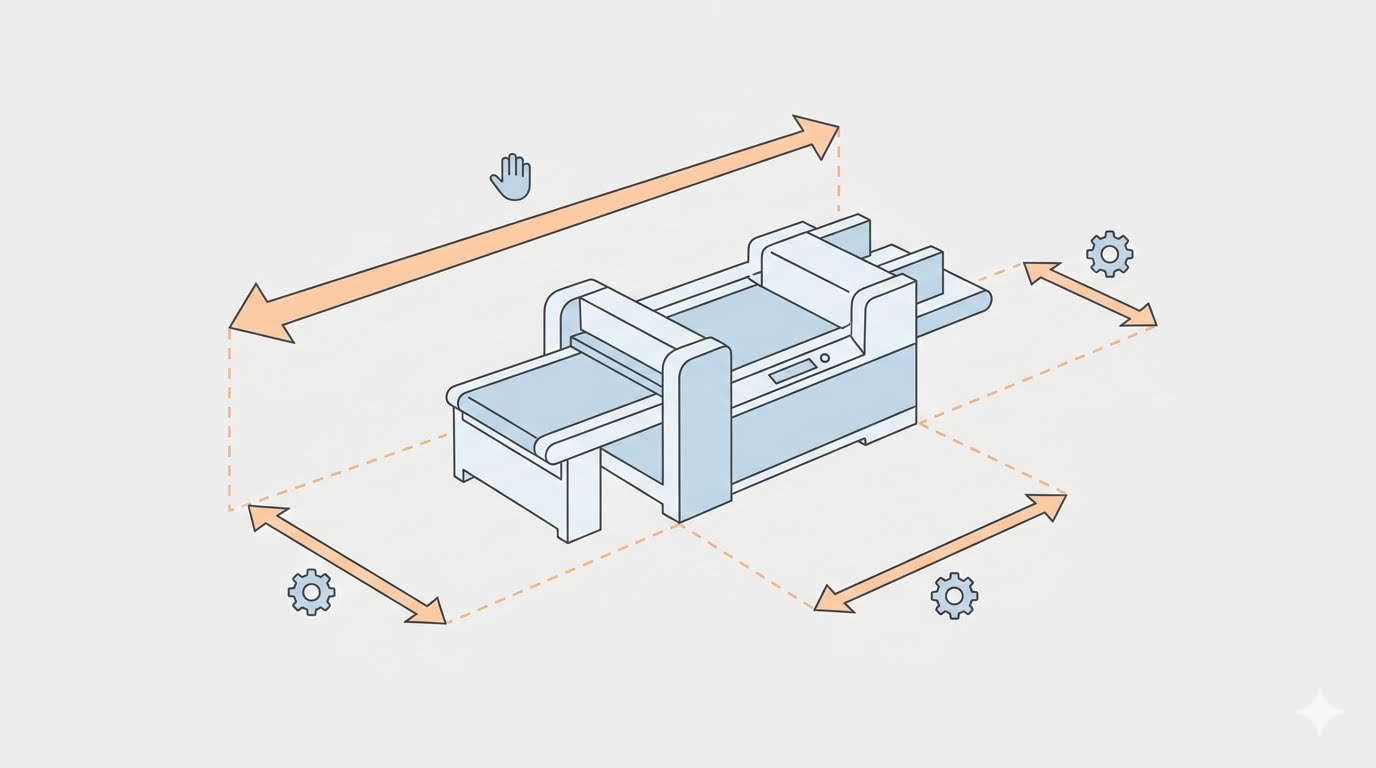
The first requirement is working range. The span of board sizes a machine accepts determines how many customers it can serve, and a broader range reduces the volume of work sent elsewhere. Range alone is not enough, however. A machine must also hold its accuracy at the small and large ends of that range, since a line that handles a wide span but loses precision at the edges serves few customers well.
The second requirement is practical adjustment. When the carton size changes, the feeding, gluing, folding and pressing sections must be set to the new dimensions. How quickly and how repeatably an operator can make these settings affects the share of the shift spent producing rather than preparing. The time needed depends on how different the two sizes are and on the operator’s experience, so we do not quote a fixed changeover time.
The third requirement is verification. After each adjustment, a first-piece check confirms that dimensions, fold position and glue placement match the order before continuous production begins. Machine flexibility and process discipline work together here. The condition of the blanks matters as well, because die-cut accuracy and board moisture influence results on any machine, and the folder gluer cannot correct every variation that arrives from earlier stages.

Lighting, Baby Product and Hardware Cartons on One Line
Lighting products illustrate the range problem clearly. A single lighting customer may order cartons for small bulbs, mid-length fixtures and long tubes, and the carton dimensions differ widely between them. A plant with a narrow machine range would need several lines or outside help to cover this one customer, while a broad range allows the same line to run all of these boxes.
Baby and maternity products present a different pattern. Brands release many styles, orders arrive in small and medium quantities, and stock is replenished throughout the year, so the plant changes sizes often. For this work, a steady feed and reliable alignment after each change matter as much as range, because every new setup must return to square, consistent cartons quickly.
Small hardware and fittings bring many orders for modest cartons, repeated at intervals. Batches are rarely large, but the number of separate orders is high, which turns order separation and counting into daily concerns. Heavier hardware cartons may call for stitched joints, and we can discuss suitable equipment for those cases. Very small runs and unusual carton shapes are also sometimes better handled by hand, and many plants keep a manual area for that purpose.
Our Machine’s Approach to Multi-Size Production
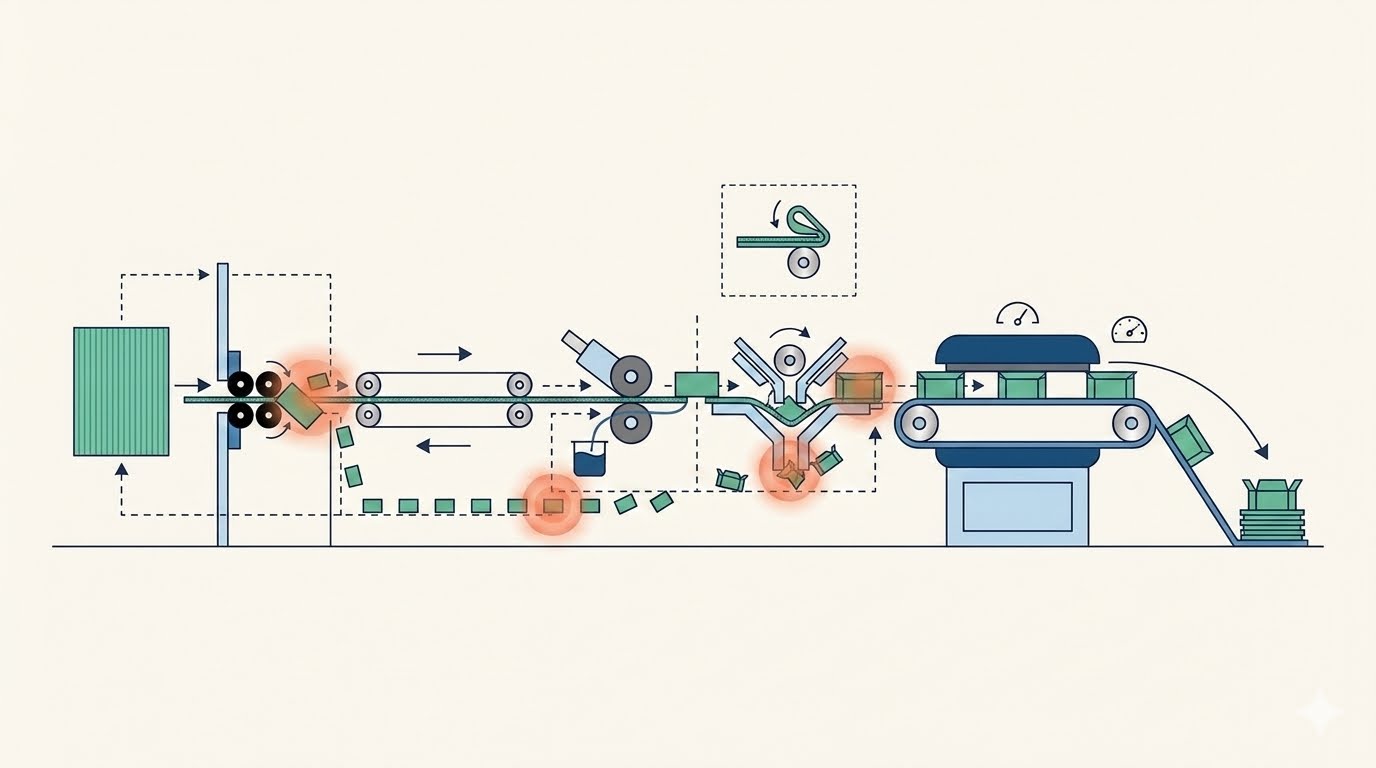
Our machine is built for plants whose orders vary. An automatic belt suction system feeds blanks one at a time, glue is applied, the panels are folded, automatic calibration squares the carton and the joint is pressed. Cartons are counted and stacked at the output end, with an optional box-flipping function and a packing arrangement available according to the plant layout.
For lighting customers, the broad board size range lets long and short cartons share a line, which limits outside work and keeps more of the customer’s order inside the plant. For baby product orders, steady feeding and automatic calibration help each size return to a square carton with a consistently placed joint, which suits the small and medium batches typical of replenishment work. For hardware and fittings, the counted and stacked output makes it straightforward to keep separate orders apart and move them on to packing without a manual tally.
Reliable running supports all three cases. Every unplanned stop interrupts a schedule that already contains frequent size changes, so we build our machines for steady operation. Our after-sales team supports customers throughout the machine’s service life, giving operators and supervisors a clear contact when questions come up.
Choosing a Machine Around Your Customer Mix
The most useful starting point for equipment selection is the customer list itself. The spread of carton dimensions, the usual batch sizes, the number of changeovers per week and the board grades in use all point toward the working range and configuration a plant actually needs. The largest size a machine can process is only one of those factors, and often not the most important one.
We manufacture corrugated box folder gluer machines for plants that serve many customers with many carton types. If you send us a list of your typical carton sizes, board grades and batch quantities, our team will review it with you and discuss which configuration suits the way your orders arrive.
 Application Scenarios