

In carton manufacturing, the way the seam is secured affects more than the strength of the joint. Metal staples create a mechanical connection, while adhesive bonds the glue flap to the adjoining panel without adding fasteners. For single-piece cartons, gluing is a common choice because it supports a flat seam and a clean interior surface. The differences between these joining methods also influence carton design, handling and equipment selection, making the choice an important part of the forming process.
Stitched and Glued Seams Serve Different Carton Needs
A stitched seam uses metal staples driven through the flap and the adjoining panel. The method is direct and can hold thick board firmly, which is why it remains in use for some heavy-duty cartons. A glued seam uses adhesive applied to the flap, which is then pressed against the panel. The result is a flat joint with no metal parts, formed in a single pass through a folder gluer machine.
Neither method is better in every case. Board thickness, the weight of the contents, the storage environment and the equipment that handles the carton afterward all influence the decision. A plant packing heavy components may reasonably prefer staples, while a plant producing lighter cartons in volume may favor adhesive.
Reasons Single-Piece Cartons Lean Toward Bonding
The first reason is flatness. Once the glue flap is bonded to the panel, the joint sits close to the board surface, so the carton folds flat neatly and stacks evenly in storage and transport. A stitched seam leaves a raised line of metal that can create uneven pressure in a stack and a slight bulge along the fold.
The second reason is the absence of metal. Staples can protrude, catch on adjacent cartons, scratch goods or surfaces, and corrode if the carton absorbs moisture. A bonded seam removes these concerns. It also simplifies recycling, since the carton consists of paperboard and adhesive alone, although local recycling rules vary and should be checked by each producer.
The third reason is compatibility with automation. A folder gluer machine applies glue, folds the panels, corrects alignment and presses the joint in one continuous sequence, and the resulting cartons share closely matched dimensions. That regularity matters downstream, where automatic erecting, filling and sealing equipment depends on cartons that open and square up in the same way every time. For single-piece cartons made in batches, this fit between the seam method and the machinery explains much of the preference for bonding.
Garments, Books and Bottled Drinks: Where the Seam Choice Matters
Garment and textile packaging shows the benefit of a flat, clean joint. Fabric and polybags can catch on exposed staples, and a snag or scratch is a visible defect at the point of delivery. Garment cartons are also commonly stored flat and erected at the packing station, so a smooth seam helps them fold, stack and open without resistance.
Book and printed-matter shipping calls for a more careful judgment. Covers and corners are sensitive to scuffing, and a seam without metal reduces the chance of marking the product. At the same time, a carton of books is heavy, so the right seam depends on board grade and load, and some producers will still choose staples for their heaviest boxes. We recommend testing the joint against the actual contents rather than relying on a general rule.
Bottled drinks and glassware add another requirement. These cartons often contain dividers and are stacked in several layers on pallets, which makes a square body and a uniform seam important. An evenly bonded joint supports consistent carton geometry, and consistent geometry helps the stack distribute pressure more evenly. We make no claim about a specific load rating here, because performance depends on the board, the adhesive and the stacking conditions of each plant.
Keeping the Glued Joint Dependable on Our Machine
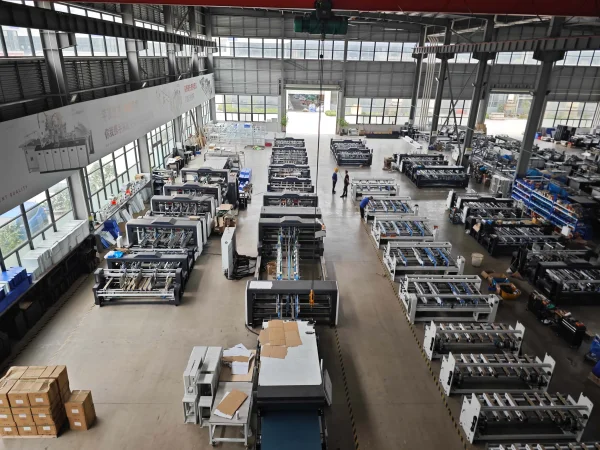
A bonded seam is only as reliable as the process that produces it, so we build our single-piece folder gluer machine around joint consistency. Blanks are fed one at a time by an automatic belt suction system, glue is applied to the flap, the panels are folded, and automatic calibration squares the carton before the joint is pressed. Finished cartons are counted and stacked at the output end, and an optional box-flipping function and packing arrangement are available when the plant layout calls for them.
For garment and textile cartons, which are produced in many sizes and medium batch quantities, steady glue placement and calibration help the flap land in the same position on every box. That keeps cartons square for flat storage and smooth erection later. Book and printed-matter orders benefit from even pressing and orderly counted stacks, which make it simple to move completed batches straight to bundling. Bottled drink and glassware cartons vary widely in height and footprint, and the broad range of board sizes our machine accepts lets a plant cover more of these specifications on one line.
Stable running is the other half of dependability. A machine that runs steadily produces joints that look and behave alike across a long shift, and fewer interruptions mean fewer cartons held back for inspection. We build our equipment for steady operation and support it with our after-sales team, so customers have a clear contact when questions arise during the life of the machine.
Choosing a Seam Method That Suits Your Cartons
The decision between glue and staples rests on the carton and its contents. Light to medium loads, flat storage, clean surfaces and automated packing lines point toward bonding, while very heavy goods and thick board may justify staples. A sound choice weighs these factors together and tests the joint under the plant's own conditions.
We manufacture single-piece folder gluer machines for producers whose cartons call for a bonded seam, and we can discuss the stitched alternative where it fits better. Send us your carton styles, board grades and expected volumes, and our team will review them with you and recommend a configuration that matches the way your plant works.
 Application Scenarios