Bottled cooking oil and sauces are heavy products, and they are usually shipped several bottles to a case. The case has to carry that weight through warehouse stacking, truck loading and a long period on a pallet. Most of the structural strength comes from the corrugated board, but a carton is only as dependable as the glued joint that holds it together. A two-piece folding and gluing machine forms that joint on larger cartons, so the consistency of its gluing and splicing has a direct effect on how the finished case performs under load.
What Heavy Bottled Goods Ask of a Glued Joint
Purchasing specifications for edible oil describe the demands quite plainly. One set of requirements for vegetable oil asks that packaging withstand long periods of stacking in warehouses and during distribution without product leakage. Another, written for oil supplied in PET and HDPE bottles, directs the packaging designer to consider harsh handling, humid conditions, storage time and the total stacking height, and to meet a stated minimum static compression load. These are demands on the whole carton, but a joint that gives way early undermines everything else, because the load then shifts onto board that was never meant to carry it alone.
Some specifications address the seam itself. A sunflower oil specification states that carton seams should be glued. The instruction is brief, yet it reflects an important point. In a case holding several liters of oil per bottle, the seam is under constant tension from the contents, and it stays under that tension for as long as the case sits in storage. Sauces add their own conditions, since glass or plastic bottles of different shapes press on the walls in different ways and cases are often moved through humid or chilled areas. A reliable bond in this setting means a glue line that is continuous, even and sufficient in volume along the whole length of the joint.
Where Traditional Gluing Leaves Weak Spots
Manual and basic semi-automatic gluing leave much to the operator and to the state of the equipment. Glue volume drifts as rollers wear or as adhesive thickens during a shift, and the result is a joint that varies from carton to carton. A thin or interrupted glue line leaves the seam with less bonding area than intended, and this is the first place a heavy case will start to open under sustained stacking. Excess glue creates a different kind of problem. It is pressed out as the panels are joined, marks the carton surface and builds up on conveyors, where it affects the cartons that follow.
Large cartons add the question of alignment. Many cases for multi-bottle oil packs are formed from two boards, and a small offset between them moves the glue line away from its intended position and reduces the effective overlap. Product range is the third difficulty. Oil and sauce producers sell many bottle sizes and case counts, and every combination calls for a carton in a slightly different format. When a line takes a long time to adjust, or is adjusted by feel, results change from one setup to the next. The recurring weaknesses of traditional equipment are therefore uneven glue lines, imprecise alignment of large panels and slow changeovers.
Where a Two-Piece Folding and Gluing Machine Fits in Oil and Sauce Carton Production
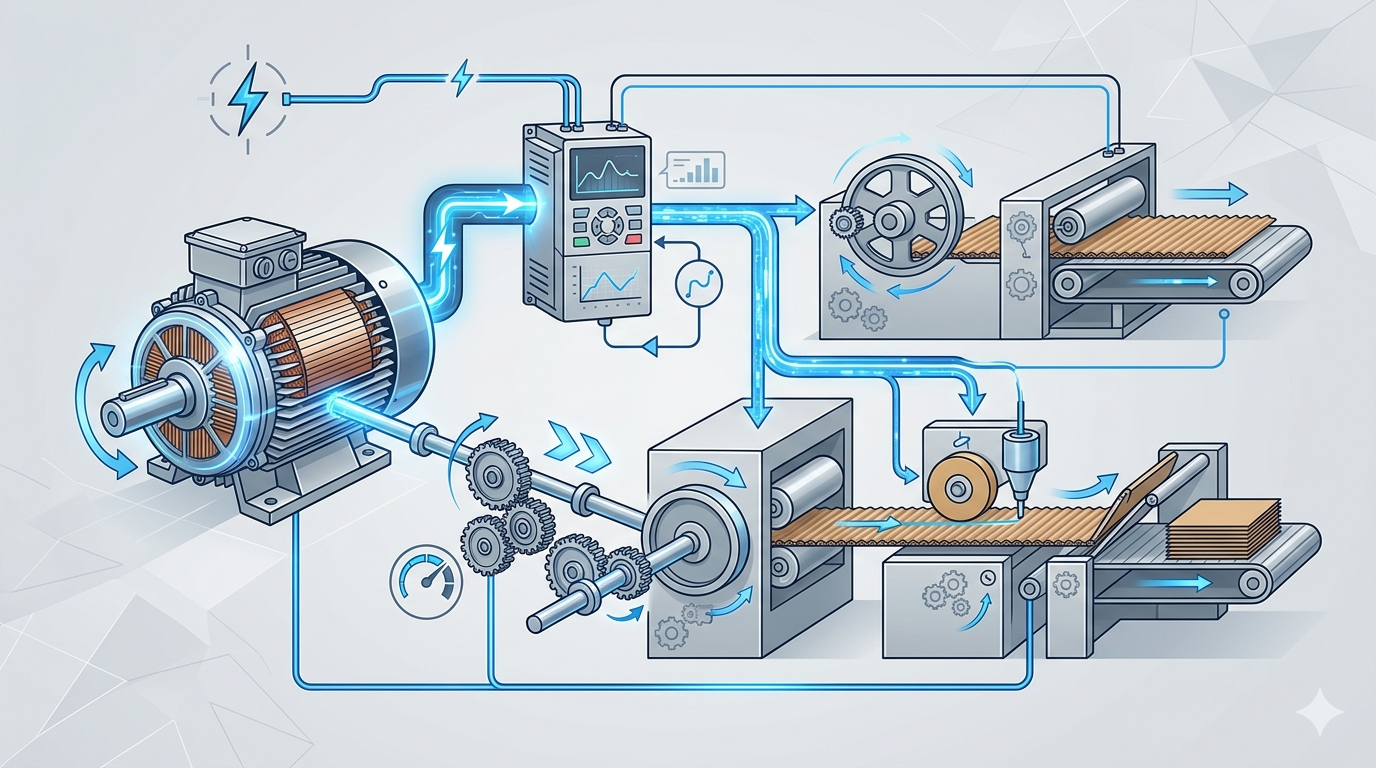
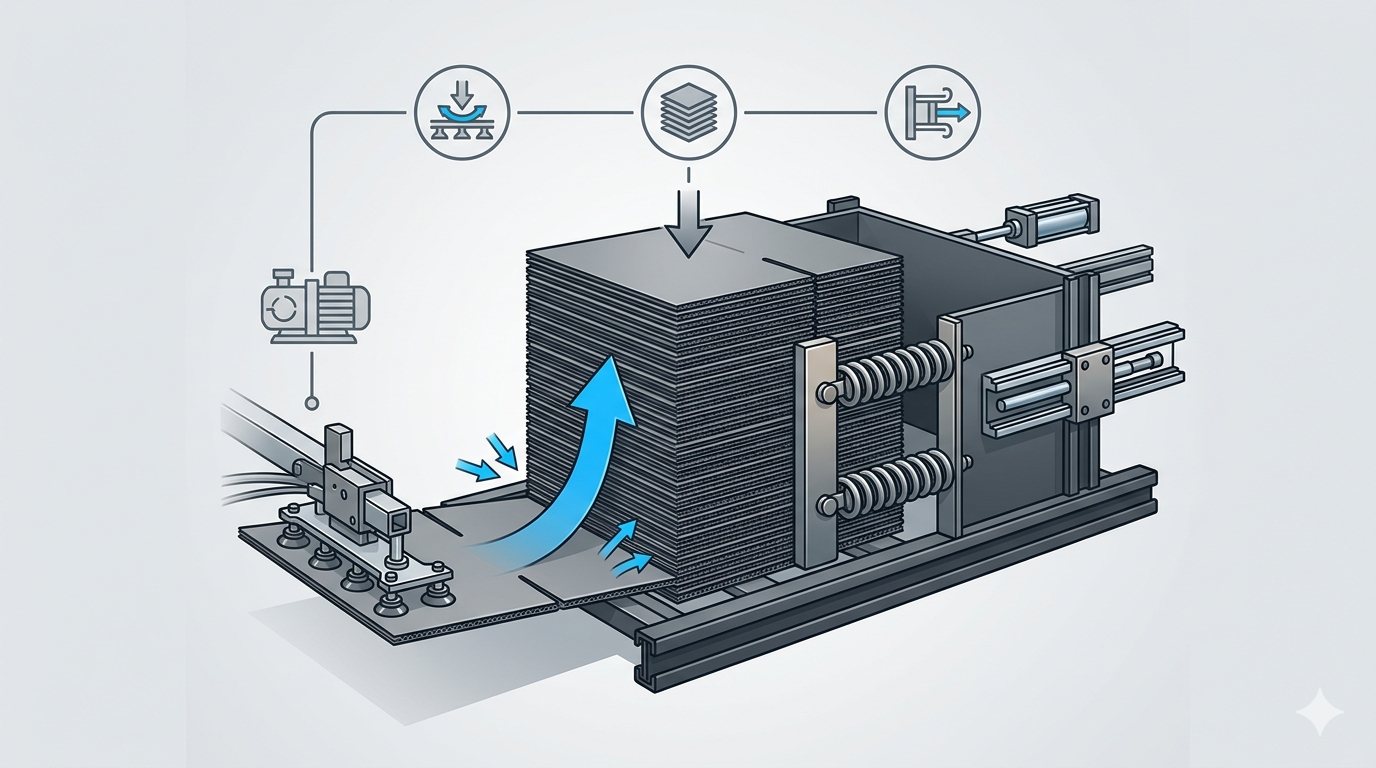
A fully automatic two-piece folding and gluing machine handles feeding, gluing, folding, splicing, patting and conveying as one continuous sequence. The defining feature is the two-piece construction. When a carton is too large to be made from a single sheet, two boards are joined at a splice and glued in the same pass, and the finished case leaves the line ready to stack. For the larger formats typical of multi-bottle oil cases, as well as heavy sauce and seasoning cases packed for distribution, this removes the manual steps that would otherwise be needed to assemble the carton.
The link between machine and application is straightforward. Oil cartons are heavy and tall, so their joints carry the weight of the load above. Sauce cartons usually run in repeat orders across several bottle sizes, so repeatability and changeover time matter in daily production. The machine does not alter the carton style or the board grade chosen by the customer, and it does not replace adhesive selection, which depends on the board and on the conditions the cartons will face. What it contributes is control over how the chosen design is folded and bonded, order after order.
Gluing and Splicing Features Matched to Bottled Product Cartons
The gluing section is the first place where bonding quality is decided. Our machine applies adhesive with mechanical rollers and can run hot glue or cold glue, with a spray glue system available as an option. That choice lets a carton maker match the method to the board and to the storage conditions expected for the finished case. The aim is a glue line of steady thickness from the first carton of an order to the last, which gives each seam enough bonding area without pushing excess adhesive onto the carton surface. For oil and sauce cases that will stand under load for weeks, this evenness is the property that counts most.
The splicing section addresses the large-carton joint directly. Two servo-driven belt conveyors move the boards toward the splice, and photoelectric guidance supports accurate alignment as they meet, so the glue line sits where it was designed to sit. The splice receives hot and cold double coating and steel-ball board pressing, which reinforce the zone that carries the greatest structural load in a heavy case. Guide plates are driven by electric leading screws with a memory function, so a repeat order can be restored from stored settings instead of being rebuilt by hand. This is helpful for sauce producers whose product lists bring the same carton formats back several times a year. Stable suction feeding at the entry and steady folding and patting at the exit present each carton in the same condition, which keeps the bonding stages working from a consistent starting point.
| Carton Demand | Machine Section | Contribution |
|---|---|---|
| Even glue line along the seam | Gluing section | Mechanical roller gluing with hot or cold glue, spray system optional |
| Accurate alignment of two large boards | Splicing section | Servo-driven belts with photoelectric guidance |
| Strong bond at the highest-load joint | Splicing section | Hot and cold double coating with steel-ball board pressing |
| Quick return to a known setup for repeat orders | Guide plate adjustment | Electric leading screws with memory function |
A Dependable Glue Line, Carton After Carton
For cooking oil and sauce bottle cartons, reliable bonding starts with consistent glue application and accurate alignment during folding. Our two-piece folding and gluing machine brings these operations together to help carton makers produce strong, well-formed cases for heavy bottled products. We manufacture our machines in-house, combining practical production experience with careful attention to bonding quality, carton accuracy and operating efficiency. Our equipment helps packaging manufacturers meet the demands of bottle carton production with greater confidence and consistency.
 Technical Encyclopedia