


Minimum tape spacing is an important technical specification in automated double-sided tape application processes. It refers to the shortest axial distance between the cutting end of the previous tape section and the starting end of the next tape application position.
In the semi-automatic double-sided tape applicator machine, the tape head is designed with a minimum spacing capability of 10mm (Min. Distance Between Two Sticking Ends: 10mm), supporting precise adhesive placement for compact packaging structures and industrial applications.
Industry Challenges of Conventional Tape Heads
In double-sided tape application processes, the distance between two adhesive sections directly affects product design flexibility and production consistency. Traditional tape heads often require a relatively larger spacing range because of limitations in mechanical structure, cutting response time, and tape feeding control. In practical applications, some conventional systems may struggle to maintain stable spacing below 20mm, which creates difficulties when manufacturers need to process small-size packaging components or products with closely arranged adhesive positions.
For industries such as premium packaging, electronics assembly, and printed products, adhesive placement accuracy is becoming increasingly important. Small gift boxes, cosmetic packaging, electronic accessories, and customized paper products often require shorter adhesive intervals to optimize material usage and maintain a clean appearance. When the minimum tape spacing is too large, the application layout may be restricted, affecting the overall design flexibility of finished products.
Another challenge comes from the cutting process. When a tape head attempts to shorten the distance between two application points without sufficient response control, delayed cutting action can cause issues such as incomplete tape separation, adhesive residue, or tape deformation. The combination of cutting delay and unstable tape tension may lead to irregular tape positioning, requiring operators to make manual adjustments during production.
Manual rework is another common concern in traditional adhesive application processes. If the tape spacing varies during continuous operation, workers may need to manually remove excess tape, correct adhesive positions, or inspect finished products. These additional steps increase labor requirements and reduce the efficiency advantages of automated tape application equipment.
Core Technology Behind 10mm Minimum Tape Spacing
Achieving a stable 10mm minimum tape spacing requires coordinated performance from the tape head structure, cutting system, and tape feeding mechanism. The tape head used in the semi-automatic double-sided tape applicator machine is developed with a compact mechanical design to reduce unnecessary movement distance between tape application and cutting operations.
The high-response cutting mechanism is one of the key factors influencing short tape spacing performance. By using a lightweight cutting structure with optimized mechanical response, the tape head can complete tape separation within a short operating cycle. The reduced response delay helps maintain accurate spacing between the previous tape end and the next application position, especially during repeated adhesive placement operations.
The tape feeding system also plays an important role in maintaining spacing accuracy. A stable feeding mechanism with controlled roller movement helps reduce tape slipping, stretching, and position deviation during operation. When the tape is cut and the next feeding cycle begins, precise control of tape movement ensures that the new application point remains within the required position range.
For double-sided adhesive materials, maintaining consistent tension is particularly important. Excessive tension may cause tape deformation, while insufficient tension may lead to wrinkles or unstable positioning. The tape head structure is designed to balance feeding force and tape stability, helping operators achieve reliable application results across different adhesive materials and product sizes.
The mechanical structure of the tape head is another factor affecting long-term accuracy. A rigid mounting design and adjustable positioning mechanism help maintain the relative position between the tape feeding unit and cutting unit. During extended production periods, stable mechanical positioning reduces the possibility of spacing variation caused by vibration or component movement.
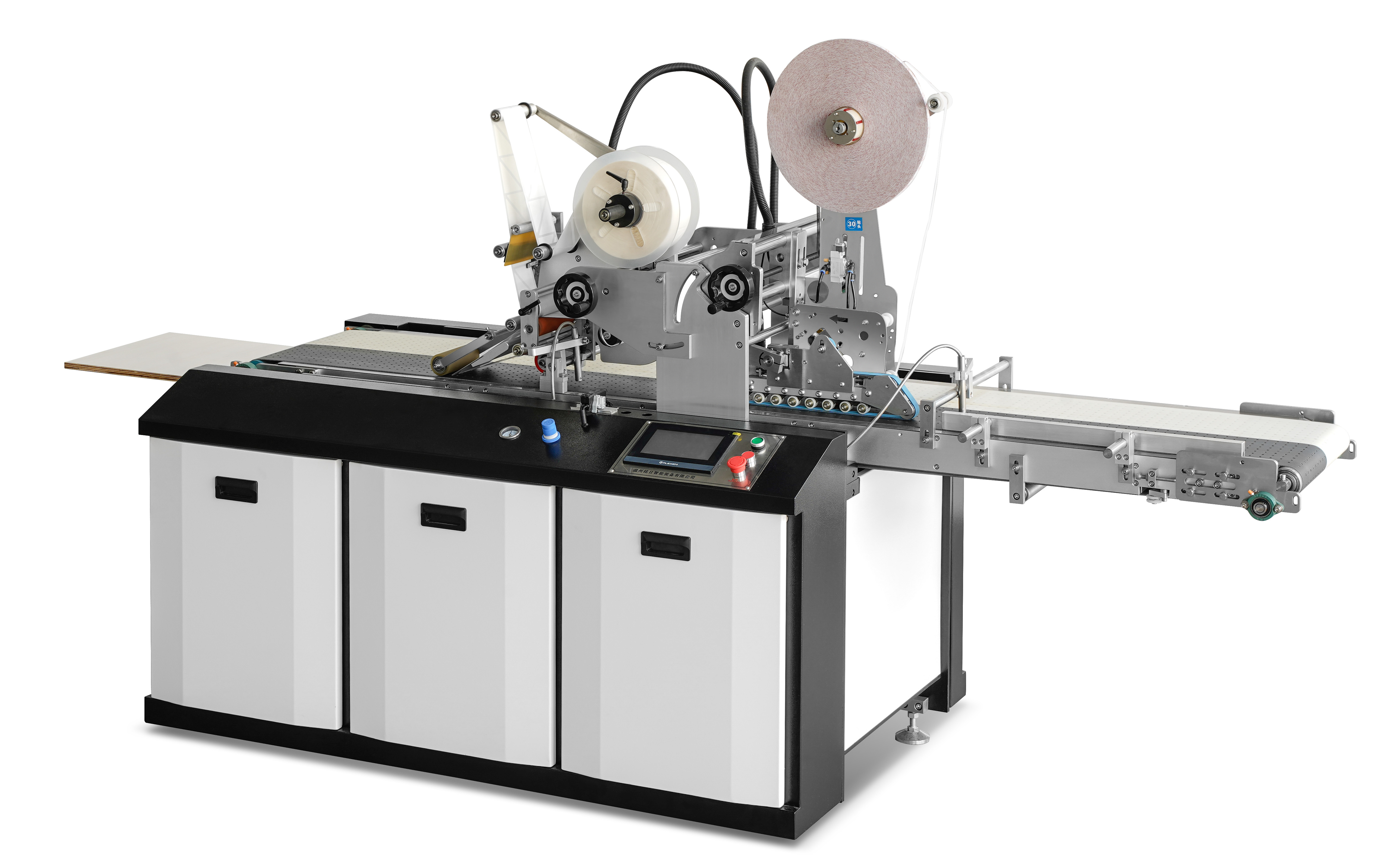
Integrated Performance Advantages of Semi-Automatic Double-Sided Tape Applicator Machine
The minimum tape spacing capability of 10mm is not only determined by the tape head itself but also supported by the overall control system of the semi-automatic double-sided tape applicator machine. The coordination between mechanical components and electronic control allows operators to adjust tape application parameters according to different product requirements.
The machine control system provides convenient parameter adjustment for tape length, application position, and operating sequence. Through accurate setting and repeatable control, manufacturers can maintain consistent adhesive placement for different production batches. This is especially valuable for companies handling multiple packaging designs that require frequent product changes.
The compact tape head structure also improves application flexibility. With a shorter minimum distance between adhesive points, the machine can better adapt to products with limited surface space or complex adhesive layouts. Applications may include paper boxes, cardboard packaging, promotional materials, electronic product accessories, and other components requiring precise double-sided tape placement.
Production efficiency is another consideration. Stable short-spacing performance allows shorter movement cycles during repeated applications, which can help improve overall operating efficiency when processing products requiring multiple adhesive positions. By reducing unnecessary tape gaps and minimizing manual adjustment requirements, manufacturers can achieve a more streamlined production workflow.
Compared with manual tape application methods, semi-automatic equipment provides better consistency and repeatability. Operators only need to place products according to the positioning requirements, while the machine performs controlled tape feeding, cutting, and application operations. This combination of operator flexibility and mechanical precision makes the equipment suitable for small and medium-volume production environments.
Reliable Double-Sided Tape Application Solution from Our Factory
As a professional manufacturer of adhesive application equipment, we focus on developing practical solutions that meet the requirements of modern packaging and industrial production. The semi-automatic double-sided tape applicator machine integrates a precision tape head design, stable feeding structure, and user-friendly control system to provide consistent adhesive application performance.
With a minimum tape spacing specification of 10mm, this machine helps manufacturers handle products requiring compact adhesive layouts and accurate tape positioning. Our engineering team continuously improves mechanical design, component coordination, and application flexibility to support different tape materials and production requirements.
We provide complete technical support, equipment customization options, and application guidance according to customer production conditions. For companies seeking a reliable semi-automatic double-sided tape applicator machine for packaging, printing, electronics, and industrial assembly applications, our factory offers professional manufacturing experience and tailored adhesive application solutions.
'/%3e%3cpath%20id='Rectangle%20455'%20d='M0%2011.1428H5.57143L22.2857%2052H0V11.1428Z'%20fill='%23CE221D'/%3e%3c/g%3e%3cdefs%3e%3clinearGradient%20id='paint0_linear_888_3811'%20x1='0'%20y1='26'%20x2='401.607'%20y2='26'%20gradientUnits='userSpaceOnUse'%3e%3cstop%20stop-color='%23153B8A'/%3e%3cstop%20offset='1'%20stop-color='%23153B8A'%20stop-opacity='0'/%3e%3c/linearGradient%3e%3c/defs%3e%3c/svg%3e) Products
Products
'/%3e%3cpath%20id='Rectangle%20455'%20d='M0%2012H6L24%2056H0V12Z'%20fill='%23CE221D'/%3e%3c/g%3e%3cdefs%3e%3clinearGradient%20id='paint0_linear_769_2773'%20x1='0'%20y1='28'%20x2='432.5'%20y2='28'%20gradientUnits='userSpaceOnUse'%3e%3cstop%20stop-color='%23153B8A'/%3e%3cstop%20offset='1'%20stop-color='%23153B8A'%20stop-opacity='0'/%3e%3c/linearGradient%3e%3c/defs%3e%3c/svg%3e)


