


In corrugated packaging, consistent box quality starts with stable feeding. However, varying board stiffness and surface coatings make precise feeding a challenge under high-speed operation. This is why high-performance rubber feeder belts have become essential in modern folder gluers—ensuring the reliable grip and exact timing needed to eliminate feeding deviations.
Feeding Stability Challenges in Corrugated Box Production
The feeding section is responsible for separating individual sheets from the hopper and transferring them into the following processing units. Although this process appears simple, it requires precise control of friction, pressure, and synchronization. In continuous production environments, the feeder system must work reliably with thousands of sheets passing through the machine every hour.
One common challenge in conventional feeding systems is belt slippage. Standard belts made from low-elasticity materials may experience reduced surface grip after extended operation due to wear, heat, and repeated mechanical stress. When the friction between the belt and corrugated board becomes inconsistent, the sheet may not be transferred at the expected speed. This can create variations in board positioning before folding and gluing operations.
For a corrugated folder gluer machine, unstable feeding can affect multiple downstream processes. If the board enters the folding section with a slight deviation, the folding line may not align correctly with the designed structure. Similarly, inaccurate positioning may influence glue application areas and increase the possibility of defective cartons. In high-volume carton plants, these small variations can lead to additional material consumption, production interruptions, and increased operator adjustment requirements.
Another challenge comes from the increasing variety of packaging materials. Modern box manufacturers often process different types of corrugated boards, including single-wall boards, double-wall boards, lightweight E-flute materials, and printed or laminated packaging sheets. A feeding system that performs well on one material may not always provide stable handling for another. Therefore, the feeder belt material and mechanical design have become important factors in improving the flexibility of a corrugated folder gluer machine.
Limitations of Conventional Feeding Belt Designs
Traditional synthetic feeding belts have been widely used in carton converting equipment because of their basic durability and cost efficiency. However, some conventional materials may not provide sufficient elasticity and surface adaptability for modern packaging requirements.
When a belt surface becomes harder over time, its ability to maintain consistent contact pressure with the board can decrease. This may result in weaker gripping performance, especially when handling lightweight or slightly uneven corrugated sheets. In addition, rigid contact between the belt and the board surface may increase the risk of marks or scratches on high-quality printed packaging.
For manufacturers producing premium retail packaging, cosmetic boxes, electronics packaging, or other visually demanding products, surface protection is an important consideration. The feeding system needs to provide enough traction to move the board accurately while avoiding unnecessary pressure that could damage the printed surface.
Maintenance requirements are another factor affecting production efficiency. Belt stretching, edge wear, and frequent tension adjustments can increase machine downtime and require additional operator attention. A well-designed feeding system should maintain stable performance over long operating periods while reducing the need for frequent manual adjustments.
High-Performance Rubber Feeder Belts Improve Feeding Reliability
A corrugated folder gluer machine equipped with high-elasticity natural rubber feeder belts can achieve more stable board handling through improved friction performance and material flexibility. Natural rubber has excellent elasticity and recovery characteristics, allowing the belt surface to maintain effective contact with corrugated sheets during continuous operation.
The high-friction surface of rubber feeder belts helps improve board separation from the hopper and supports more consistent sheet transfer. Whether processing lightweight corrugated materials or heavier double-wall boards, the feeding system can maintain reliable gripping performance when properly adjusted according to material conditions.
Compared with harder belt materials, rubber feeder belts provide a more balanced combination of grip and surface protection. The elastic surface can adapt to small variations in board flatness, helping reduce feeding instability caused by minor material deformation. This feature is especially valuable for packaging manufacturers that process a wide range of carton structures and board specifications.
The improved feeding consistency also supports the synchronization between different sections of the corrugated folder gluer machine. The feeder, folding section, gluing unit, and delivery system must operate together as an integrated process. When the feeding speed remains stable, the following mechanisms can perform more accurately, helping maintain consistent carton dimensions and production quality.
Protecting Printed Corrugated Packaging During High-Speed Processing
As packaging designs become more sophisticated, many corrugated boxes now include high-quality printing, coatings, and laminated surfaces. Protecting these surfaces during converting has become an important requirement for modern folder gluer equipment.
Rubber feeder belts provide firm but controlled contact with the board surface. Their softer material structure helps reduce aggressive friction that may cause visible marks on printed areas. This makes them suitable for applications where appearance quality is important, such as retail packaging, branded shipping boxes, and specialty corrugated products.
In addition to protecting the surface, stable feeding helps prevent side-wall deformation and incorrect positioning. When the board moves smoothly through the machine, the folding and gluing processes can achieve better consistency, reducing the possibility of appearance defects in finished cartons.
Engineering Advantages for Long-Term Machine Performance
For industrial packaging manufacturers, equipment reliability is closely related to component design. A professional corrugated folder gluer machine requires feeding components that can withstand continuous mechanical stress while maintaining accurate operation.
High-quality rubber feeder belts are typically designed with reinforced internal structures to improve tensile strength and dimensional stability. This helps reduce excessive stretching during long-term use and supports consistent belt tracking. Combined with proper tension adjustment and mechanical alignment, the feeding system can maintain stable performance during multi-shift production.
The durability of the feeder belt also contributes to lower maintenance requirements. By reducing problems related to slipping, uneven feeding, and frequent adjustments, manufacturers can improve machine availability and optimize production scheduling. While maintenance remains an essential part of any industrial machine operation, selecting reliable feeding components can help simplify daily machine management.
A Reliable Feeding Foundation for Advanced Corrugated Folder Gluer Machines
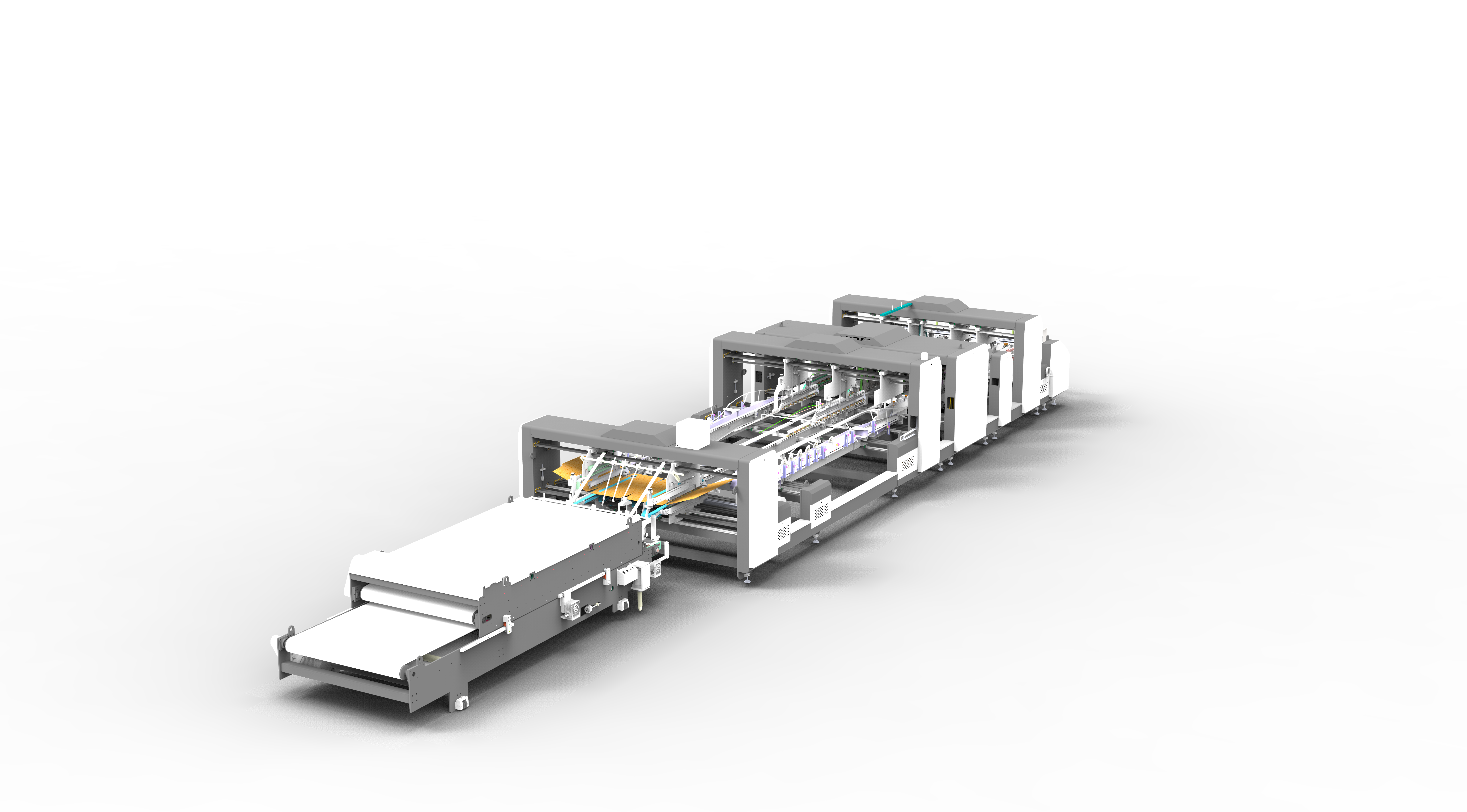
The performance of a corrugated folder gluer machine depends on how effectively every section works together. The feeding system provides the foundation for accurate folding, precise gluing, and consistent carton output. A high-quality feeder design with durable rubber belts helps manufacturers achieve more stable production by improving board grip, reducing feeding variations, and protecting packaging surfaces.
Our corrugated folder gluer machine integrates reliable feeding technology with a complete mechanical design focused on production stability and operational efficiency. From the feeder section to the folding and gluing systems, each component is engineered to support consistent carton converting performance across different packaging applications.
As carton manufacturers continue to face increasing requirements for quality, flexibility, and productivity, improvements in key components such as rubber feeder belts can create meaningful advantages in daily production. A stable feeding system is not only a mechanical detail but also an important foundation for achieving efficient and reliable corrugated box manufacturing.
'/%3e%3cpath%20id='Rectangle%20455'%20d='M0%2011.1428H5.57143L22.2857%2052H0V11.1428Z'%20fill='%23CE221D'/%3e%3c/g%3e%3cdefs%3e%3clinearGradient%20id='paint0_linear_888_3811'%20x1='0'%20y1='26'%20x2='401.607'%20y2='26'%20gradientUnits='userSpaceOnUse'%3e%3cstop%20stop-color='%23153B8A'/%3e%3cstop%20offset='1'%20stop-color='%23153B8A'%20stop-opacity='0'/%3e%3c/linearGradient%3e%3c/defs%3e%3c/svg%3e) Application Scenarios
Application Scenarios'/%3e%3cpath%20id='Rectangle%20455'%20d='M0%2012H6L24%2056H0V12Z'%20fill='%23CE221D'/%3e%3c/g%3e%3cdefs%3e%3clinearGradient%20id='paint0_linear_769_2773'%20x1='0'%20y1='28'%20x2='432.5'%20y2='28'%20gradientUnits='userSpaceOnUse'%3e%3cstop%20stop-color='%23153B8A'/%3e%3cstop%20offset='1'%20stop-color='%23153B8A'%20stop-opacity='0'/%3e%3c/linearGradient%3e%3c/defs%3e%3c/svg%3e)
'%3e%3cg%20id='Group%201315'%3e%3cg%20id='Group'%20opacity='0.5'%3e%3cpath%20id='Vector'%20d='M387.997%200L232.635%20265.605L58.6579%2086.8843L285.379%200H387.997Z'%20fill='url(%23paint0_linear_821_1490)'/%3e%3c/g%3e%3cg%20id='Group_2'%20opacity='0.5'%3e%3cg%20id='Group%201314'%3e%3cpath%20id='Vector_2'%20d='M376.103%2012.2625L298.38%20330L10.1988%20240.481L298.38%2012.2625H376.103Z'%20fill='url(%23paint1_linear_821_1490)'/%3e%3c/g%3e%3c/g%3e%3c/g%3e%3c/g%3e%3c/g%3e%3cdefs%3e%3clinearGradient%20id='paint0_linear_821_1490'%20x1='319.349'%20y1='11.6627'%20x2='157.133'%20y2='145.876'%20gradientUnits='userSpaceOnUse'%3e%3cstop%20stop-color='%23D2DFFF'/%3e%3cstop%20offset='1'%20stop-color='%23D2DFFF'%20stop-opacity='0.01'/%3e%3c/linearGradient%3e%3clinearGradient%20id='paint1_linear_821_1490'%20x1='253.685'%20y1='25.1395'%20x2='74.5789'%20y2='173.327'%20gradientUnits='userSpaceOnUse'%3e%3cstop%20stop-color='%23D2DFFF'/%3e%3cstop%20offset='1'%20stop-color='%23D2DFFF'%20stop-opacity='0.01'/%3e%3c/linearGradient%3e%3c/defs%3e%3c/svg%3e)