


Shorter lead times and more varied carton orders are changing how corrugated packaging plants manage production. Small batches, multiple box specifications, and frequent repeat orders mean that a machine may need to switch between different carton sizes several times during a working day. Under these conditions, productivity depends not only on running speed but also on how quickly and consistently the equipment can be prepared for the next order.
This makes changeover an important part of the actual productivity of a corrugated box folder gluer machine. When operators repeatedly measure, adjust, test, and correct machine positions, valuable production time can be lost between orders. Memory adjustment provides a practical way to make these repeated settings more controlled, particularly in the splicing section.
Why Traditional Changeovers Can Take Time
On conventional mechanical equipment, many changeover adjustments depend heavily on operator experience. When a new carton specification enters production, guide boards, paper-pressing components, conveying positions, and other working parts may need to be repositioned according to the carton dimensions.
The splicing section can be particularly sensitive. If guide boards are not positioned correctly, connected sheets may not enter the working area as intended. Operators may need to measure the carton, adjust the mechanism, run trial sheets, inspect the result, and make further corrections before production can continue.
This process becomes more significant when production involves frequent order changes. A single adjustment may take only a limited amount of time, but repeated setup work throughout the day can accumulate into noticeable non-productive time.
Manual adjustment can also create consistency challenges. Different operators may use slightly different methods or adjustment references, resulting in variations in setup accuracy. In the splicing process, this may contribute to positioning errors, uneven paper pressure, or bonding problems.
The underlying challenge is therefore not simply mechanical adjustment. It is the lack of a repeatable way to retain and recall settings for carton specifications that return regularly.
The Role of a Folder Gluer in Flexible Production
A folder gluer is an important stage in corrugated box production. After upstream processes such as printing and slotting, the carton blank must be accurately conveyed, folded, glued, and formed into the required structure. The performance of these operations directly affects finished-box quality and production flow.
As order structures become more diversified, a corrugated box folder gluer machine needs to support practical changes between different specifications. Traditional mechanical equipment can perform the basic folding and gluing functions, but frequent specification changes place greater demands on setup efficiency.
This is why we focus not only on machine operating performance but also on how adjustments are made and repeated. Making frequently used settings easier to reproduce can reduce unnecessary trial-and-error during production changeovers.
Memory Adjustment for Faster Splicing Setup
A key feature in the splicing section of our corrugated box folder gluer machine is leading screw electric adjustment with memory mode.
Commonly used settings can be preset and stored rather than requiring operators to manually measure and reposition the guide boards each time a familiar carton specification is produced. When the same or a similar specification returns to production, the stored setting can be recalled as a starting point for the new setup.
This makes the adjustment process more structured. Instead of beginning from an unknown mechanical position, the operator has an established setting available as a reference. Fine adjustment may still be necessary according to the actual board condition and production requirements, but the initial setup can be completed more directly.
The benefit is particularly relevant to plants producing several recurring carton sizes. When orders frequently move between these specifications, retaining their adjustment positions can reduce repeated measurement and positioning work at each changeover.
Memory adjustment therefore provides more than an electronic control function. It creates a practical method for retaining recurring setup information and making changeovers easier to reproduce.
Combining Memory Settings with Servo Conveying
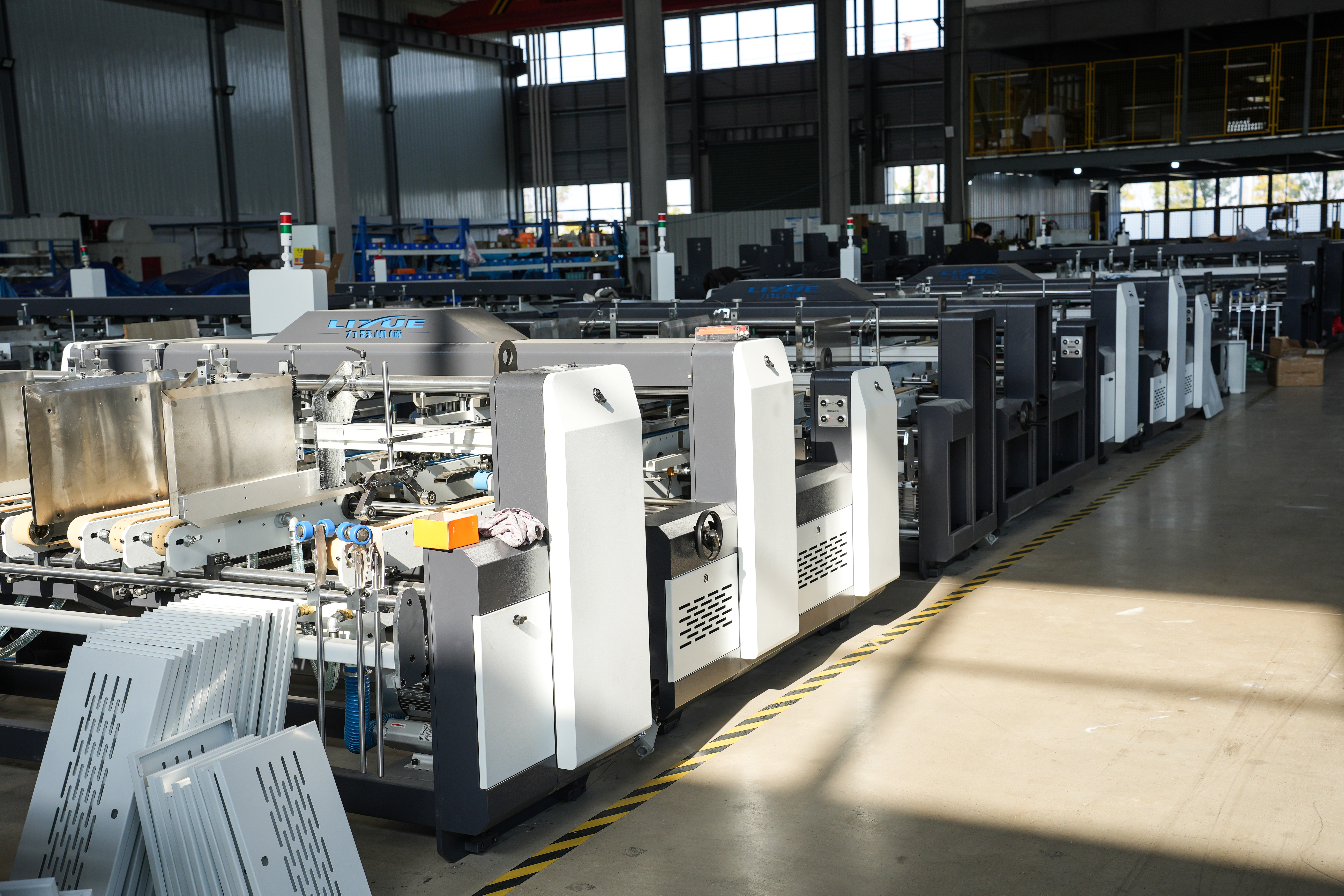
Memory adjustment works together with the mechanical and control systems around the splicing section. Our machine uses dual servo-driven synchronous conveyor belts to support controlled board conveying and positioning.
The servo-driven conveying system provides controlled movement during splicing, while the stored adjustment position provides a repeatable starting point when changing specifications. These functions address two connected requirements: establishing the correct setup position and maintaining controlled movement during production.
The splicing section also incorporates steel-ball paper pressing and photoelectric guidance. The paper-pressing structure helps maintain contact between the board and conveying system, while photoelectric guidance assists with detecting and controlling board positioning.
Together, these features can help reduce variations associated with purely manual positioning. This is useful when production shifts between operators because the setup can be based more on stored machine settings and defined adjustment positions.
Supporting Overall Changeover Efficiency
Although memory adjustment focuses on the splicing section, it also forms part of the machine's broader adjustment system.
The folding and knocking sections of our corrugated box folder gluer machine use independent motor-driven structures, providing flexibility for speed adjustment according to different production requirements. These systems work alongside the splicing section to support the overall production process.
An efficient changeover is therefore not simply about reducing one adjustment step. It is about making the machine easier to configure, verify, and return to production when carton specifications change.
This becomes particularly relevant in high-mix production, where frequent order changes can increase the amount of time spent between batches. Reducing unnecessary setup work allows operators to return to production sooner while maintaining the checks required for carton quality.
Building More Repeatable Folder Gluer Production
A modern corrugated box folder gluer machine should be considered not only by its operating capability but also by how effectively it handles repeated specification changes in actual production.
Memory adjustment is one example of this design approach. By combining leading screw electric adjustment, stored settings, servo-driven conveying, paper pressing, and photoelectric guidance, we aim to make the splicing process more controlled and repeatable.
The goal is not to eliminate operator involvement. Operators still need to verify board conditions, carton dimensions, and actual machine performance. Instead, the machine provides a defined starting point that reduces the need to recreate familiar settings through repeated manual trial and error.
As corrugated packaging orders become more varied and changeovers more frequent, these practical adjustment features can make a meaningful difference to daily production efficiency.
At our manufacturing facility, we continue to improve folder gluer equipment around real production requirements. Our focus on electric adjustment, memory-based positioning, servo conveying, and guided splicing is intended to help customers manage frequent order changes with less unnecessary changeover downtime and more consistent carton processing.
'/%3e%3cpath%20id='Rectangle%20455'%20d='M0%2011.1428H5.57143L22.2857%2052H0V11.1428Z'%20fill='%23CE221D'/%3e%3c/g%3e%3cdefs%3e%3clinearGradient%20id='paint0_linear_888_3811'%20x1='0'%20y1='26'%20x2='401.607'%20y2='26'%20gradientUnits='userSpaceOnUse'%3e%3cstop%20stop-color='%23153B8A'/%3e%3cstop%20offset='1'%20stop-color='%23153B8A'%20stop-opacity='0'/%3e%3c/linearGradient%3e%3c/defs%3e%3c/svg%3e) Products
Products
'/%3e%3cpath%20id='Rectangle%20455'%20d='M0%2012H6L24%2056H0V12Z'%20fill='%23CE221D'/%3e%3c/g%3e%3cdefs%3e%3clinearGradient%20id='paint0_linear_769_2773'%20x1='0'%20y1='28'%20x2='432.5'%20y2='28'%20gradientUnits='userSpaceOnUse'%3e%3cstop%20stop-color='%23153B8A'/%3e%3cstop%20offset='1'%20stop-color='%23153B8A'%20stop-opacity='0'/%3e%3c/linearGradient%3e%3c/defs%3e%3c/svg%3e)


