


The application of double-sided tape on long strip components requires accurate positioning, stable feeding, and suitable equipment configuration. Industries such as electronics, automotive components, decorative profiles, and industrial assemblies often process products with different dimensions and tape requirements. Understanding the specifications and size range of an automatic triangle double-sided tape applicator machine helps manufacturers select suitable equipment for their production needs.
Modern Substrate Handling Bottlenecks and Mechanical Constraints
In long strip product manufacturing, achieving repeatable adhesive placement presents distinct mechanical challenges. Traditional linear taping devices often utilize fixed adhesive heads or rudimentary guide rails. These older configurations frequently lack the physical adjustability needed to process diverse product runs on a single line. When operators must shift production between short component housings and extended architectural profiles, conventional machinery introduces significant changeover lag.
A primary issue with legacy equipment is material drift during high-speed feeding. Long strip products with minimal widths are inherently prone to lateral shifting or snaking when passing under pressure rollers. If the guide system does not feature microscopic calibration, small tracking deviations at the entry point amplify over the length of an 800mm workpiece. This results in tape overhang, exposed adhesive, or angular skewing. Furthermore, standard industrial tape dispensers often require extensive disassembly to replace spent material rolls. Technicians must frequently unbolt tension plates and re-thread complex roller pathways, which causes prolonged downtime and reduces overall equipment effectiveness.
Advanced Component Engineering and Mechanical Advantages
To resolve the operational inefficiencies of traditional taping methods, modern high-precision applicators incorporate distinct engineering upgrades. These component-level innovations focus specifically on reducing maintenance interventions and achieving sub-millimeter positional repeatability across long production shifts.
The 45-Degree Rotary Quick-Change Adhesive Head
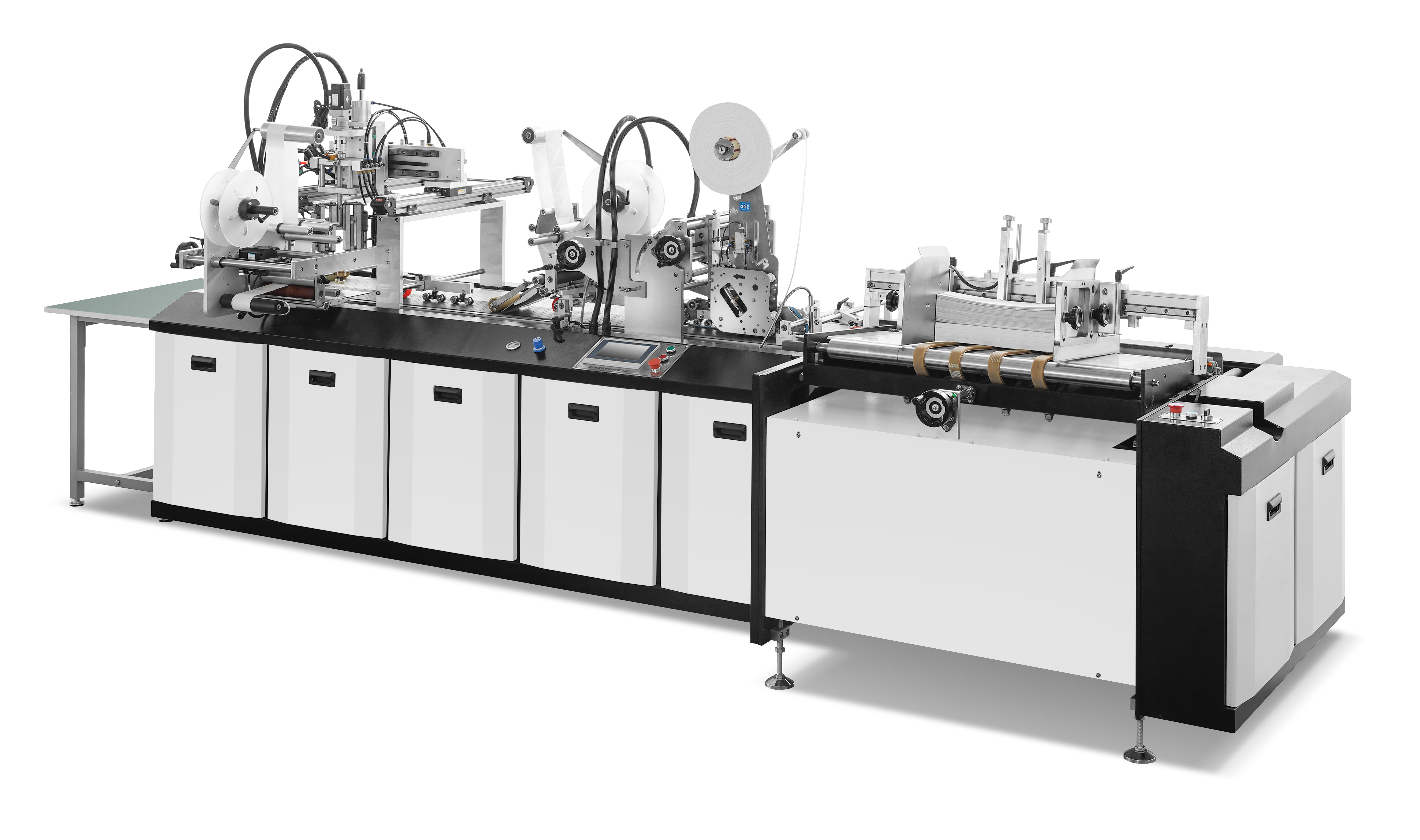
A major advancement in reducing production downtime is the integration of an adjustable, pivoting head mechanism. Instead of requiring technicians to work within confined mechanical frames to change spent adhesive rolls, the entire taping head assembly pivots smoothly at a 45-degree angle. This structural flexibility opens the workspace, allowing operators clear physical and visual access to the tape spindle. A standard tape roll replacement that typically requires several minutes on fixed-head machinery can be securely executed in approximately 30 seconds. This minimized intervention window ensures that linear production lines maintain steady uptime.
Micro-Adjustment Lead Screws and Steel Calibration Guides
Component alignment on this advanced machinery utilizes industrial-grade lead screws paired with high-contrast steel measuring rules. Rather than relying on approximate slide-and-lock mechanisms, operators adjust the lateral position of the tape application heads by rotating a precision handwheel. The lead screw system translates this rotation into linear movement, achieving a fine adjustment resolution of 0.5mm. The integrated steel rules allow technicians to verify coordinates instantly. This mechanical rigidity prevents the taping heads from shifting under vibration, maintaining exact placement along the entire edge of extended substrates.
Technical Specifications and Material Compatibility Matrix
Workpiece Dimensional Processing Bounds
The physical transport system and pressure rollers are engineered to handle a broad spectrum of linear profiles. The machine accommodates long strip products within the following dimensional parameters:
Long Strip Product Size Range: 100×60 mm to 800×450 mm (L×W)
This dimensional capacity allows manufacturing plants to run compact electronic backing plates and wide automotive interior trim panels on the exact same conveyor platform. The underlying feed mechanics support structural stability at both ends of the sizing spectrum, mitigating the risk of component slippage or edge damage during the compression phase.
Double-Sided Tape Width Adaptation Range
Adhesive specifications vary based on the structural bonding requirements of the final product. The tape dispensing and cutting mechanisms are designed to feed, tension, and sever industrial double-sided tapes within a specific width envelope:
- Minimum Supportable Tape Width: 5mm
- Maximum Supportable Tape Width: 35mm
- The tape guiding channels prevent narrow 5mm tapes from twisting or folding under tension, while the heavy-duty cutting anvils deliver clean, perpendicular cuts across wider 35mm adhesive webs. This structural adaptability supports various tape chemistries, including high-tack acrylic, foam-backed bonding tapes, and thin transfer films.
Strategic Production Integration and Industrial Output Optimization
Integrating an automatic triangle double-sided tape applicator machine into an existing assembly environment alters the economics of the finishing department. When transitioning from manual or semi-automated stations, production managers can systematically calculate the reduction in scrap rates and the stabilization of cycle times. The combination of consistent 0.5mm linear accuracy and minimized 30-second roll changeovers leads to predictable hourly output rates.
Choosing equipment according to product dimensions is an important step in achieving stable double-sided tape application. The automatic triangle double-sided tape applicator machine combines adjustable positioning design with flexible product and tape size compatibility to support different long strip product applications.
With a product size range of 100×60mm to 800×450mm and tape width support from 5mm to 35mm, our machine provides a practical solution for manufacturers looking for reliable and adaptable tape application equipment.
'/%3e%3cpath%20id='Rectangle%20455'%20d='M0%2011.1428H5.57143L22.2857%2052H0V11.1428Z'%20fill='%23CE221D'/%3e%3c/g%3e%3cdefs%3e%3clinearGradient%20id='paint0_linear_888_3811'%20x1='0'%20y1='26'%20x2='401.607'%20y2='26'%20gradientUnits='userSpaceOnUse'%3e%3cstop%20stop-color='%23153B8A'/%3e%3cstop%20offset='1'%20stop-color='%23153B8A'%20stop-opacity='0'/%3e%3c/linearGradient%3e%3c/defs%3e%3c/svg%3e) Products
Products
'/%3e%3cpath%20id='Rectangle%20455'%20d='M0%2012H6L24%2056H0V12Z'%20fill='%23CE221D'/%3e%3c/g%3e%3cdefs%3e%3clinearGradient%20id='paint0_linear_769_2773'%20x1='0'%20y1='28'%20x2='432.5'%20y2='28'%20gradientUnits='userSpaceOnUse'%3e%3cstop%20stop-color='%23153B8A'/%3e%3cstop%20offset='1'%20stop-color='%23153B8A'%20stop-opacity='0'/%3e%3c/linearGradient%3e%3c/defs%3e%3c/svg%3e)


