


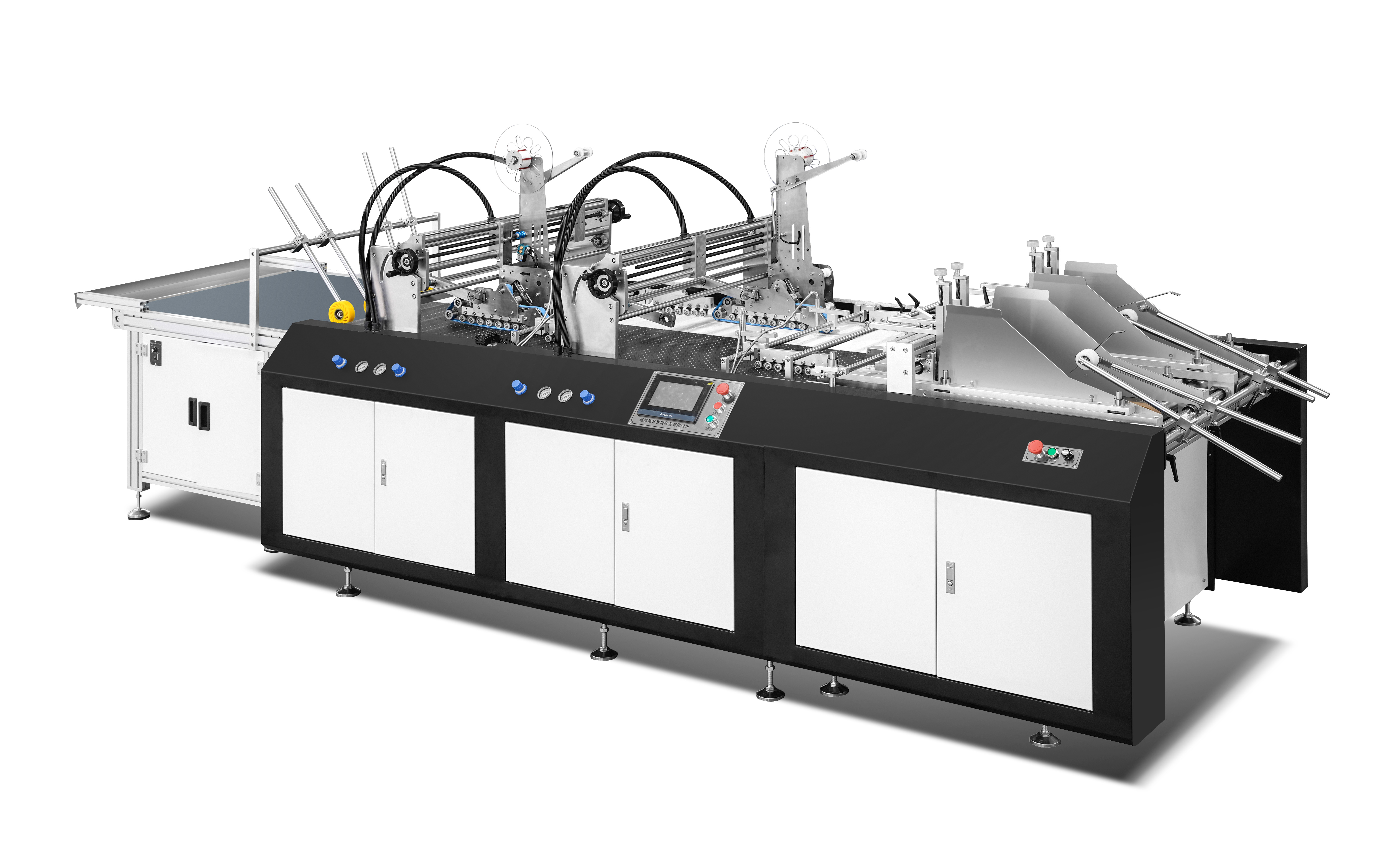
A double-sided tape applicator machine is an automated converting solution designed for precise double-sided tape application on various packaging materials, including rigid paperboard above 200gsm, plastic sheets, and E-flute, B-flute, and C-flute corrugated boards. By integrating automatic feeding, accurate tape positioning, pressing, and collection systems, the machine helps packaging manufacturers improve production consistency and processing efficiency.
Material Challenges in Automatic Tape Application
In packaging production, different materials require different tape application methods. Paperboard, plastic sheets, and corrugated boards vary significantly in thickness, surface characteristics, rigidity, and structural strength. These differences directly influence feeding stability, tape positioning accuracy, and bonding performance during continuous production.
Traditional manual tape application or conventional tape applying equipment may face challenges when processing heavier paperboard, smooth plastic materials, or structured corrugated boards. Operators often need to make frequent adjustments according to material changes, which can increase production preparation time and affect overall workflow efficiency.
For packaging manufacturers producing different types of cartons, display products, or paper-based components, a reliable double-sided tape applicator machine needs to provide stable material handling and flexible adjustment capability to support a wider range of substrates.
Feeding Stability for Heavy Paperboard and Plastic Sheets
One of the key challenges in automatic tape application is maintaining stable sheet transportation. Paperboard above 200gsm usually has higher rigidity and weight compared with standard paper materials, requiring a feeding system with sufficient friction and consistent pressure control.
Plastic sheets create another challenge because their smooth surfaces may reduce friction between the material and the feeding components. Without proper feeding control, material movement may become unstable, affecting the accuracy of tape placement.
A double-sided tape applicator machine designed for multiple material types typically uses a high-friction belt feeding mechanism to improve contact between the conveyor surface and the substrate. The optimized friction performance helps maintain stable transportation of rigid paperboard, plastic sheets, and corrugated boards during continuous operation.
This type of feeding structure is especially important for packaging applications where accurate tape positioning directly influences the quality of the finished product. Stable feeding reduces material deviation and helps maintain consistent processing results.
Accurate Tape Application on Different Packaging Materials
Different packaging materials have different surface structures and mechanical properties. Rigid paperboard generally provides a flat surface for tape application, while corrugated board includes flute structures that require controlled pressure during processing. Plastic sheets may require precise positioning because of their smooth surface characteristics.
A double-sided tape applicator machine uses adjustable tape application systems to accommodate different product requirements. The tape head position, feeding speed, and pressing conditions can be adjusted according to material thickness and product design.
For packaging manufacturers, this flexibility is valuable because one machine may need to process various products, including paper packaging components, carton accessories, advertising displays, and customized packaging structures.
Double-Sided Tape Application on Paperboard Above 200gsm
Heavy paperboard is widely used in packaging industries due to its rigidity, smooth appearance, and good printing performance. Materials above 200gsm are commonly found in premium packaging boxes, display products, and paper-based structural components.
When applying double-sided tape to rigid paperboard, the equipment needs to maintain precise feeding and stable pressure. Excessive pressure may affect the surface quality, while insufficient pressure may reduce tape contact.
A suitable double-sided tape applicator machine provides controlled tape placement and consistent pressing performance, helping manufacturers achieve reliable bonding results while maintaining the appearance and structure of the paperboard.
Processing E-Flute, B-Flute and C-Flute Corrugated Board
Corrugated board is one of the most common materials in modern packaging production. Different flute types provide different combinations of strength, cushioning performance, and material thickness.
E-flute corrugated board has a relatively fine flute structure and is often used for retail packaging, small cartons, and products requiring a smoother printing surface. Because of its thinner structure, accurate feeding and controlled pressing are important during tape application.
B-flute corrugated board provides a balance between strength and flexibility. It is commonly used for shipping cartons, medium-duty packaging, and various industrial packaging applications. During processing, the tape applicator needs to maintain stable positioning while adapting to the board structure.
C-flute corrugated board has a thicker flute profile and provides stronger cushioning performance. When applying tape to C-flute materials, the machine requires suitable pressure control to maintain adhesive contact while protecting the internal flute structure.
By supporting different corrugated board types, a double-sided tape applicator machine provides packaging manufacturers with greater production flexibility for various carton designs.
Rotatable Tape Head Design for Efficient Maintenance
In continuous production environments, tape replacement efficiency is an important factor affecting machine operation. Traditional fixed tape heads may provide limited working space during tape roll replacement, requiring additional adjustment steps.
A double-sided tape applicator machine with a rotatable tape head structure improves accessibility during maintenance operations. The tape head can be adjusted to create a more convenient replacement position, allowing operators to complete tape roll changes with fewer adjustment procedures.
This design helps reduce unnecessary downtime and improves the convenience of daily machine operation, especially for manufacturers handling multiple production orders with different tape requirements.
Multi-Head Control System for Flexible Tape Application
Packaging products often require different tape positions or multiple adhesive lines depending on their structure. A multi-head double-sided tape applicator machine provides greater flexibility by allowing multiple tape application units to work together.
Through PLC-based control, operators can adjust tape application parameters according to product requirements. Different tape positions, application patterns, and production settings can be managed through the control interface.
This function is suitable for packaging manufacturers producing customized cartons, paper products, and other applications requiring multiple tape strips. It helps reduce manual operation steps and improves production consistency.
Straight-Out Fish Scale Delivery System for Organized Collection
After tape application, efficient product collection is important for maintaining continuous production. A straight-out fish scale delivery system arranges finished products in an overlapping pattern during output, helping maintain orderly stacking.
Compared with manual collection methods, an organized delivery system makes finished products easier to handle, count, inspect, and package. The structure also helps reduce unnecessary surface friction between products during transportation.
For manufacturers with high-volume packaging production requirements, an effective collection system supports smoother workflow from tape application to final packing.
Supporting Flexible Packaging Production with Advanced Tape Application Technology
As packaging products continue to develop toward customization and efficient production, automated tape application technology plays an important role in improving manufacturing processes. A double-sided tape applicator machine provides a practical solution for applying adhesive tapes on rigid paperboard, plastic sheets, and E/B/C flute corrugated boards.
With stable material feeding, accurate tape placement, flexible multi-head control, and organized product collection, our multihead modern tape application equipment helps packaging manufacturers achieve more efficient and reliable production processes while meeting the requirements of different packaging applications.
'/%3e%3cpath%20id='Rectangle%20455'%20d='M0%2011.1428H5.57143L22.2857%2052H0V11.1428Z'%20fill='%23CE221D'/%3e%3c/g%3e%3cdefs%3e%3clinearGradient%20id='paint0_linear_888_3811'%20x1='0'%20y1='26'%20x2='401.607'%20y2='26'%20gradientUnits='userSpaceOnUse'%3e%3cstop%20stop-color='%23153B8A'/%3e%3cstop%20offset='1'%20stop-color='%23153B8A'%20stop-opacity='0'/%3e%3c/linearGradient%3e%3c/defs%3e%3c/svg%3e) Products
Products
'/%3e%3cpath%20id='Rectangle%20455'%20d='M0%2012H6L24%2056H0V12Z'%20fill='%23CE221D'/%3e%3c/g%3e%3cdefs%3e%3clinearGradient%20id='paint0_linear_769_2773'%20x1='0'%20y1='28'%20x2='432.5'%20y2='28'%20gradientUnits='userSpaceOnUse'%3e%3cstop%20stop-color='%23153B8A'/%3e%3cstop%20offset='1'%20stop-color='%23153B8A'%20stop-opacity='0'/%3e%3c/linearGradient%3e%3c/defs%3e%3c/svg%3e)


