


Packaging orders are becoming more diverse. E-commerce, food and beverage, consumer goods, and customized packaging can require manufacturers to produce several box sizes and styles in relatively small batches, often with short delivery windows. This shift creates a practical challenge for conventional folding and gluing equipment: machines designed around long production runs may require considerable adjustment when the next order has different dimensions or board specifications. As changeovers become more frequent, the flexibility of a corrugated box folder gluer machine becomes more important in maintaining efficient production.
Why Traditional Folder Gluer Machines Struggle With High-Mix Orders
Long Changeovers Reduce Effective Production Time
Traditional folder gluer machines often rely heavily on mechanical adjustment. Operators may need to manually reposition guides, folding components, and other working sections before a different carton specification can run correctly.
For large orders, this adjustment time can be distributed across a long production run. For small batches, the situation is different. If an order only requires a limited quantity, a substantial setup period can represent a significant share of the total production time. Frequent stopping and trial running can also make scheduling more difficult when several orders need to be completed within the same delivery window.
The challenge is not simply machine speed. A machine may have sufficient running capacity, but if every changeover requires extensive manual intervention, its practical flexibility remains limited.
Frequent Changes Can Affect Folding Accuracy
High-mix production can involve different board thicknesses, blank dimensions, folding structures, and production speeds. These changes place additional demands on the feeding, folding, and conveying systems.
When conventional mechanical transmission systems are repeatedly started, stopped, or adjusted, maintaining consistent synchronization can become more difficult. Poorly matched settings may contribute to folding deviation, glue-line displacement, fish-tailing, or other carton-forming defects.
These problems are particularly relevant for short production runs because there may be less time available to stabilize the machine before the required quantity has already been produced. Material used during repeated testing and adjustment also adds to production waste.
Previous Settings Are Difficult to Reproduce
Another challenge is repeatability. A customer may place the same carton order again after several weeks, but a manually adjusted machine may not provide an efficient way to reproduce the previous setup.
Operators may have to rely on records, measurements, or personal experience to determine the correct positions and operating parameters. Even when experienced operators can achieve the required result, repeating the same adjustment process consumes time and can introduce variation between production runs.
For manufacturers handling many recurring small orders, the ability to reproduce established settings can be just as important as the ability to create a new setup.
Independent Servo Drive Supports Faster Production Adjustments
One important feature is the use of independent motor or servo-driven sections for key operating stations, including feeding, folding, and carton alignment or tapping functions.
With independent drive control, different sections can be adjusted according to their specific operating requirements rather than depending entirely on a common mechanical transmission relationship. This provides operators with greater flexibility when production conditions change.
For example, when switching between carton specifications, the feeding and folding requirements may not remain identical. Independent drive control allows the relevant operating sections to respond to new parameters without requiring the entire machine to be mechanically reconfigured to the same extent as a conventional system.
The benefit becomes particularly noticeable in high-mix production. Instead of treating every new carton as a completely new mechanical setup, operators can make targeted adjustments to the sections that need to change.
The paper tapping section also supports practical changeover requirements through a quick length adjustment design. This is useful when different carton lengths are produced during the same working period, helping reduce the amount of manual intervention required between jobs.
Independent drive control does not eliminate the need for correct setup. Rather, it gives operators a more flexible control structure for adapting the machine to different production conditions while maintaining coordinated carton movement.
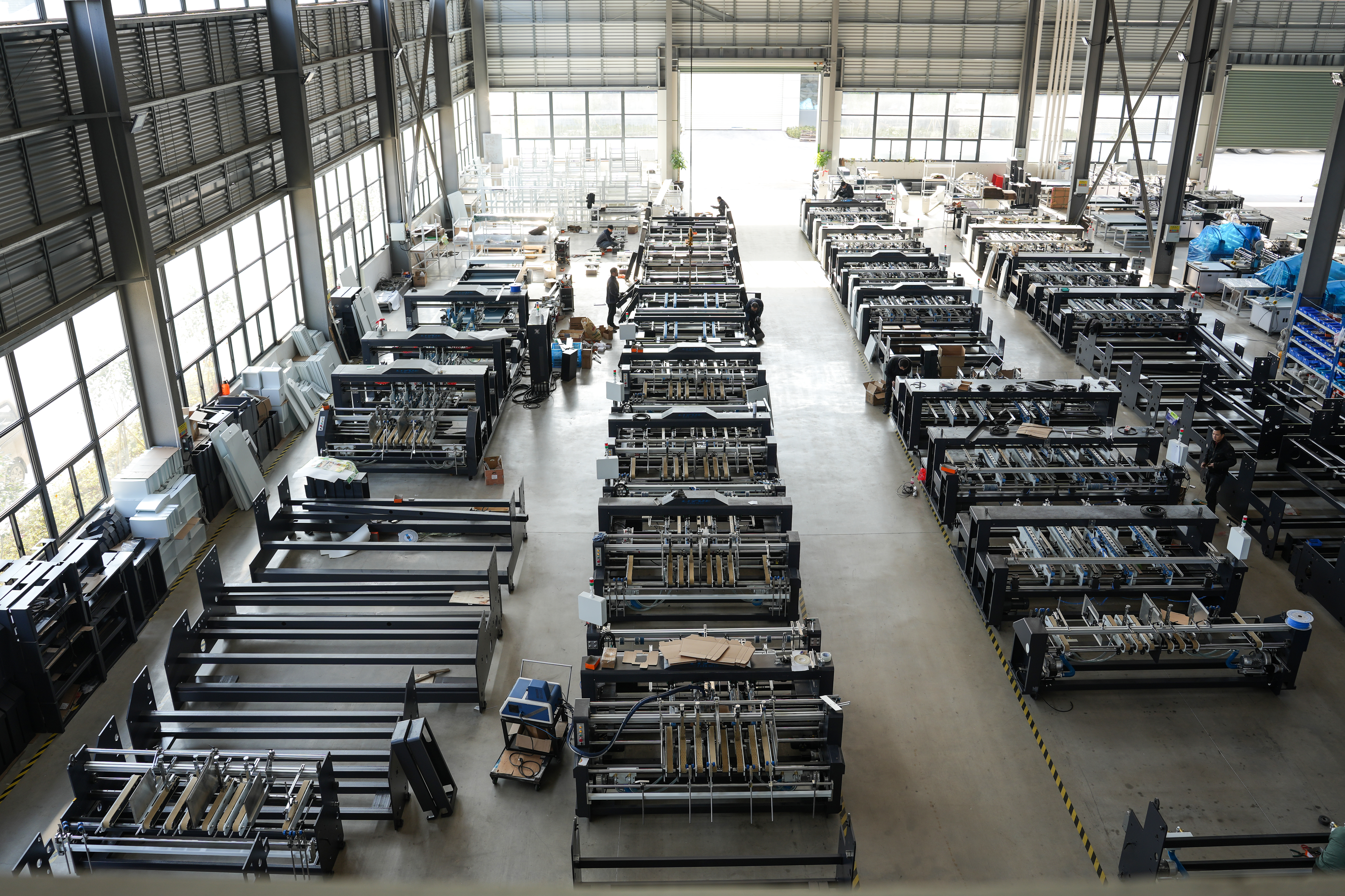
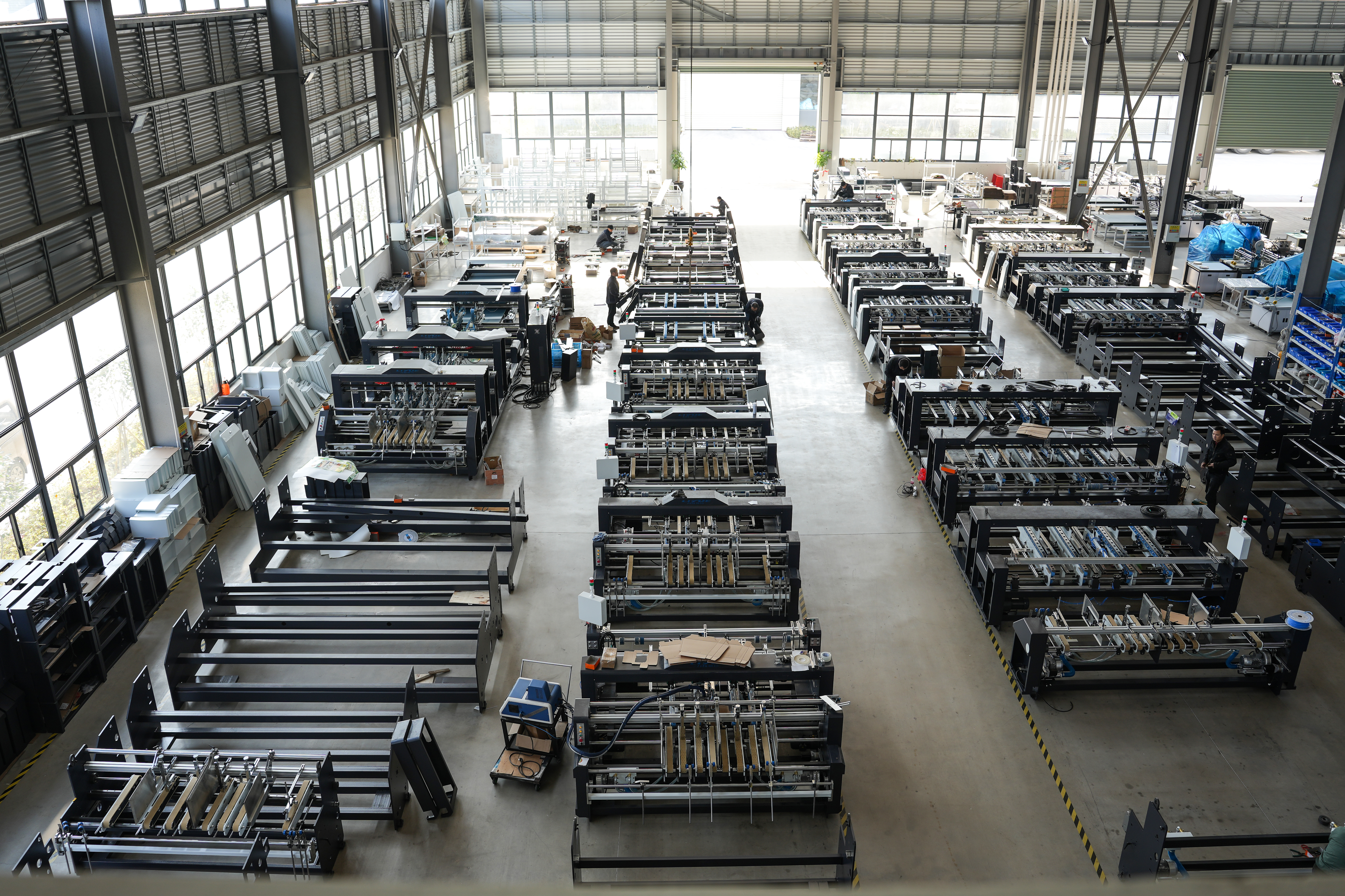
Electric Memory Adjustment Makes Repeat Orders Easier to Reproduce
Our corrugated box folder gluer machine incorporates an electrically adjusted splicing section with multiple guide structures and screw-driven positioning. More importantly for high-mix production, the adjustment system can work with a memory mode.
When a carton specification has already been set and the required parameters have been established, the settings can be retained for subsequent production. When the same or a similar order returns, operators can use the stored settings as a starting point instead of rebuilding the setup entirely from manual measurements.
This approach can reduce trial-and-adjustment work and improve consistency between repeat production runs. It is especially useful for manufacturers whose order mix includes many customers with different carton dimensions but also contains recurring box specifications.
The splicing section can also use photoelectric guidance to assist positioning accuracy. Combined with electrically controlled adjustment, this provides a more structured approach to managing carton alignment when production switches between different specifications.
The objective is not simply to make one production run faster. It is to make the machine easier to operate across multiple production cycles, where the same box may need to be produced again after other orders have been completed.
Designed Around Real High-Mix Production Requirements
Flexible production does not depend on a single component. A practical corrugated box folder gluer machine must accommodate different board conditions and carton structures while maintaining a manageable operating process.
Depending on the production configuration, gluing methods can also be selected to suit different applications, including hot and cold glue requirements. The machine can be configured for a range of corrugated board specifications, allowing manufacturers to handle more than one type of carton within their normal production range.
These features complement the two primary flexibility functions: independent drive control for responsive adjustment and electrically controlled memory adjustment for repeatable production.
Together, they address two different problems. Independent drives help operators respond to a new order, while memory-based adjustment helps them return to an established order without starting the setup process from zero.
Building Folder Gluer Equipment for More Flexible Production
High-mix, low-volume production requires more than simply increasing machine speed. When orders change frequently, manufacturers also need to control the time spent on setup, reduce unnecessary trial production, and maintain consistent carton forming from one batch to the next.
As a corrugated box folder gluer machine manufacturer, we develop our equipment around these practical production requirements. Independent servo-driven working sections provide greater adjustment flexibility, while electric memory adjustment helps manufacturers reproduce established settings for recurring orders. Supporting functions such as quick paper tapping adjustment, guided splicing, and adaptable gluing configurations further contribute to a more flexible production process.
We focus on improving folder gluer equipment based on real production needs, helping customers manage diverse carton orders with a more controlled and repeatable setup process.
'/%3e%3cpath%20id='Rectangle%20455'%20d='M0%2011.1428H5.57143L22.2857%2052H0V11.1428Z'%20fill='%23CE221D'/%3e%3c/g%3e%3cdefs%3e%3clinearGradient%20id='paint0_linear_888_3811'%20x1='0'%20y1='26'%20x2='401.607'%20y2='26'%20gradientUnits='userSpaceOnUse'%3e%3cstop%20stop-color='%23153B8A'/%3e%3cstop%20offset='1'%20stop-color='%23153B8A'%20stop-opacity='0'/%3e%3c/linearGradient%3e%3c/defs%3e%3c/svg%3e) Products
Products
'/%3e%3cpath%20id='Rectangle%20455'%20d='M0%2012H6L24%2056H0V12Z'%20fill='%23CE221D'/%3e%3c/g%3e%3cdefs%3e%3clinearGradient%20id='paint0_linear_769_2773'%20x1='0'%20y1='28'%20x2='432.5'%20y2='28'%20gradientUnits='userSpaceOnUse'%3e%3cstop%20stop-color='%23153B8A'/%3e%3cstop%20offset='1'%20stop-color='%23153B8A'%20stop-opacity='0'/%3e%3c/linearGradient%3e%3c/defs%3e%3c/svg%3e)


