


In corrugated packaging production, the maximum blank size (max. blank size) is one of the most important technical parameters used to evaluate the capability of a folder gluer machine. It is not simply a dimensional specification on a datasheet. Instead, it defines the physical and mechanical processing boundary of the entire folding and gluing system, directly affecting production stability, carton range, and line efficiency.
Understanding this parameter is essential for manufacturers selecting a folder gluer, especially in high-volume corrugated converting lines where consistency, speed, and structural accuracy are critical.
1. Definition of Max. Blank Size in a Folder Gluer Machine
The max. blank size refers to the largest unfolded die-cut corrugated sheet that a folder gluer machine can continuously process through its feeding, alignment, folding, and gluing sections in a single pass.
In practical terms, it defines:
- Maximum blank width (W)
- Maximum blank length (L)
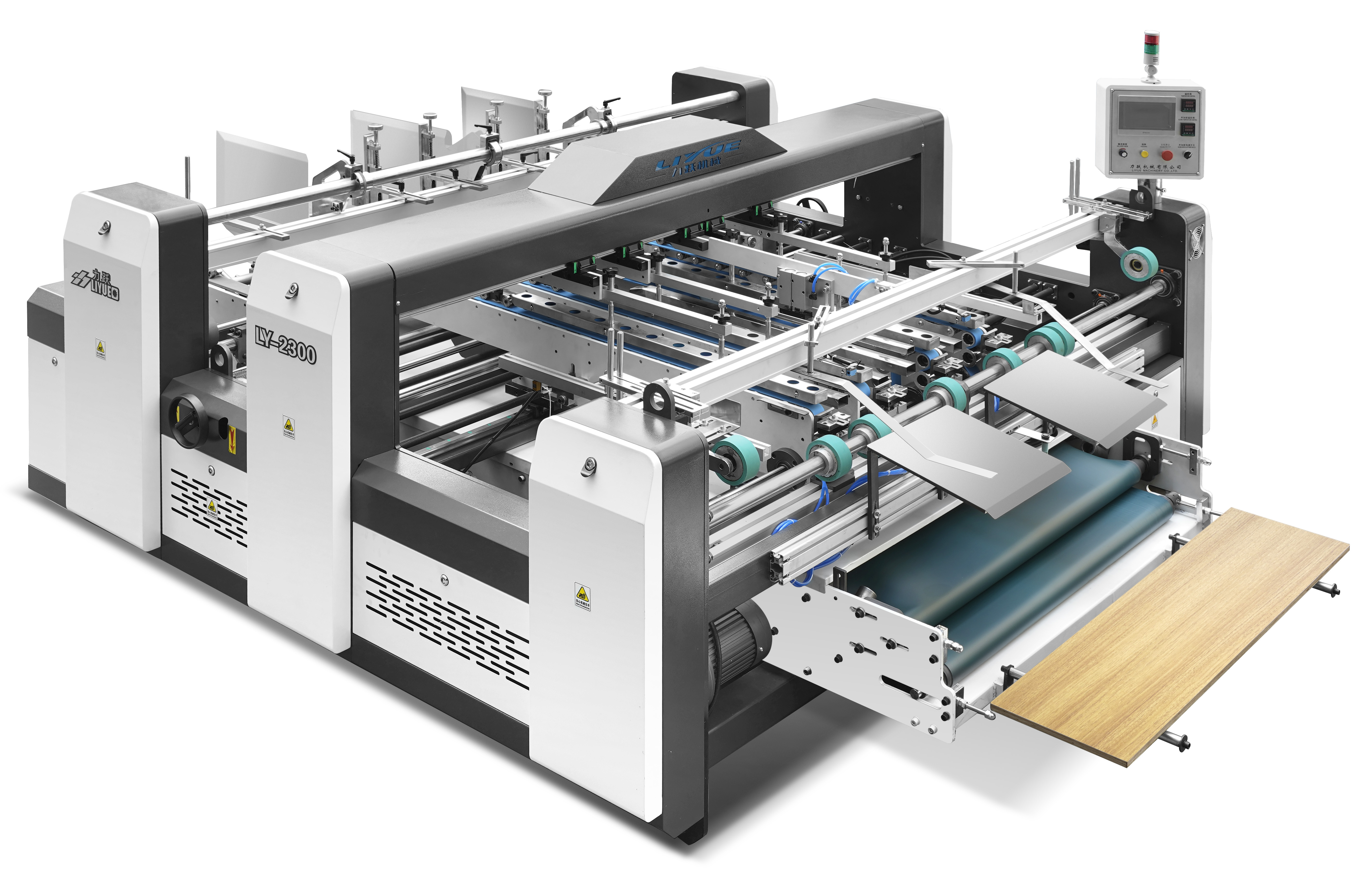
For example, in industrial models such as the LY-2300 series folder gluer, the typical maximum processing range may reach approximately:
- Max blank size: 1100 mm × 1150 mm
This value represents the upper operational envelope of the machine’s mechanical system, including feeding stability, conveyor synchronization, and folding rail tolerance.
When a blank exceeds this limit, the machine can no longer guarantee stable transport or accurate folding performance.
2. Why Max. Blank Size Is a Critical Engineering Parameter
Unlike simple machine dimensions, max. blank size is a system-level constraint that reflects the integration of multiple mechanical subsystems:
- Friction or suction feeding system
- Conveyor and timing belt synchronization
- Folding rail geometry
- Side guide positioning system
- Glue application alignment
- Structural frame rigidity
Each subsystem must work in precise coordination. The max. blank size therefore becomes a design-driven limitation, not just a theoretical measurement.
In modern corrugated packaging lines, this parameter directly determines:
- The largest carton format that can be produced
- The compatibility with industrial packaging standards
- The machine’s suitability for export-grade cartons
- The range of folding styles (straight line, crash lock bottom, multi-point glue boxes, etc.)
3. Mechanical Influence on Feeding Stability
One of the most sensitive areas affected by blank size is the feeding section.
When a blank approaches the maximum size limit:
3.1 Increased Friction Load
Large blanks increase the contact surface area on friction belts or suction feeding systems. This leads to:
- Uneven pressure distribution
- Reduced grip stability
- Higher risk of double-sheet feeding or misfeeding
3.2 Feeding Deviation Risk
If the blank width exceeds optimal tolerance:
- Side guides cannot fully stabilize the sheet
- Slight skewing occurs at entry point
- Accumulated deviation affects downstream folding accuracy
3.3 Jam Probability Increase
Oversized blanks may:
- Overlap transport rollers
- Interfere with timing belts
- Cause instant mechanical stoppage
This is why the feeding section is typically designed with adjustable side guides and servo-controlled synchronization systems in high-end folder gluers.
4. Folding System Limitations and Alignment Control
The folding section is where max. blank size becomes most critical.
A folder gluer relies on a series of precision folding rails and guide belts to shape corrugated blanks into final carton structures.
When operating near maximum capacity:
4.1 Rail Coverage Limitation
Oversized blanks may extend beyond folding rail support zones, causing:
- Partial folding
- Inconsistent crease activation
- Edge collapse in corrugated board
4.2 Glue Seam Misalignment
If the blank is not properly controlled:
- Glue lines may shift from intended bonding position
- Side seam overlap becomes unstable
- Final carton strength is reduced
4.3 Skew Accumulation
Even a 1–2 mm deviation at feeding can become:
- 5–10 mm deviation at folding stage
- Significant alignment failure at delivery section
Therefore, max. blank size is not only about “fit,” but about maintaining full-process geometric stability.
5. Conveyor Synchronization and Timing System Impact
Modern folder gluers rely on synchronized conveyor systems, often driven by servo motors or mechanical timing belts.
When blank length approaches the maximum limit:
- The gap between consecutive sheets becomes harder to maintain
- Timing synchronization becomes more sensitive to load variation
- Transport inertia increases
This leads to several operational risks:
- Irregular spacing between cartons
- Reduced machine speed stability
- Increased wear on drive components
High-performance systems solve this through:
- Servo-driven independent sections
- Intelligent gap control systems
- Automatic speed compensation algorithms
6. Structural Rigidity and Machine Frame Engineering
The max. blank size rating is also a reflection of the machine’s structural engineering strength.
Processing large corrugated sheets introduces significant mechanical stress:
- Torsional force on folding rails
- Lateral pressure on side frames
- Vibration amplification at high speed
To maintain precision, industrial folder gluers typically use:
- 16mm heavy-duty steel frame structures
- Cold-rolled or heat-treated steel panels
- Reinforced crossbeam design
- Anti-vibration base support systems
This ensures that even at maximum blank size operation:
- Frame deflection remains minimal
- Folding accuracy is preserved
- Long-term mechanical stability is maintained
Without sufficient rigidity, machine accuracy will degrade rapidly under continuous heavy-duty operation.
7. Production Capability and Application Range
The max. blank size directly determines the production versatility of a folder gluer machine.
A larger processing envelope allows manufacturers to produce:
- Large industrial export cartons
- Appliance packaging boxes (TV, refrigerator, washing machine)
- Heavy-duty logistics cartons
- Multi-layer corrugated shipping boxes
- Custom oversized packaging structures
Smaller machines, by contrast, are limited to:
- Standard e-commerce cartons
- Small retail packaging
- Lightweight folding boxes
Therefore, selecting a machine with an appropriate max. blank size is essential for:
- Product diversification
- Market expansion capability
- Long-term production scalability
8. Relationship Between Max. Blank Size and Machine Speed
It is important to understand that maximum size and maximum speed are inversely related in real production conditions.
When operating near maximum blank size:
- Machine speed is typically reduced
- Acceleration and deceleration phases are extended
- Mechanical stress per cycle increases
For example:
- Small-to-medium blanks → high-speed stable production
- Near-maximum blanks → controlled speed for accuracy
This balance is necessary to ensure:
- Folding precision
- Glue application consistency
- Transport stability
9. Practical Selection Guidelines for Manufacturers
When choosing a folder gluer machine, manufacturers should not only consider nominal speed or automation level. The max. blank size should be matched to real product demand.
Key selection factors include:
- Largest carton format in production portfolio
- Board type (E-flute, B-flute, C-flute, double wall)
- Seasonal product expansion requirements
- Export packaging specifications
- Future production scalability
A recommended engineering principle is:
The machine’s max. blank size should exceed actual production requirements by at least 10–15% safety margin.
This ensures long-term operational flexibility and reduces mechanical stress.
10. Conclusion: Why Max. Blank Size Defines Folder Gluer Capability
The maximum blank size of a folder gluer machine is not just a specification—it is a comprehensive indicator of mechanical design strength, system synchronization capability, and production flexibility.
It determines:
- The physical limits of carton processing
- The stability of feeding and folding systems
- The structural rigidity of the machine frame
- The range of packaging applications
- The long-term scalability of production lines
In modern corrugated packaging factories, understanding and correctly evaluating this parameter is essential for building a stable, efficient, and future-ready production system.
A properly selected folder gluer with an appropriate max. blank size ensures not only smooth daily operation, but also consistent product quality and long-term return on investment.
'/%3e%3cpath%20id='Rectangle%20455'%20d='M0%2011.1428H5.57143L22.2857%2052H0V11.1428Z'%20fill='%23CE221D'/%3e%3c/g%3e%3cdefs%3e%3clinearGradient%20id='paint0_linear_888_3811'%20x1='0'%20y1='26'%20x2='401.607'%20y2='26'%20gradientUnits='userSpaceOnUse'%3e%3cstop%20stop-color='%23153B8A'/%3e%3cstop%20offset='1'%20stop-color='%23153B8A'%20stop-opacity='0'/%3e%3c/linearGradient%3e%3c/defs%3e%3c/svg%3e) Products
Products
'/%3e%3cpath%20id='Rectangle%20455'%20d='M0%2012H6L24%2056H0V12Z'%20fill='%23CE221D'/%3e%3c/g%3e%3cdefs%3e%3clinearGradient%20id='paint0_linear_769_2773'%20x1='0'%20y1='28'%20x2='432.5'%20y2='28'%20gradientUnits='userSpaceOnUse'%3e%3cstop%20stop-color='%23153B8A'/%3e%3cstop%20offset='1'%20stop-color='%23153B8A'%20stop-opacity='0'/%3e%3c/linearGradient%3e%3c/defs%3e%3c/svg%3e)


