


The total installed power of a corrugated folder gluer is a key engineering parameter used to evaluate machine performance, stability, and production capability. Unlike single-drive systems, a modern folder gluer integrates multiple synchronized subsystems, each contributing to the total energy demand.
In industrial applications, a typical machine may use a 4 kW–15 kW main motor, while total installed power often ranges from 12 kW to 30 kW, depending on machine width, automation level, and production speed.
This difference is important because total power reflects the combined demand of:
- Main drive system
- Vacuum feeding system
- Glue heating and thermal system
- Folding and delivery sections
- Electrical control and auxiliary modules
A correct understanding of power distribution ensures stable production across different corrugated board grades, from E-flute to heavy-duty BC double-wall board.
Key Sub-Systems Driving Total Power Demand
1. Main Drive Motors and Acceleration System
The main drive system is the core power source of a corrugated folder gluer, responsible for synchronizing feeding, folding, gluing, and delivery.
Typical Power Range
- Main motor: 4 kW – 15 kW
- Servo-assisted axes (optional): 0.75–3 kW each
Functional Role
The main motor provides the torque required to:
- Accelerate corrugated blanks smoothly
- Maintain stable high-speed operation
- Synchronize multiple mechanical sections
- Handle load variations from different board thicknesses
Proper power selection prevents belt slippage, misfeeds, and unstable folding accuracy during continuous production.
For heavy corrugated boards (BC/BE flute), torque stability is more critical than peak speed, ensuring consistent registration and folding quality.
2. Pneumatic Vacuum Feeding and Transport System
The vacuum feeding system is one of the largest auxiliary power consumers in a folder gluer machine.
Power Composition
- Vacuum blowers: 1.5 kW – 7.5 kW each
- Air distribution and suction zones
- Belt-assisted transport vacuum chambers
This system may account for 20%–35% of total installed power.
Function in Production
The vacuum system ensures:
- Stable sheet feeding and alignment
- Flat transport of die-cut corrugated blanks
- Prevention of double feeding or misalignment
- Continuous accuracy for sheet sizes up to 1100 × 1150 mm
Without sufficient vacuum power, sheets may shift, leading to folding errors, glue misalignment, and increased waste.
Modern systems often use zoned vacuum control to optimize airflow based on board size and thickness, improving energy efficiency.
3. Thermal Systems for Adhesive Application
The glue system requires stable thermal energy to maintain adhesive performance during continuous operation.
Power Demand
- Glue heating units: 1 kW – 6 kW
- Temperature maintenance: 0.5 kW – 2 kW
- Circulation pumps: 0.3 kW – 1.5 kW
Key Functions
The thermal system ensures:
- Stable glue viscosity
- Consistent bonding strength
- Prevention of cold-splice defects
- Elimination of glue stringing
Temperature stability is critical in high-speed production, where even small fluctuations can affect carton strength and sealing quality.
Modern systems maintain ±1–2°C precision for reliable long-run operation.
4. Folding, Pressing, and Delivery Systems
The folding and delivery section also contributes to total power consumption due to continuous mechanical load.
Power Range
- 1 kW – 4 kW depending on configuration
- Additional servo power for automation modules
Function
This subsystem ensures:
- Accurate folding along crease lines
- Proper compression for adhesive curing
- Stable stacking and delivery
- Smooth transition between production stages
Higher board thickness increases mechanical resistance, requiring stronger motor torque and stable structural support.
Advanced Power Management and Efficiency Design
Modern corrugated folder gluers integrate intelligent electrical systems to optimize energy distribution and reduce peak load impact.
Variable Frequency Drive (VFD) Technology
VFD systems are used in:
- Main motors
- Vacuum blowers
- Glue circulation systems
Benefits include:
- Soft-start acceleration reducing inrush current by up to 40%
- Stable speed adjustment during production changes
- Reduced mechanical stress on gearboxes and bearings
Load Optimization and System Protection
Modern machines are designed to operate at 70%–80% of rated load, ensuring:
- Stable long-term operation
- Reduced overheating risk
- Lower mechanical wear
- Improved energy efficiency
Running equipment at full capacity continuously can significantly reduce service life and increase maintenance frequency.
Thermal and Mechanical Stability Control
Controlled energy distribution reduces:
- Sudden torque shocks
- Electrical overload peaks
- Thermal stress in components
This is particularly important for heavy-duty machines with structural weights of 3.5–6 tons, where stability directly affects production accuracy.
Technical Benchmarks for Evaluation
A proper evaluation of a corrugated folder gluer must consider the full power distribution, not just the main motor rating.
Key Power Parameters
- Main motor power (kW)
- Vacuum system total load
- Glue heating system consumption
- Servo and control system load
- Auxiliary electrical systems
Machine Structure Parameters
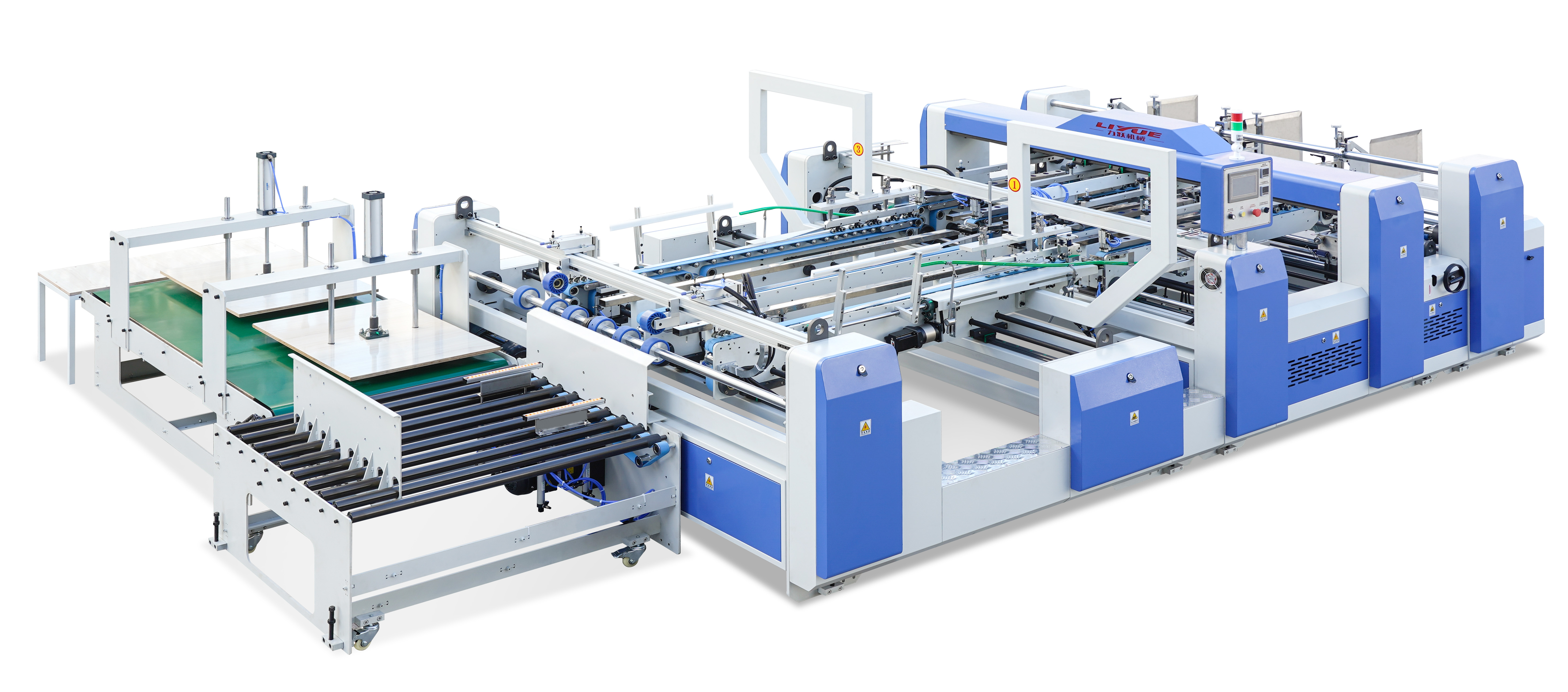
- Machine footprint: approx. 7000 × 3000 × 1400 mm
- Production speed: 150–400 m/min
- Maximum sheet width: up to 1200 mm
- Machine weight: 3.5–6 tons
These structural factors directly influence energy consumption, vibration control, and mechanical stability.
Board Compatibility and Load Variation
Different corrugated materials require different energy loads:
- E-flute: lightweight, high-speed processing
- B/C flute: standard carton production
- BC double-wall: heavy-duty structural packaging
Each grade affects torque demand, vacuum force, and folding resistance, requiring adaptive power distribution across subsystems.
Conclusion
The total power rating of a corrugated folder gluer is a complete reflection of machine design, subsystem coordination, and production capability.
A well-balanced power system ensures:
- Stable high-speed operation
- Accurate folding and gluing performance
- Reduced energy waste
- Longer machine lifespan
- Reliable performance across different board grades
Understanding how power is distributed across the main drive, vacuum system, thermal units, and auxiliary components is essential for selecting the right equipment for modern corrugated converting production lines.
'/%3e%3cpath%20id='Rectangle%20455'%20d='M0%2011.1428H5.57143L22.2857%2052H0V11.1428Z'%20fill='%23CE221D'/%3e%3c/g%3e%3cdefs%3e%3clinearGradient%20id='paint0_linear_888_3811'%20x1='0'%20y1='26'%20x2='401.607'%20y2='26'%20gradientUnits='userSpaceOnUse'%3e%3cstop%20stop-color='%23153B8A'/%3e%3cstop%20offset='1'%20stop-color='%23153B8A'%20stop-opacity='0'/%3e%3c/linearGradient%3e%3c/defs%3e%3c/svg%3e) Products
Products
'/%3e%3cpath%20id='Rectangle%20455'%20d='M0%2012H6L24%2056H0V12Z'%20fill='%23CE221D'/%3e%3c/g%3e%3cdefs%3e%3clinearGradient%20id='paint0_linear_769_2773'%20x1='0'%20y1='28'%20x2='432.5'%20y2='28'%20gradientUnits='userSpaceOnUse'%3e%3cstop%20stop-color='%23153B8A'/%3e%3cstop%20offset='1'%20stop-color='%23153B8A'%20stop-opacity='0'/%3e%3c/linearGradient%3e%3c/defs%3e%3c/svg%3e)


