


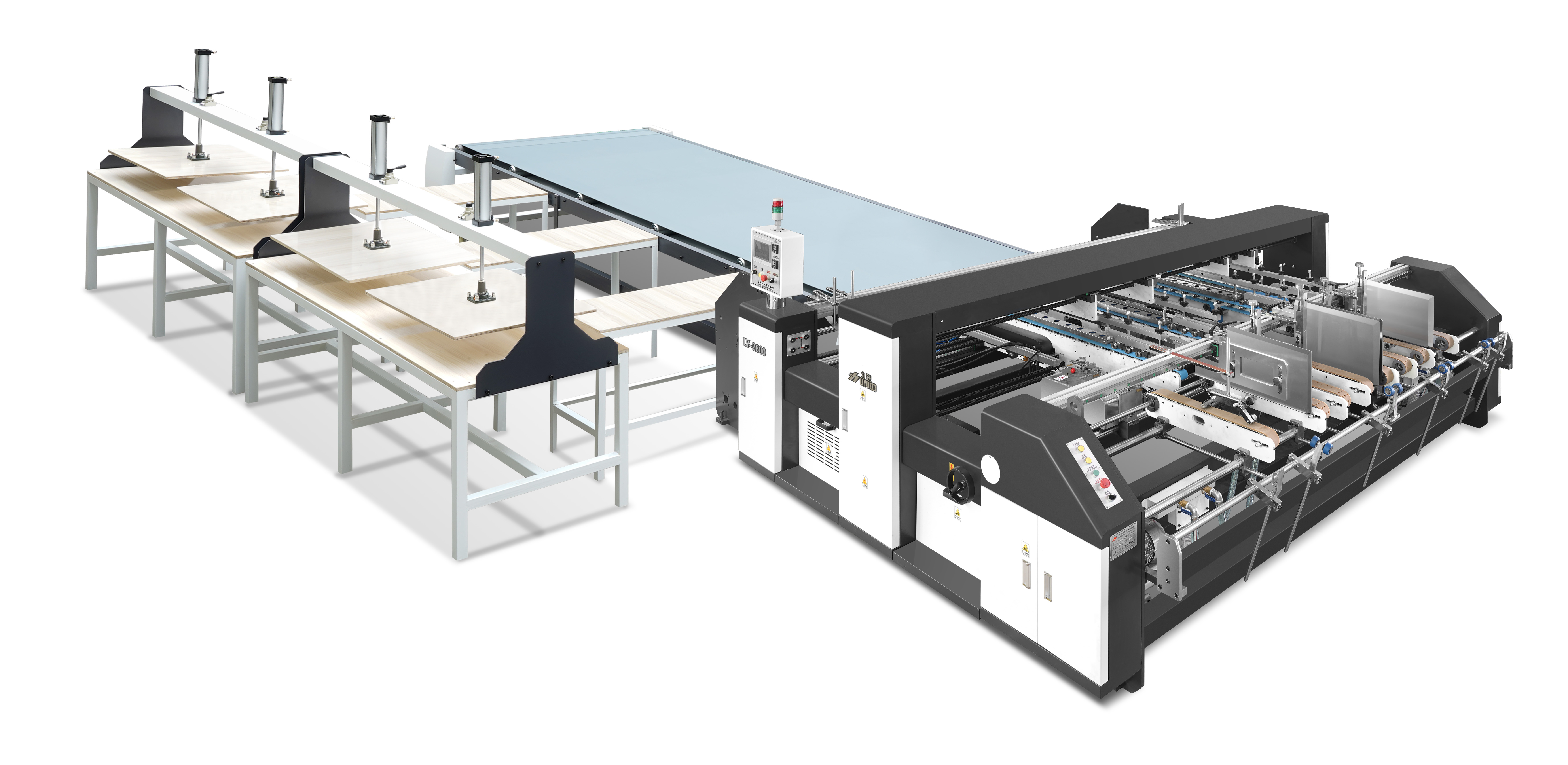
In the heavy-duty packaging manufacturing industry, operational efficiency, high-speed precision, and equipment reliability are the cornerstones of profitability. At the heart of this high-speed production line is the corrugated folder gluer machine, a complex piece of engineering designed to transform flat corrugated sheets into precision-folded, glued, and finished boxes.
Acting as the critical interface between low-voltage digital control signals and high-power mechanical loads, industrial contactors ensure the stable, safe, and continuous operation of critical machinery functions. This technical article explores the deep-level engineering, functional mechanics, and strategic benefits of contactors in modern high-speed corrugated folder gluer machines.
1. Power Switching and Heavy-Duty Load Control
A corrugated folder gluer machine is powered by an array of electric motors and high-current thermal devices. These components require heavy-duty switching systems capable of handling massive electrical stresses. Magnetic contactors are specifically engineered to switch high-current circuits repeatedly and manage the severe inrush currents (which can be 6 to 10 times the rated running current) generated during large motor startups.
In a standard high-efficiency folder gluer, industrial contactors are strategically deployed to control several primary mechanical and thermal loads within a total machine power spectrum ranging from 9 kW to 25.7 kW:
Main Drive Motors
The main drive system utilizes high-torque AC variable frequency motors, typically optimized at around 5 kW depending on the specific machine configuration. Contactors handle the primary power distribution to these motors, ensuring that the heavy transmission systems, timing belts, and primary conveyor systems start smoothly and run continuously at precise production line speeds.
High-Pressure Vacuum Blowers
Precise paperboard feeding and stable positioning require powerful vacuum suction. Dedicated contactors manage these vacuum suction blowers. These blowers create a strong negative pressure zone under the feeder belts, ensuring that even warped or heavy corrugated boards are drawn down tightly and fed one by one without slippage or double-feeding errors.
Hot-Melt and Cold Glue Heating Systems
Modern structural box manufacturing requires advanced gluing systems, often involving a combination of cold glue extrusion and hot-melt glue units. The hot-melt system relies on electrical heating elements to melt polyurethane or adhesive materials and maintain them at exact operating temperatures. Heavy-duty contactors handle the cyclic, high-current switching demanded by temperature controllers to regulate these intensive thermal loads safely.
Multi-Axis Auxiliary Adjustment Motors
To enable rapid order changes and reduce setup times, modern folder gluers feature automated motorized adjustments. A network of small, highly responsive auxiliary motors drives the automated movement of carrier frames, folding swords, and gluing heads. Contactors, working in forward-reverse pairs, manage the precise positioning of these subsystems during automated structural changeovers.
2. Safety Isolation and Emergency Protection Mechanisms
Industrial manufacturing environments demand absolute compliance with global safety standards, such as CE (European Conformity), OSHA, and UL/CSA standards. Because corrugated folder gluers operate at high speeds with powerful mechanical pinch points, the machine’s safety circuit requires a fail-safe electrical layout. Contactors play an indispensable role in providing physical safety isolation and emergency protection.
When an operator presses an emergency stop (E-stop) button, trips a safety light curtain, or opens a physical interlocking safety door, the safety relay immediately interrupts the control voltage feeding the contactor coils. This safety loop triggers three immediate phases:
Instantaneous Coil De-energization: The electromagnetic field inside the contactor collapses instantly.
Spring-Assisted Contact Opening: High-tension internal springs force the heavy main contacts to snap open within milliseconds.
Physical Isolation:This action creates a secure physical air gap that immediately disconnects the 380V/415V/480V three-phase main power supply from all upstream drives and motors.
By isolating the high-voltage distribution at the source, contactors prevent hazardous mechanical motion, accidental automated restarts, or electrical faults during line maintenance, effectively protecting field operators and technicians from severe workplace injuries.
3. PLC Integration and Intelligent Automation Control
In the era of Industry 4.0 and highly automated smart factories, modern corrugated folder gluers rely heavily on a centralized Programmable Logic Controller (PLC) to manage machine timing, speed synchronization, and operational logic. However, a digital PLC processor operates on low-voltage, low-current microelectronics, which cannot directly interface with heavy industrial power grids. Contactors act as the critical bridging execution layer.
The Switching Process
The PLC calculates the operational demands and outputs a low-voltage digital control signal—typically 24V DC or 110V AC—to the electromagnetic coil of the contactor. This small control signal generates a magnetic field inside the contactor core, drawing the internal armature downward. This mechanical movement closes the heavy-duty main contacts, which smoothly passes the three-phase main power to the target motor or heating element.
Real-Time System Feedback Loop
Beyond power switching, industrial contactors used in high-end folder gluers are equipped with auxiliary contact blocks. These auxiliary contacts are mechanically linked to the main power contacts but carry low-voltage signals back to the PLC input modules. This configuration provides a continuous, real-time feedback loop.
If a contactor fails to close, or if its contacts become welded due to an external short circuit, the PLC detects the discrepancy between its output command and the auxiliary contact's physical feedback state. The PLC instantly halts the machine, triggers an acoustic alarm, and displays an explicit fault code on the human-machine interface (HMI) touchscreen. This feature enables precise system self-diagnostics and immediate troubleshooting.
4. Heavy-Load Durability and Paper Dust Resistance
The production environment inside a corrugated packaging facility is notoriously harsh. The high-speed slotting, die-cutting, and scoring of corrugated fiberboard generate large volumes of fine, abrasive paper dust, cellulose fibers, and airborne debris. Furthermore, setting up a folder gluer for new production runs demands continuous "jogging" or "inching"—a process where operators repeatedly pulse the main drive motor for fractions of a second to verify mechanical alignment and board tracking.
Jogging causes severe electrical wear because the contactor is forced to break high inductive currents before the motor can achieve its full running speed and counter-electromotive force. To survive these conditions, the contactors selected for corrugated folder gluers must meet stringent engineering specifications:
Silver-Alloy Contacts: Premium industrial contactors feature contact points composed of advanced silver-nickel (AgNi) or silver-tin-oxide (AgSnO2) alloys. These materials combine excellent electrical conductivity with high resistance to thermal welding and erosion under high-current arcing conditions.
Advanced Arc-Suppression Chutes: When contacts open under heavy load, an electrical arc forms across the gap. Contactors utilize specialized arc-extinguishing chutes equipped with magnetic splitters to draw the arc away from the contact faces, splitting and cooling it rapidly to prevent housing degradation.
Dust-Protected Enclosures:To prevent fine paper dust from settling on internal mechanical joints or insulating the contact points, contactors are installed within sealed electrical enclosures. Many feature encapsulated coil structures and guide mechanisms to ensure dust cannot infiltrate the moving armature, preventing mechanical binding and contact failure.
5. Controller Protection and Plant Maintenance Efficiency
From an electrical design perspective, contactors act as a protective barrier that shields the machine's primary financial investment: its computerized control automation. High-power motors and inductive loads inherently cause severe electrical feedback, including harmonic distortions, voltage spikes, and transient switching surges.
Protecting Sensitive Electronics
By absorbing the severe electrical and thermal stresses of high-current switching within their robust contact chambers, contactors insulate the sensitive and expensive PLC output modules and solid-state relays from direct exposure to the high-power grid. If an unexpected overcurrent or localized short circuit occurs in a drive motor, the localized thermal stress is absorbed by the contactor or its companion thermal overload relay, saving the delicate PLC system from catastrophic failure and replacement costs.
'/%3e%3cpath%20id='Rectangle%20455'%20d='M0%2011.1428H5.57143L22.2857%2052H0V11.1428Z'%20fill='%23CE221D'/%3e%3c/g%3e%3cdefs%3e%3clinearGradient%20id='paint0_linear_888_3811'%20x1='0'%20y1='26'%20x2='401.607'%20y2='26'%20gradientUnits='userSpaceOnUse'%3e%3cstop%20stop-color='%23153B8A'/%3e%3cstop%20offset='1'%20stop-color='%23153B8A'%20stop-opacity='0'/%3e%3c/linearGradient%3e%3c/defs%3e%3c/svg%3e) Products
Products
'/%3e%3cpath%20id='Rectangle%20455'%20d='M0%2012H6L24%2056H0V12Z'%20fill='%23CE221D'/%3e%3c/g%3e%3cdefs%3e%3clinearGradient%20id='paint0_linear_769_2773'%20x1='0'%20y1='28'%20x2='432.5'%20y2='28'%20gradientUnits='userSpaceOnUse'%3e%3cstop%20stop-color='%23153B8A'/%3e%3cstop%20offset='1'%20stop-color='%23153B8A'%20stop-opacity='0'/%3e%3c/linearGradient%3e%3c/defs%3e%3c/svg%3e)


