


For a corrugated folder gluer machine, it must coordinate multiple processes, including feeding, alignment, folding, gluing, and pressing, while handling different types of corrugated boards with various thicknesses, flute structures, and material characteristics.
Among the mechanical components inside a folder gluer system, the main motor plays a fundamental role in maintaining consistent machine performance. Although operators usually pay close attention to feeding accuracy, glue application, and folding adjustment, the drive system behind these processes determines whether the machine can deliver stable power during high-speed production. A reliable main motor provides the torque, speed control, and operational consistency required for the entire transmission system to work smoothly.
Challenges in High-Speed Folder Gluer Production
During continuous operation, a corrugated folder gluer machine experiences constantly changing mechanical loads. Corrugated boards are not completely uniform materials; variations in board thickness, flute rigidity, paper quality, and box structure can influence the resistance experienced during transportation and folding.
When heavier corrugated sheets or multi-wall boards enter the folding section, the conveyor system needs additional force to overcome material resistance and maintain stable movement. Traditional drive systems with limited torque response may experience small speed fluctuations under these conditions. Even minor variations in transportation speed can influence the relative position between the carton blank, folding components, and glue application system.
These speed changes may result in several production issues, including inconsistent folding positions, unstable carton dimensions, and reduced forming accuracy. In high-speed production environments, small mechanical variations can become more noticeable because the available adjustment time for each carton becomes shorter.
Another challenge is vibration control during long-term operation. The main motor transfers power through shafts, belts, pulleys, and other transmission components. If the power output is not sufficiently stable, unwanted vibration can travel through the mechanical structure. This may affect sensitive adjustment areas such as folding rails, guide systems, and correction mechanisms, especially when the machine operates continuously at higher speeds.
For this reason, the main motor is not simply a power source. It is a key component that influences the overall balance between production speed, mechanical stability, and carton forming quality.
Limitations of Conventional Drive Systems in Corrugated Folder Gluer Machines
Traditional motor configurations may meet basic production requirements, but modern packaging applications often demand higher levels of dynamic response and operational flexibility. As carton designs become more complex and customers require faster delivery cycles, folder gluer machines need drive systems that can adapt to changing production conditions.
One common limitation of conventional drive systems is insufficient torque response when the machine encounters sudden load changes. For example, when thicker corrugated board passes through the folding area, the resistance applied to conveyor belts and folding carriers increases. If the motor cannot quickly compensate for this additional load, temporary speed reduction may occur.
This speed instability can affect the synchronization between different machine sections. The feeding unit, folding section, gluing system, and delivery section must work together with accurate timing. Any inconsistency in movement can influence the final carton appearance and production efficiency.
How Advanced Main Motor Technology Improves Folder Gluer Stability
An advanced main motor system is designed to provide stable torque output, accurate speed regulation, and reliable operation under different production conditions. These characteristics are especially valuable for corrugated folder gluer machines used in industrial packaging environments.
High-torque motor design allows the machine to maintain stable transportation force when processing different types of corrugated materials. Whether producing standard cartons or heavier packaging boxes, consistent power delivery helps reduce speed fluctuation during demanding operations.
Variable-frequency control technology also improves the response capability of the drive system. By adjusting motor speed according to operating conditions, the system can achieve smoother acceleration, controlled deceleration, and better synchronization between machine sections. This helps the folder gluer maintain a more stable running condition during continuous production.
Another advantage of an optimized main motor system is improved vibration management. Stable power transmission reduces unnecessary mechanical impact throughout the drive structure. As a result, components such as conveyor systems, folding carriers, and alignment mechanisms can operate under more consistent conditions.
For manufacturers producing large volumes of corrugated boxes, these improvements contribute to better production consistency, reduced adjustment frequency, and more predictable machine performance.
The Role of Main Motor Performance in Folding and Correction Processes
The influence of the main motor becomes especially visible in the folding zone of a corrugated folder gluer machine. During this stage, corrugated blanks must pass through folding carriers that apply controlled force to create accurate carton shapes. The material itself produces resistance due to board stiffness and natural spring-back characteristics.
A stable main motor provides continuous torque to maintain conveyor belt tension and transportation speed during this process. This allows the folding components to work with more consistent timing, helping improve carton squareness and reduce irregular folding conditions.
The correction section is another area where stable drive performance is important. High-speed folder gluer machines often use correction devices to adjust carton alignment before final delivery. These systems rely on consistent conveyor movement to achieve effective correction.
If the transportation speed changes unexpectedly, the correction mechanism may not achieve the desired adjustment result, which can lead to carton skewing or alignment variations. By maintaining a stable baseline speed, the main motor supports the accurate operation of correction components and helps protect printed surfaces from unnecessary friction or damage.
MAILI Main Motor Equipped Corrugated Folder Gluer Machine Solution
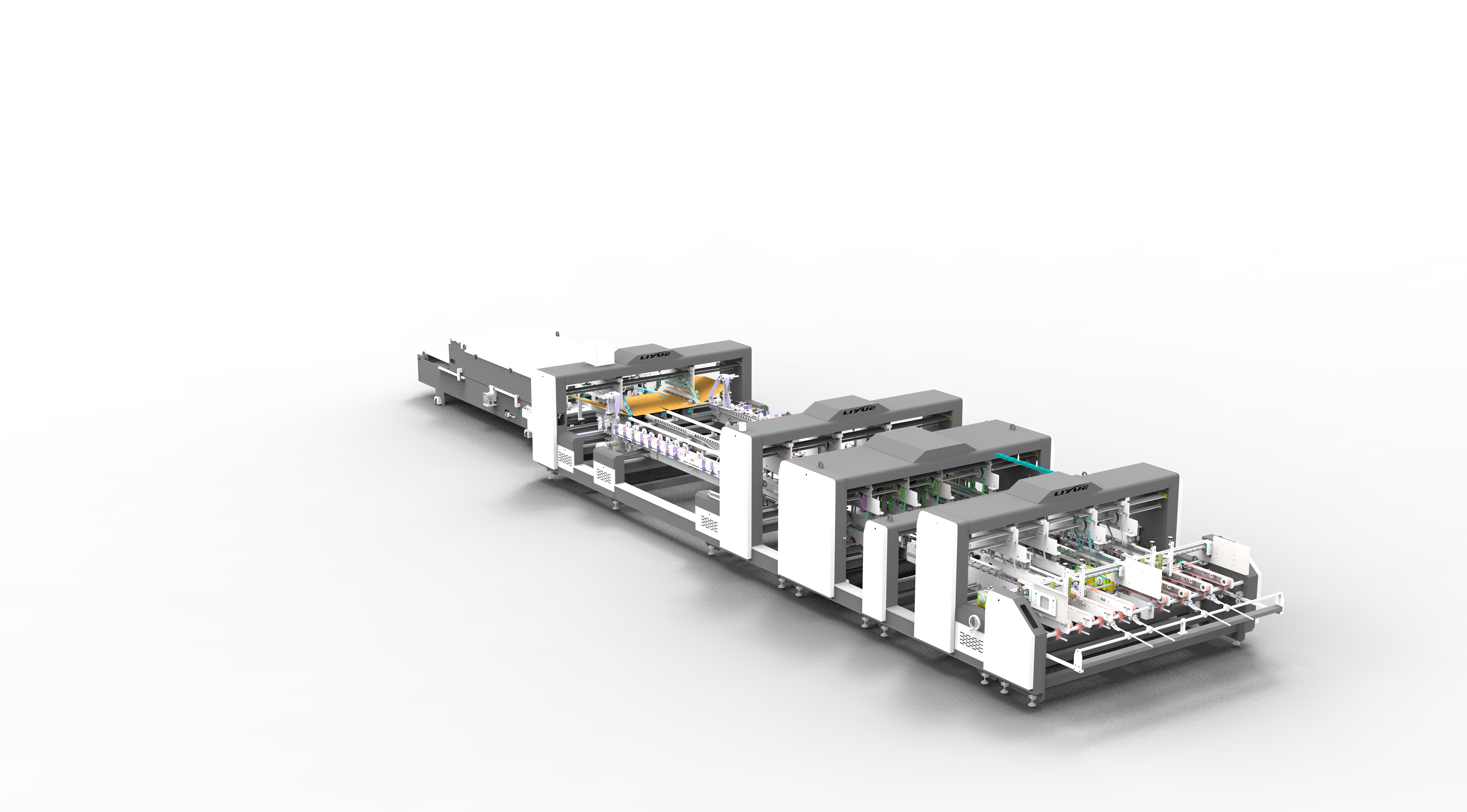
To meet the requirements of modern corrugated packaging production, our corrugated folder gluer machine is equipped with MAILI main motor technology as a reliable power solution for the drive system.
MAILI motors are designed for industrial applications where stable operation, efficient power transmission, and consistent speed control are important. Combined with advanced variable-frequency control, the motor system provides responsive torque management and supports smooth machine operation under different production conditions.
By integrating a reliable main drive system, our folder gluer machines are engineered to maintain stable performance across key processes, including feeding, folding, gluing, correction, and delivery. This integrated approach helps reduce the impact of load variations and supports consistent carton quality during continuous manufacturing.
The combination of robust mechanical design and reliable motor technology allows the machine to handle a wide range of corrugated packaging applications, including standard cartons, heavy-duty boxes, and customized packaging structures. Manufacturers can benefit from improved operational stability, reduced downtime caused by mechanical adjustment, and more efficient production management.
Building Long-Term Value Through Reliable Drive Technology
The performance of a corrugated folder gluer machine depends on how effectively every system works together. While folding mechanisms, glue systems, and control technology are important factors, the main motor provides the foundation for stable machine operation.
A properly designed drive system helps maintain consistent speed, manage changing production loads, and support accurate carton forming throughout long production cycles. With a focus on mechanical reliability and practical production requirements, our corrugated folder gluer machine combines advanced drive components with precision engineering to provide a dependable solution for modern carton converting operations.
'/%3e%3cpath%20id='Rectangle%20455'%20d='M0%2011.1428H5.57143L22.2857%2052H0V11.1428Z'%20fill='%23CE221D'/%3e%3c/g%3e%3cdefs%3e%3clinearGradient%20id='paint0_linear_888_3811'%20x1='0'%20y1='26'%20x2='401.607'%20y2='26'%20gradientUnits='userSpaceOnUse'%3e%3cstop%20stop-color='%23153B8A'/%3e%3cstop%20offset='1'%20stop-color='%23153B8A'%20stop-opacity='0'/%3e%3c/linearGradient%3e%3c/defs%3e%3c/svg%3e) Products
Products
'/%3e%3cpath%20id='Rectangle%20455'%20d='M0%2012H6L24%2056H0V12Z'%20fill='%23CE221D'/%3e%3c/g%3e%3cdefs%3e%3clinearGradient%20id='paint0_linear_769_2773'%20x1='0'%20y1='28'%20x2='432.5'%20y2='28'%20gradientUnits='userSpaceOnUse'%3e%3cstop%20stop-color='%23153B8A'/%3e%3cstop%20offset='1'%20stop-color='%23153B8A'%20stop-opacity='0'/%3e%3c/linearGradient%3e%3c/defs%3e%3c/svg%3e)


