


Adhesive tape processing machines play an important role in modern packaging, printing, and paper converting industries where accurate tape application and stable production performance are required. When selecting suitable equipment, power consumption and voltage configuration are important factors that directly affect factory installation, operating costs, and long-term production management.
Different adhesive tape processing machines are designed with different structures, automation levels, and functional configurations, which result in different electrical requirements.
Why Electrical Specifications Matter When Selecting Adhesive Tape Processing Machines
The electrical configuration of an adhesive tape processing machine is closely related to production efficiency, equipment stability, and maintenance requirements. Before purchasing equipment, manufacturers need to consider not only the machine functions but also whether the power supply matches the production environment.
Different countries and industrial facilities may use different voltage standards, such as 220V single-phase power or 380V three-phase power systems. Selecting a machine with a suitable electrical configuration helps simplify installation and ensures that the equipment can operate properly within the available factory infrastructure.
Another important consideration is the relationship between machine specifications and power consumption. A compact semi-automatic machine designed for small-batch production naturally requires less electrical power than a fully automatic system with multiple processing functions. Choosing the correct power configuration prevents unnecessary energy consumption while ensuring that the machine has sufficient capacity for the intended application.
Electrical component quality also influences the reliability of adhesive tape processing equipment. Components such as contactors, relays, circuit protection devices, sensors, and PLC control systems need to work together to maintain stable machine operation during daily production. Proper electrical design reduces maintenance requirements and supports consistent processing performance.
Electrical Design Features of Adhesive Tape Processing Machines
Modern adhesive tape processing machines are developed with different electrical configurations to meet various production requirements. Instead of using a single power specification for all models, manufacturers usually design multiple machine versions according to automation level, processing speed, and functional options.
A model-based electrical configuration allows customers to select equipment that matches their actual production conditions. For example, a factory producing customized packaging products with limited production volume may prefer a compact machine with lower power consumption, while manufacturers handling larger production orders may require a machine equipped with additional automatic functions and higher electrical capacity.
Voltage compatibility is another important aspect of machine design. Adhesive tape processing machines can be configured according to regional power standards, including common industrial requirements such as 220V single-phase and 380V three-phase power supplies. Before shipment, manufacturers usually confirm the customer's local electrical conditions to ensure that the machine configuration is suitable for installation.
The electrical control system is also an important part of equipment performance. Industrial-grade electrical components, including PLC controllers, relays, contactors, overload protection devices, and photoelectric sensors, help coordinate different machine actions, including tape feeding, positioning, cutting, and processing control. A well-designed electrical system improves operation convenience and supports accurate machine adjustment.
Power Specifications of Different Adhesive Tape Processing Machine Models
Automatic Multi-Head Double-Sided Tape Machine
The automatic multi-head double-sided tape machine is designed for manufacturers requiring efficient tape application with multiple working heads and automated processing functions. Compared with manual equipment, this type of machine integrates more automatic control systems, feeding mechanisms, and positioning components.
The typical electrical specification of an automatic multi-head double-sided tape machine is approximately 3.5–4 kW with a 220V power supply configuration. The actual power requirement may vary depending on the number of tape heads, machine options, and automation functions selected.
The 220V configuration provides a practical solution for many light industrial production environments. It is commonly suitable for applications involving paper products, packaging components, cartons, and other materials requiring consistent double-sided tape application.
Triangle Double-Sided Tape Machine
Triangle double-sided tape machines are commonly used for applications requiring flexible tape positioning and efficient processing of specific product structures. Available in semi-automatic and automatic versions, these machines provide different production solutions according to customer requirements.
The power range of triangle double-sided tape machines is generally around 2–5 kW with a 220V electrical configuration. Lower-power models are suitable for businesses focusing on small-batch production or applications where simple operation is required. Higher-power versions may include additional automation features designed to improve processing efficiency.
Because different models have different mechanical layouts and functions, power consumption is influenced by factors such as drive motors, feeding systems, control components, and optional accessories.
Automatic Glue Scraping and Release Paper Pasting Machine
The automatic glue scraping and release paper pasting machine is designed for applications involving adhesive coating and release paper combination processes. Compared with standard tape application machines, this equipment usually requires higher power capacity because it integrates additional processing functions, including glue scraping mechanisms, material feeding systems, and precise control components.
A typical configuration of this machine requires around 10 kW with a 380V three-phase power supply. The three-phase electrical system provides suitable power distribution for industrial applications that require stronger motor capacity and stable operation under higher processing loads.
Manual Double-Sided Tape Machine
Manual double-sided tape machines provide a simple and flexible solution for businesses requiring small-volume production, sample preparation, or customized orders. Compared with automatic models, these machines have a simpler structure and lower electrical requirements.
The typical power specification of a manual double-sided tape machine is around 1.5 kW with a 220V power supply. Its compact electrical design makes it suitable for production environments where space and energy consumption need to be carefully managed.
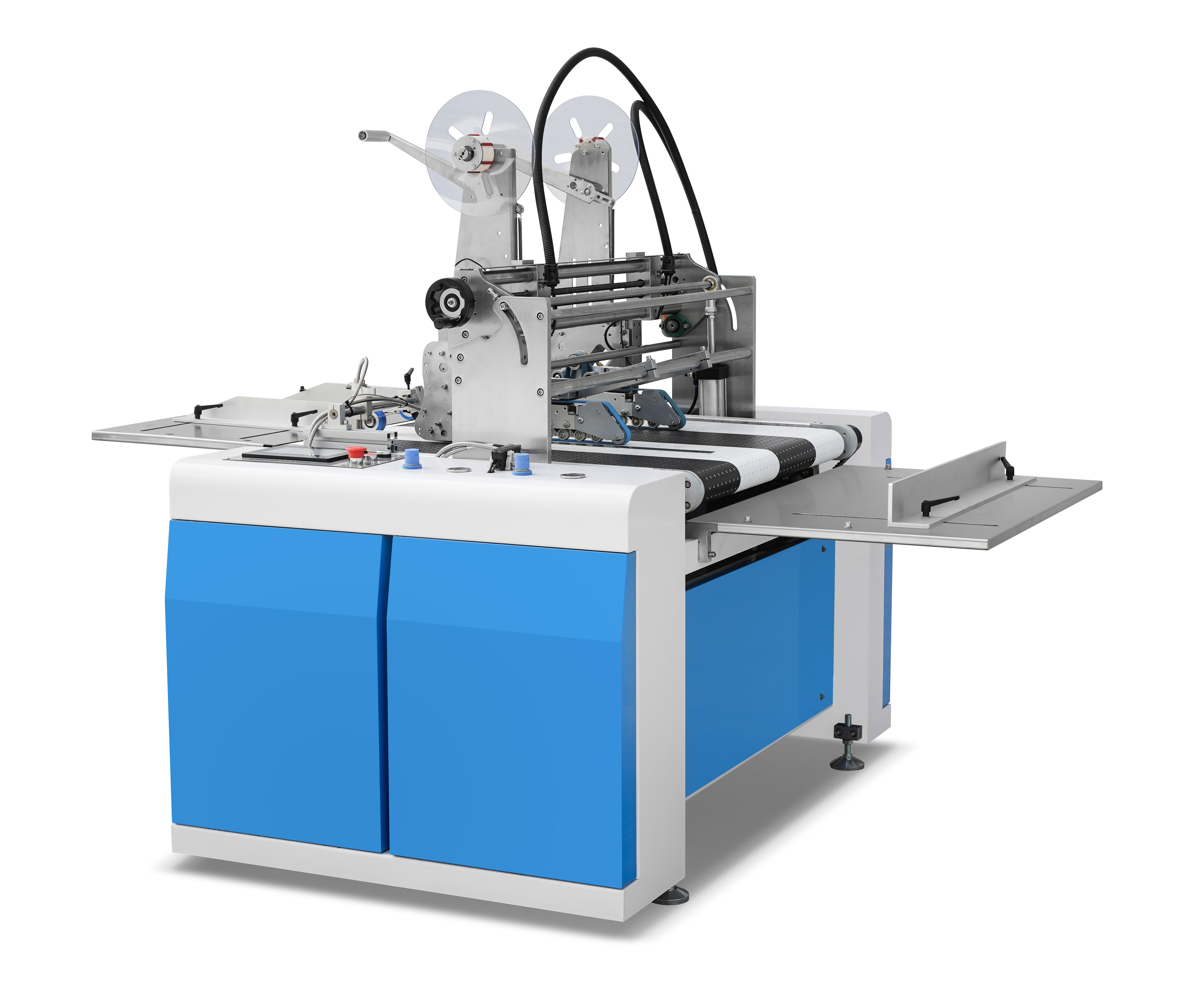
The power requirements and electrical specifications of adhesive tape processing machines vary according to machine type, automation level, and processing functions. As an experienced manufacturer of printing and packaging post-processing equipment, we provide adhesive tape processing machines with different configurations to meet various application needs. Whether a production line requires a compact 220V solution or a higher-capacity 380V industrial configuration, selecting the appropriate machine model and electrical specification helps create a more efficient and reliable production environment.
'/%3e%3cpath%20id='Rectangle%20455'%20d='M0%2011.1428H5.57143L22.2857%2052H0V11.1428Z'%20fill='%23CE221D'/%3e%3c/g%3e%3cdefs%3e%3clinearGradient%20id='paint0_linear_888_3811'%20x1='0'%20y1='26'%20x2='401.607'%20y2='26'%20gradientUnits='userSpaceOnUse'%3e%3cstop%20stop-color='%23153B8A'/%3e%3cstop%20offset='1'%20stop-color='%23153B8A'%20stop-opacity='0'/%3e%3c/linearGradient%3e%3c/defs%3e%3c/svg%3e) Products
Products
'/%3e%3cpath%20id='Rectangle%20455'%20d='M0%2012H6L24%2056H0V12Z'%20fill='%23CE221D'/%3e%3c/g%3e%3cdefs%3e%3clinearGradient%20id='paint0_linear_769_2773'%20x1='0'%20y1='28'%20x2='432.5'%20y2='28'%20gradientUnits='userSpaceOnUse'%3e%3cstop%20stop-color='%23153B8A'/%3e%3cstop%20offset='1'%20stop-color='%23153B8A'%20stop-opacity='0'/%3e%3c/linearGradient%3e%3c/defs%3e%3c/svg%3e)


